

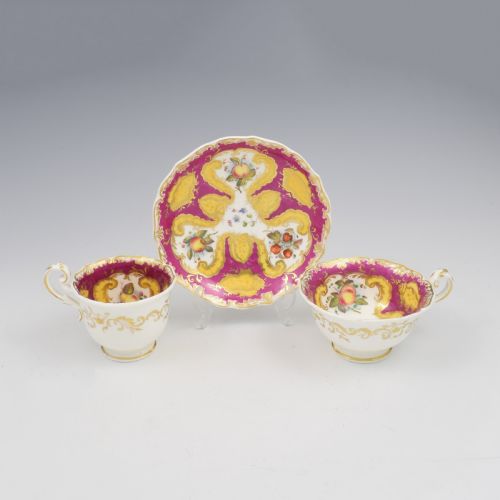
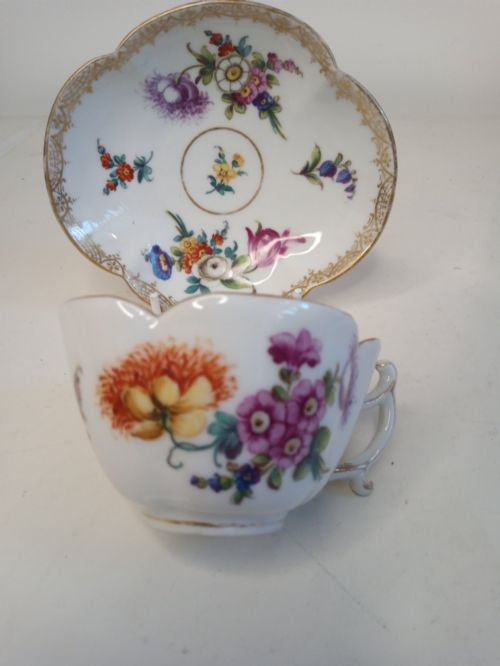
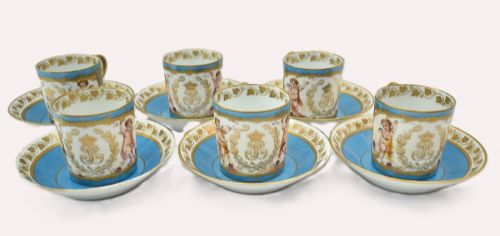


Gilt Porcelain Saucer Set
These gilt porcelain saucer sets bring hand-painted motifs and rich gold leaf together, offering practical elegance for tea and coffee service.
Gilt Porcelain Saucer Set
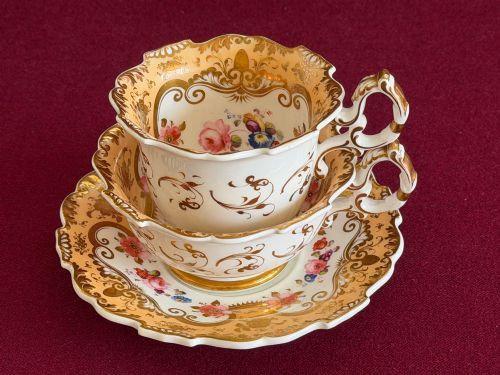
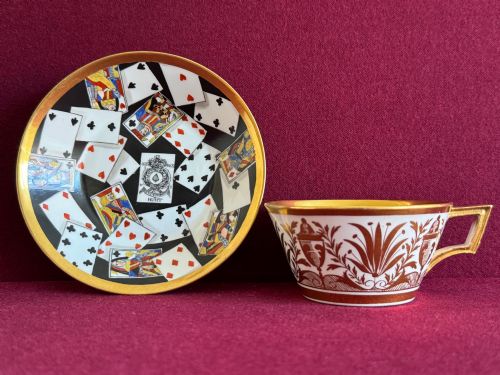
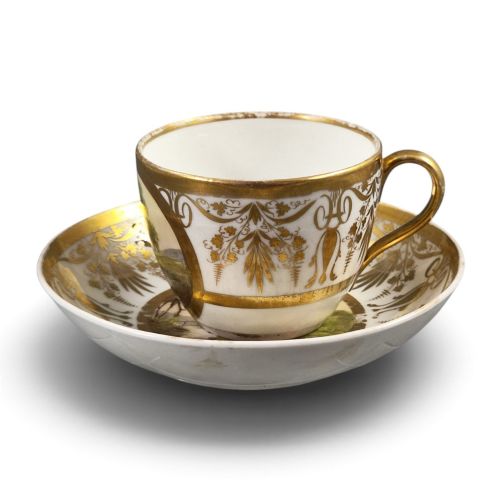
A gilt porcelain saucer set encompasses individual teacups and saucers, trios, and larger afternoon tea services spanning the eighteenth century through to the early twentieth century.
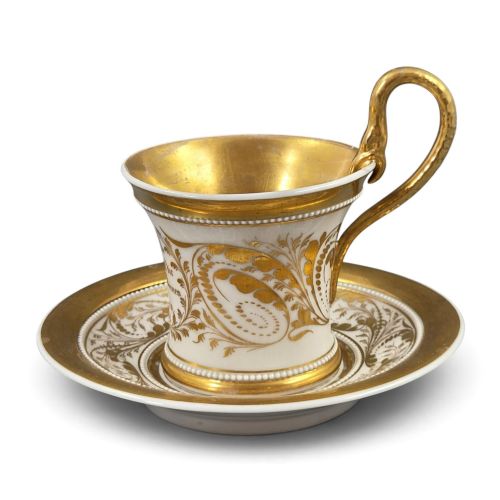
Makers from English and continental factories fashioned these items in forms ranging from Georgian fluted shapes to elaborate Victorian imari patterns and Biedermeier cabinet cups.
The buyer meets single demitasse sets, extensive tea services for multiple persons, and cabinet porcelain produced by notable European and Asian potteries.
How they were made
Potters shaped hard-paste porcelain, bone china, and porcelain bodies, frequently finishing the wares with hand-painted enamel scenes and intricate motifs.
Craftsmen applied gold leaf and gilding by hand to borders, handles, and scenic panels, then fired the pieces to fuse the metallic decoration to the glaze.
Gilt Porcelain Saucer Set Retail Price Guide 2026
Typical asking prices for gilt porcelain saucer set among the pieces listed under this phrase on Sellingantiques today, from the lower quarter to the upper quarter. They describe what is for sale here now, not the wider market.
The selection includes regional styles from English factories, continental European houses, and Japanese Satsuma workshops.
What varies in quality
The refinement of the porcelain body and the precision of the hand-painted enamel work distinguish standard production wares from superior cabinet pieces.
The thickness and completeness of the gold leaf or gilding, along with the complexity of the painted subject matter such as landscapes or birds, dictate the grade of the set.
John Rose Coalport·H and R Daniel·KPM Berlin·Royal Worcester·Royal Crown Derby·Hutschenreuther
The Gilt Porcelain Saucer Set Glossary
- Trio
- A matching set comprising a teacup, a coffee cup, and a saucer. This configuration was popular in the Georgian and nineteenth-century periods for serving different hot beverages.
- Demitasse
- A small cup used for serving strong black coffee or espresso, typically paired with a matching saucer. These often feature dense gilding and delicate hand-painted floral motifs.
- Hard-paste porcelain
- A durable ceramic composition fired at very high temperatures, made from kaolin and petuntse. European factories utilised this material to achieve crisp forms and bright glaze finishes.
- Enamel
- Coloured vitreous glass fused to the porcelain surface through firing. It provides the vibrant, lasting hues seen on floral and landscape decorations.
- Gilding
- The application of gold leaf or powdered gold to the porcelain surface. This technique accents rims, handles, and painted scenes with a metallic lustre.
Gilt Porcelain Saucer Set: Frequently Asked Questions
What is included in a tea set?
A tea set typically comprises multiple cups and matching saucers, alongside serving items such as teapots or bowls depending on the specific service configuration.
Larger service sets accommodate multiple persons for afternoon tea, grouping complementary porcelain pieces decorated with uniform patterns and gilding.
How do I date a porcelain set?
Dating relies on factory backstamps, paste characteristics, and stylistic markers such as Regency shapes or Victorian imari designs.
Comparing the painting technique and the type of gilding against known production periods helps narrow down the decade of manufacture.
Can I use these cups daily?
Antique and vintage porcelain requires careful handling due to the delicate nature of hand-painted enamels and applied gold leaf.
Hand washing in warm water without harsh detergents preserves the metallic lustre and prevents wear on the painted surfaces over time.
What is a cabinet cup?
A cabinet cup is a decorative piece intended for display in a cabinet rather than for everyday dining use.
These items often feature elaborate hand-painted landscapes, portraits, or heavy gilding that showcase the peak skill of the factory.