


Gilt Porcelain Bottle Vases
Gilt porcelain bottle vases bring rich gilding and graceful ceramic forms to a room, offering both Continental elegance and Japanese craftsmanship.
Gilt Porcelain Bottle Vases
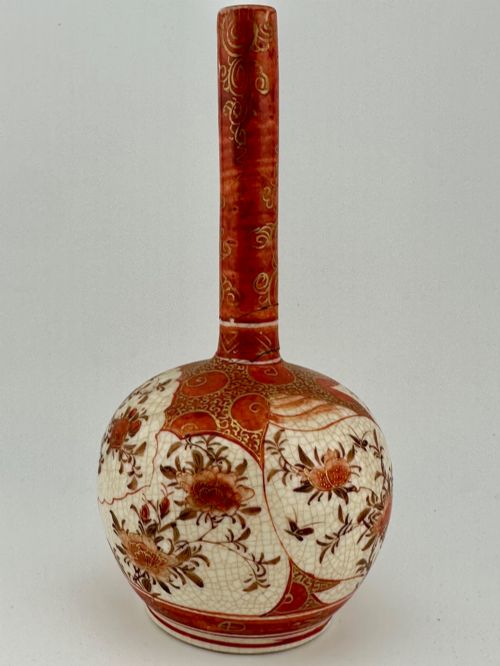
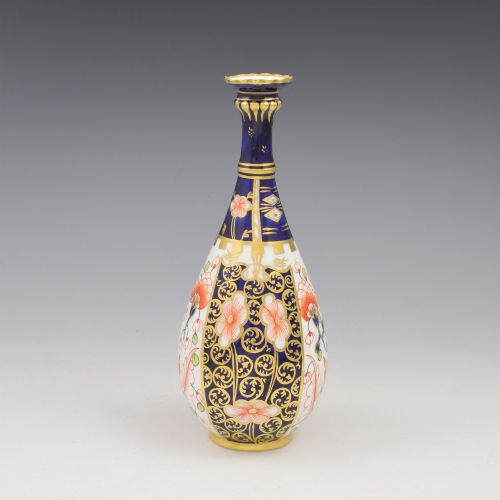
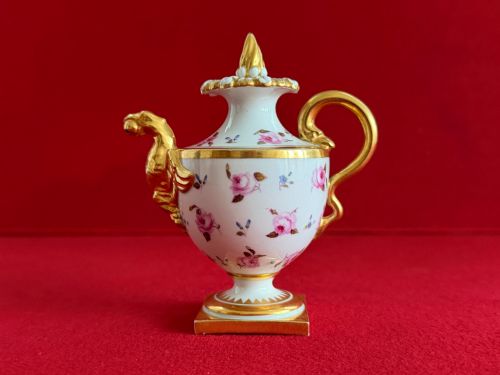
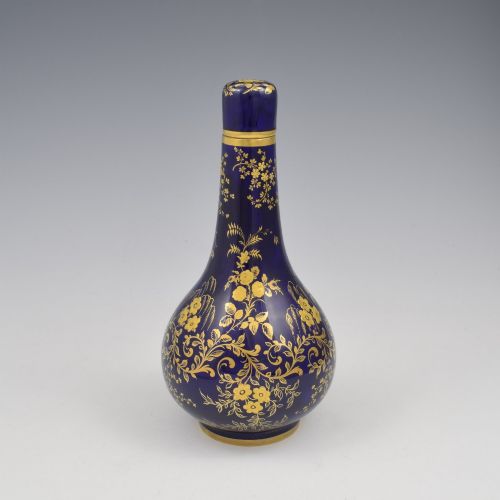
When you search for gilt porcelain bottle vases, you encounter a selection of ceramic vessels shaped with narrow necks and rounded bodies, decorated with gold leaf, gilt, or gilding. The pieces listed here span the nineteenth century, Regency period, Victorian era, and the early twentieth century.
The forms range from English factory wares and Continental garniture sets to Japanese Imari, Kutani, and Satsuma pieces. You are most likely to meet nineteenth century Japanese bottle vases alongside English porcelain from makers such as Flight, Barr and Barr, Minton, and Royal Worcester.
These vessels serve primarily as decorative ceramics, whether standing alone or forming part of a larger garniture set. Their origins cross European porcelain traditions with Japanese Meiji and Taisho period aesthetics.
How they were made
The makers formed these vessels using porcelain or earthenware bodies, applying glaze and enamel decoration before finishing the surfaces with gold leaf or hand-applied gilding. English manufactories employed refined paste porcelains painted in rich cobalt blue and highlighted with raised gold.
Japanese workshops utilised traditional potting techniques for Kutani, Satsuma, and Imari wares, combining polychrome enamels with extensive gilt detailing. Kiln firing fixed the glaze and enamel layers before the final gold application.
The listings combine nineteenth century English porcelain factories with Japanese Meiji period export wares, united by the use of gilt decoration on ceramic bottle forms.
What varies in quality
Quality rests in the crispness of the ceramic potting and the precision of the hand-applied gilding. Superior examples display finely detailed enamel work and well-preserved gold leaf that has retained its lustre across the centuries.
The distinction between standard decorative wares and top tier examples lies in the finesse of the painting and the reputation of the workshop or factory behind the piece.
Flight Barr and Barr·Royal Worcester·Minton·Derby
The Gilt Porcelain Bottle Vases Glossary
- Gilding
- The application of gold leaf or gold dust to the surface of porcelain. This technique highlights raised motifs and rims.
- Imari
- A style of Japanese porcelain featuring a distinctive palette of underglaze blue, iron red, and abundant gilt. It originated during the Edo period and remained popular through the Meiji era.
- Garniture
- A set of matching vases or decorative vessels designed to be displayed together on a mantelpiece or sideboard. These sets typically consist of three or more matching pieces.
- Enamel
- Opaque glass paste applied over the glaze of porcelain and fired in a kiln to produce coloured decoration. It provides the vibrant background hues beneath the gilt work.
Gilt Porcelain Bottle Vases: Frequently Asked Questions
How were bottle vases used?
These vessels served primarily as decorative objects for display on mantelpieces, sideboards, and cabinets within wealthy homes.
Unlike utility wares, their narrow necks meant they held few stems, focusing attention instead on their painted and gilded surfaces.
How do I date a gilt vase?
Dating relies on identifying factory marks on the base, stylistic cues from periods like the Regency or Meiji, and the character of the paste and glaze.
English pieces often carry painted or impressed maker ciphers, while Japanese ceramics look to period conventions and regional artistic traditions.
What is a garniture set?
A garniture set comprises a matched group of three, four, or five vessels designed to create a balanced display across a large architectural space.
These coordinated sets were popular in grand nineteenth century interiors.
Where were Japanese export vases made?
Japanese export ceramics originated from specific kiln centres such as Kutani, Satsuma, and the production sites associated with Imari ware.
These pieces catered to Western tastes during the nineteenth century, merging traditional Japanese forms with lavish gilding.