
Gilt Pier Table Marble
Gilt pier table marble brings grand classical proportion and heavy stone tops into high-ceilinged rooms with immediate architectural weight.
Gilt Pier Table Marble
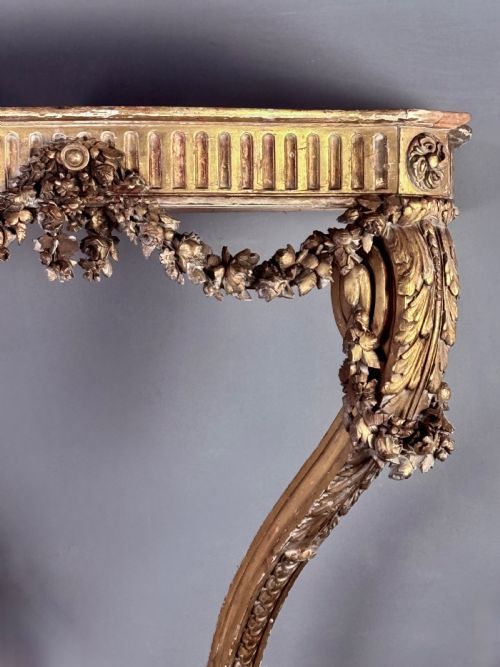
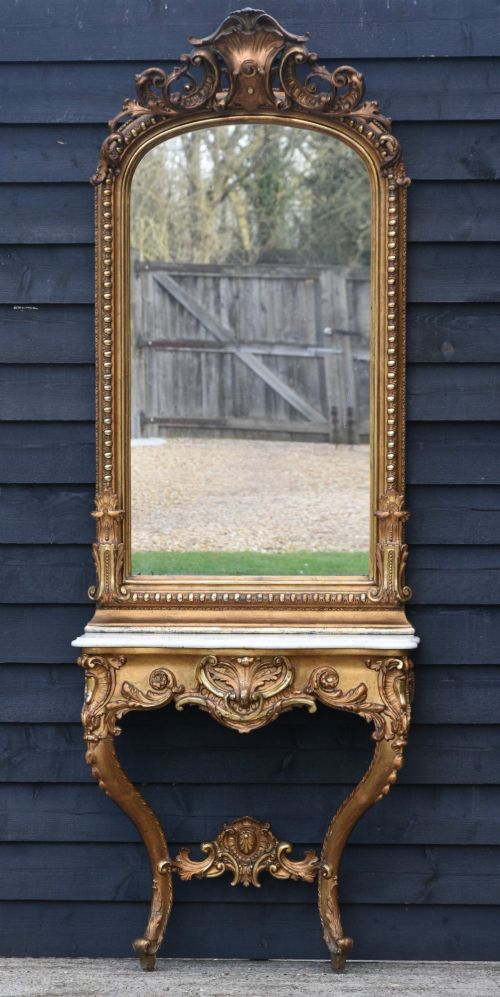
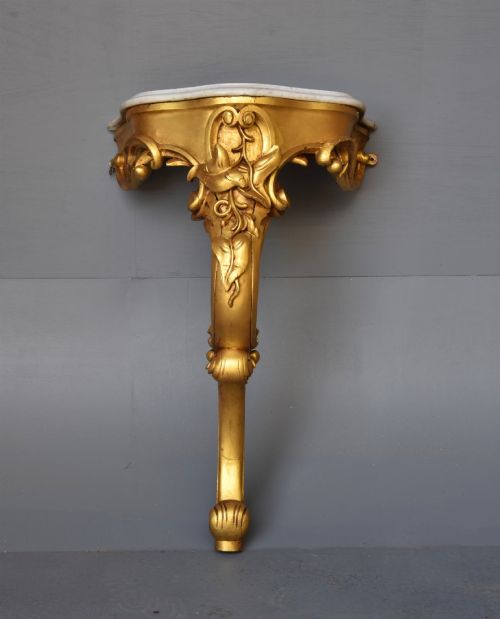
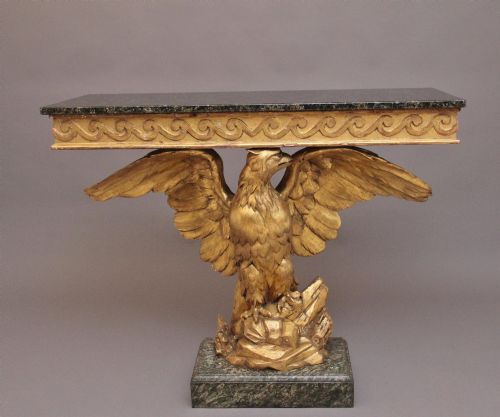
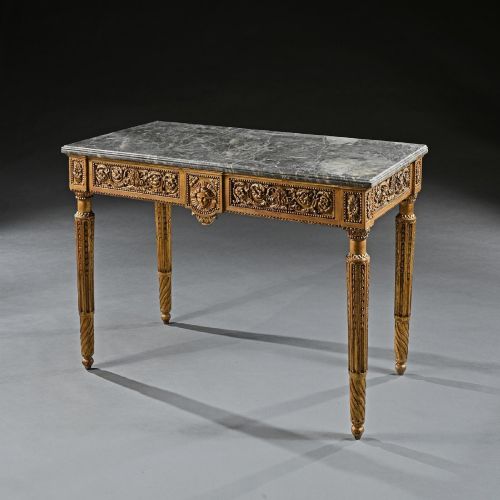
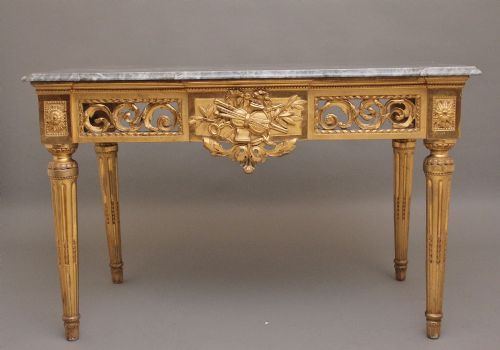
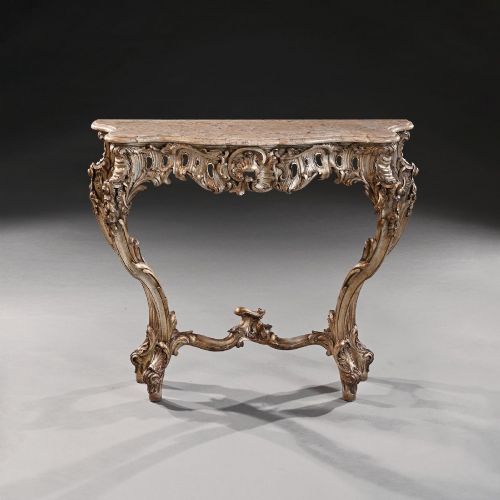
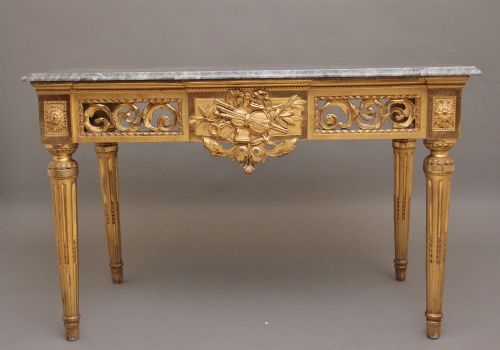
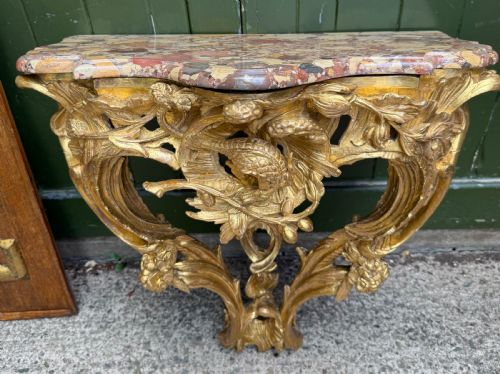
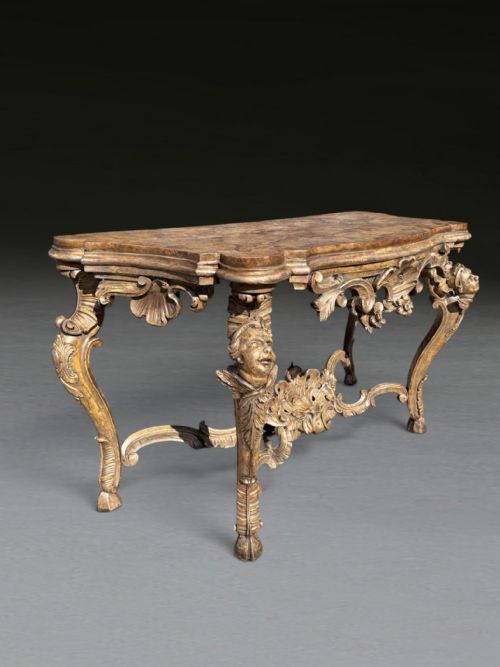
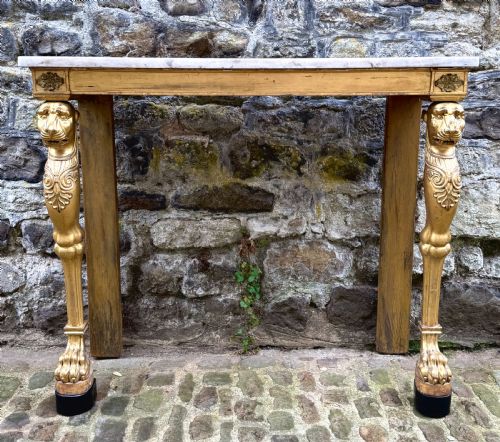
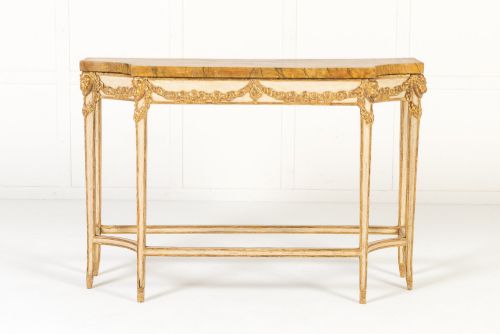
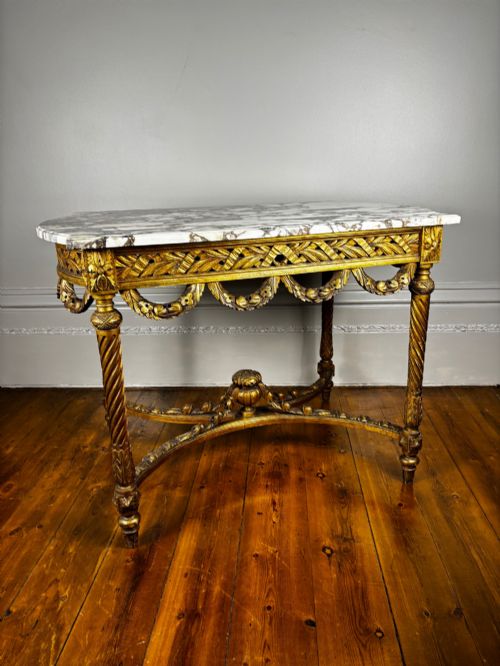
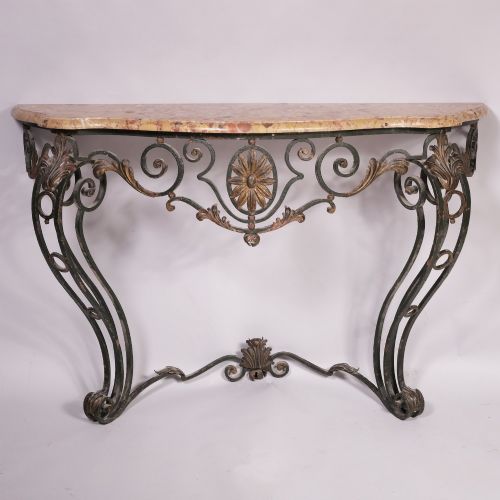
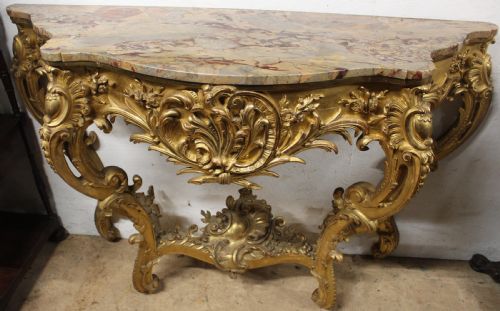
A gilt pier table marble combines a heavy stone slab surface with a heavily gilded wooden base designed to stand flush against a wall, frequently positioned beneath a tall mirror. The pieces available span the eighteenth, nineteenth, and early twentieth centuries, drawing heavily on French and Italian neoclassical, baroque, and rococo vocabularies.
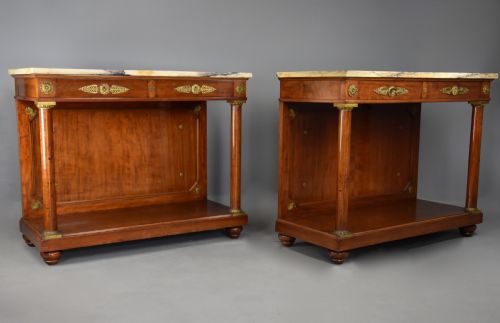
Console tables and console table-and-mirror sets dominate the forms, alongside occasional side tables and centre tables. Proportions range from small, compact examples to monumental pairs supported by carved animal paws or intricate scrolling foliage.
How they were made
Makers shaped the structural framework from timber such as oak, walnut, or pine, applying gesso layers to smooth the surface before laying gold leaf or paint. Ormolu mounts and applied giltwood details enrich the carved surfaces.
The heavy tabletops utilise various marbles, including breccia, sienna, rouge, and figured breche d'alep, cut and polished to a smooth finish that sits directly upon the frame.
Listings feature eighteenth and nineteenth-century Italian and French regional works utilising carved giltwood, gesso, and diverse marbles.
What varies in quality
The depth and crispness of the wood carving dictate the visual power of the base, distinguishing hand-chiselled acanthus leaves and figurative elements from softer, more repetitive moulded decoration. Original gilding shows varied patination, where the burnished gold interacts with the exposed red bole underneath over centuries of gentle wear.
The choice and thickness of the marble slab elevate the stature of the piece, particularly where natural mineral veining aligns with the formality of the architectural style.
Felix-Alfred Ternisien·Krieger Paris
The Gilt Pier Table Marble Glossary
- Giltwood
- Timber coated with gold leaf over a prepared gesso ground. This technique creates a brilliant reflective surface that catches interior candlelight or daylight.
- Console table
- A wall table supported by console brackets or legs rather than four independent vertical posts. These tables rely on the wall for absolute stability.
- Pier table
- A table specifically designed to stand against the wall space between two windows. They are frequently paired with a matching wall mirror above.
- Breccia marble
- A composite stone made of broken angular fragments cemented together in a fine-grained matrix. It produces striking multicolored patterns across the tabletop.
Gilt Pier Table Marble: Frequently Asked Questions
Where should I place a gilt pier table marble?
These tables belong flat against a wall, traditionally positioned in the narrow space between two tall windows or beneath a large hanging mirror. Their flat backs require wall anchoring for complete stability due to the heavy stone slab resting on top.
Placing them in a hallway, drawing room, or formal dining space allows the reflective gilded frame and polished stone to catch natural light effectively.
How do I care for the marble top?
Polished stone surfaces require simple dusting with a soft, dry cloth and immediate blotting of any liquid spills to prevent staining. Avoid acidic cleaners or household detergents that can etch the polished surface of the marble.
Applying a specialist stone wax periodically helps protect the top from everyday wear while maintaining its subtle sheen.
How can I tell the period of the gilding?
Earlier eighteenth and nineteenth-century pieces display a thin layer of gold leaf applied over a reddish clay base called bole, which gradually shows through as the metal thins. Hand-applied gilding carries subtle tool marks and natural variations in texture.
Later revival pieces from the early twentieth century often present a more uniform metallic application and cleaner underlying preparation layers.
Are these tables freestanding?
Traditional console and pier tables are designed to lean or attach securely against a vertical wall surface. Many historical examples feature only front legs, relying on wall brackets or structural fixings to remain upright safely.
Centre tables differ by featuring four fully finished sides and freestanding legs intended for the middle of a room.