






Gilt Phoenix Mirror
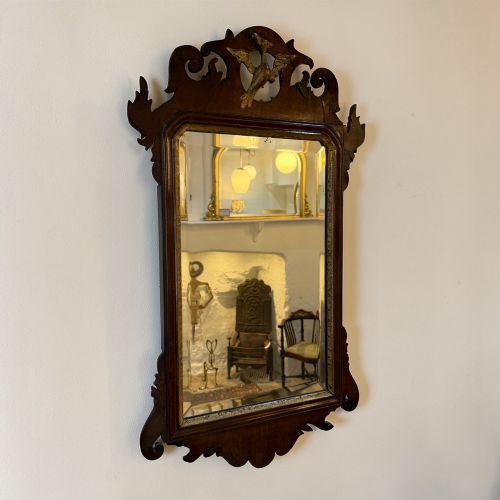
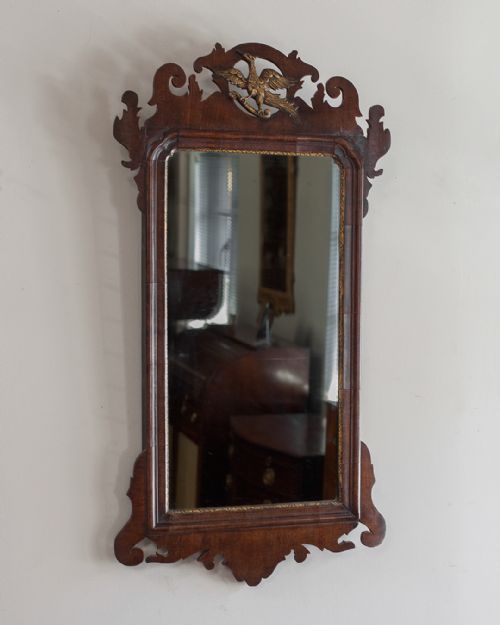
A gilt phoenix mirror brings brilliant crests and carved mahogany into a room, offering the classic elegance of Georgian and Regency craftsmanship.
Gilt Phoenix Mirror
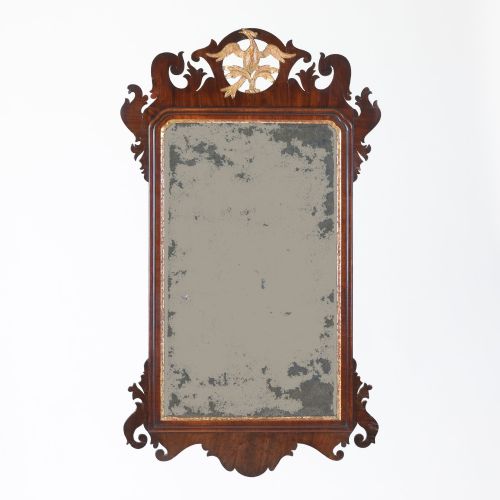
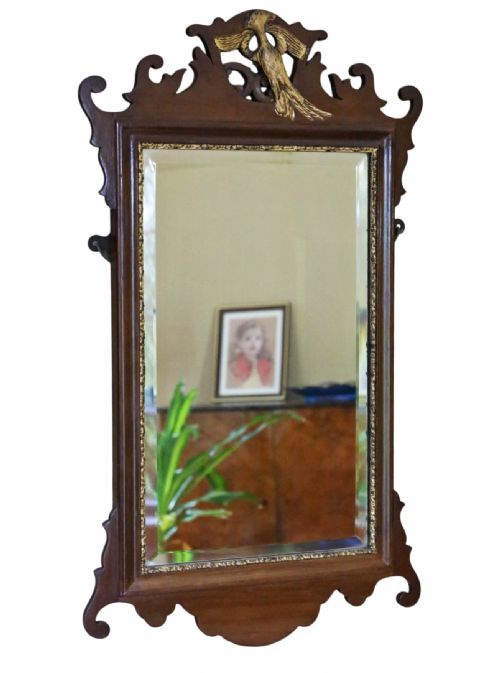
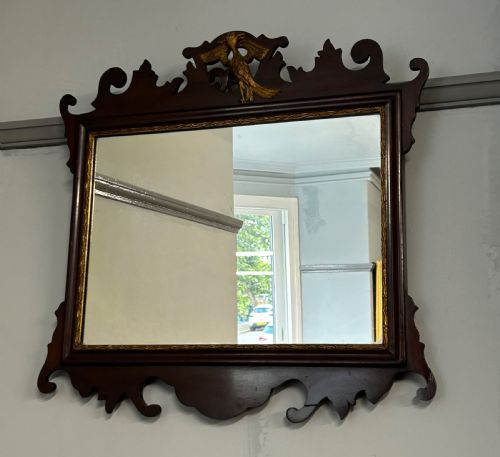
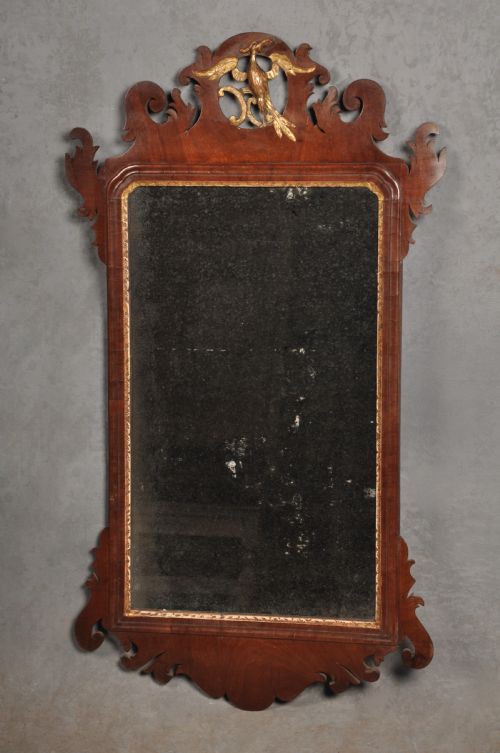
A gilt phoenix mirror stands out through its distinct fret-cut wooden frame and the carved bird ornament perched upon its crest. These wall mirrors draw on Georgian, Regency, and Victorian traditions, using walnut, mahogany, and giltwood to create striking vertical forms.
The version most commonly met on this page combines a fret-cut mahogany or walnut plate with a gilded bird, often called a ho-ho bird, at the top. Pieces range from the eighteenth century to later revivals, keeping the classic proportions and bevel-edged glass alive in historic interiors.
How they were made
Carvers shaped mahogany and walnut boards using fretsaws to produce intricate openwork frames with scrolled outlines. Craftsmen then applied gesso layers to carved wooden crests before laying down gold leaf to create the bright metallic finish on the bird motif.
Makers set glass plates into the rebated backs of the wooden frames, sometimes utilising Vauxhall mirror plates with distinct bevels. Paint accents and water gilding completed the surfaces, marrying dark timber grains with reflective glass and brilliant gold.
Every single phoenix manages to look remarkably unimpressed while perched atop centuries of fine mahogany.
What varies in quality
The crispness of the fret-cut outline and the depth of the carving determine the refinement of the piece. Superior examples show confident handling in the feathers of the phoenix and sharp corners along the scrolled mahogany borders.
The harmony between the gilded crest and the wooden body dictates the visual balance of the mirror. Better workshops achieved a seamless transition where the gold leaf and the dark timber complement one another without losing fine architectural detail.
The Gilt Phoenix Mirror Glossary
- Giltwood
- Timber coated with gold leaf over a prepared gesso ground. This technique provides the bright metallic finish seen on the crests.
- Fret-cut
- Wood pierced and shaped with a fine saw to create geometric or scrolled openwork patterns. It defines the silhouette of the frame.
- Vauxhall mirror
- A plate featuring a distinctive bevelled edge. These historic glasses reflect the high standards of early English mirror production.
- Gesso
- A plaster mixture applied to wood surfaces as a smooth base for gilding. It allows carvers to crisp up fine details before applying gold leaf.
- Ho-ho bird
- A stylized Chinese phoenix adapted in eighteenth-century British design. It forms the classic gilded crest perched atop the mirror frame.
Gilt Phoenix Mirror: Frequently Asked Questions
What is a gilt phoenix mirror?
A gilt phoenix mirror is a decorative wall hanging featuring a wooden fret-cut frame and a gilded bird crest at the top. These pieces date from the eighteenth century onwards and utilise materials like mahogany, walnut, and gold leaf.
Craftsmen designed them to hang above mantelpieces or console tables in principal rooms, combining dark timber tones with reflective glass and bright metallic highlights.
How were these mirrors used historically?
These mirrors served both as functional looking glasses and as important decorative statements in Georgian and Regency interiors. Their reflective plates bounced candlelight around panelled rooms while the carved frames displayed the owner's taste.
Placing them between windows or above fireplaces maximised the available light and created a sense of expanded space in reception rooms.
How do I live with a gilt phoenix mirror?
Hang the mirror securely on a solid wall using appropriate fixings to support the weight of the timber and glass frame. Position it away from direct sunlight and damp conditions to protect the historic gold leaf and wood.
Pair the piece with traditional furniture such as console tables or chests of drawers to echo the historic proportions and warmth of the mahogany and walnut.
How do I tell periods apart?
Eighteenth-century examples display authentic hand-cut fretwork and aged timber surfaces with period construction methods. Later revival pieces from the nineteenth and twentieth centuries often feature machine precision or different secondary woods.
Examining the backboards, fixings, and the wear on the gilt gesso helps distinguish the original Georgian items from later Victorian and Edwardian interpretations.