

Gilt Overmantle
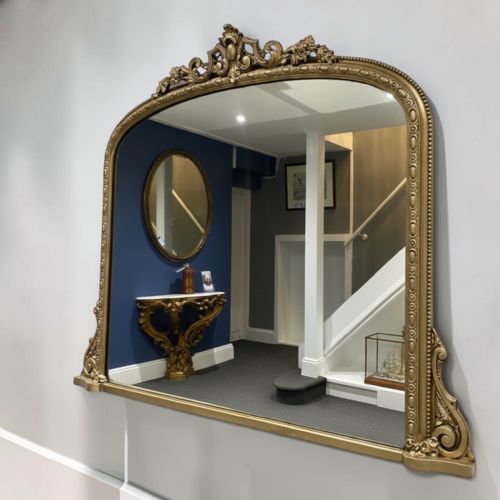
When you search for a gilt overmantle, you are looking at large, gold-finished mirrors designed to sit above a fireplace.
Gilt Overmantle
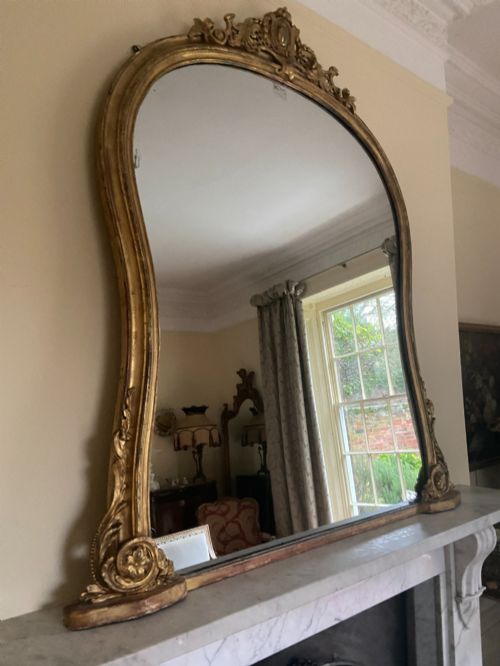
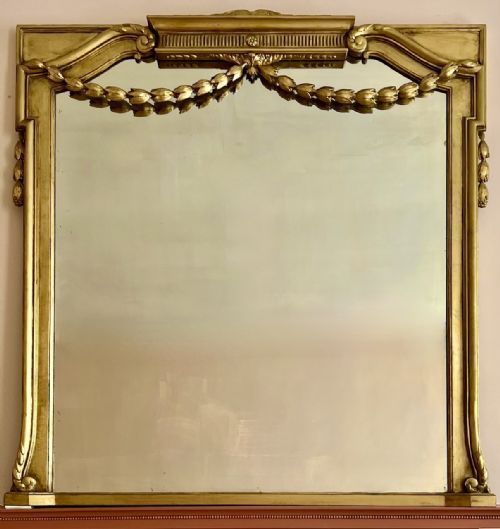
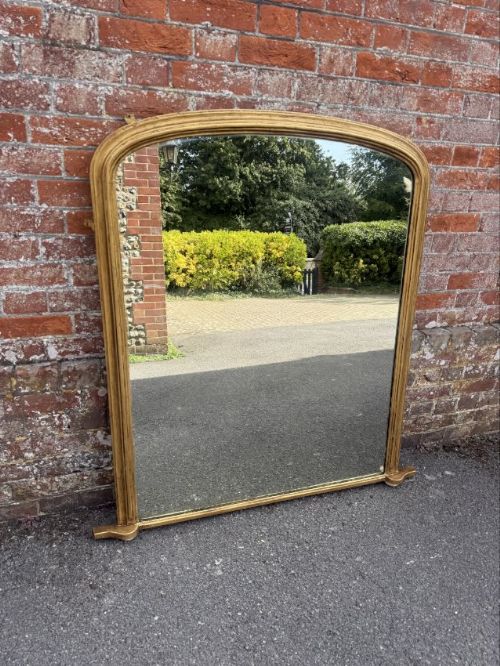
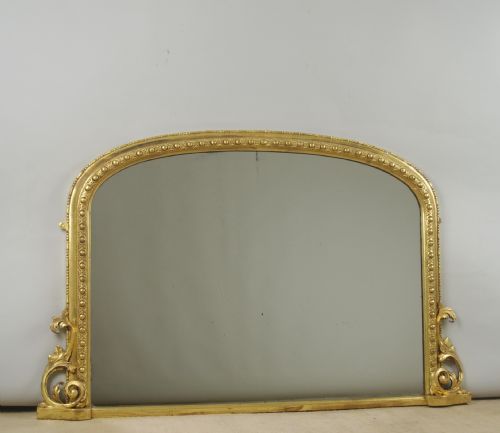
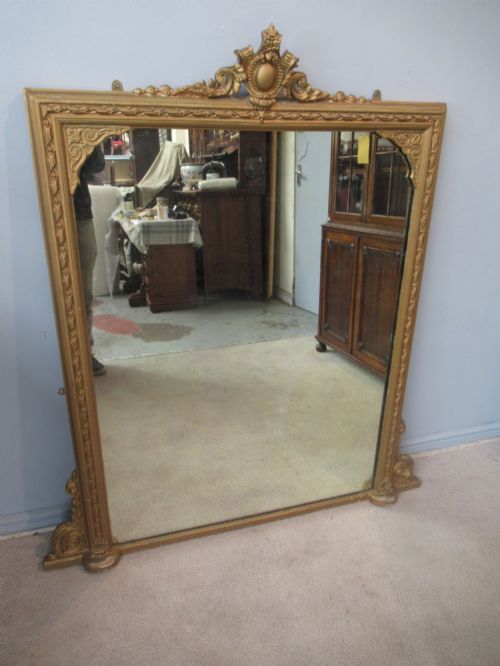
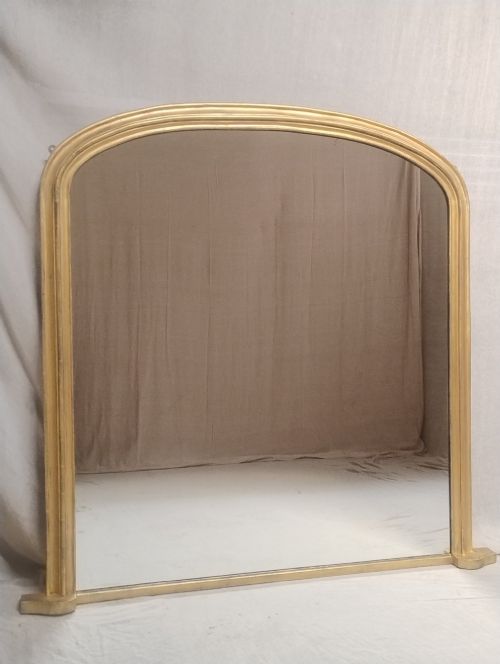
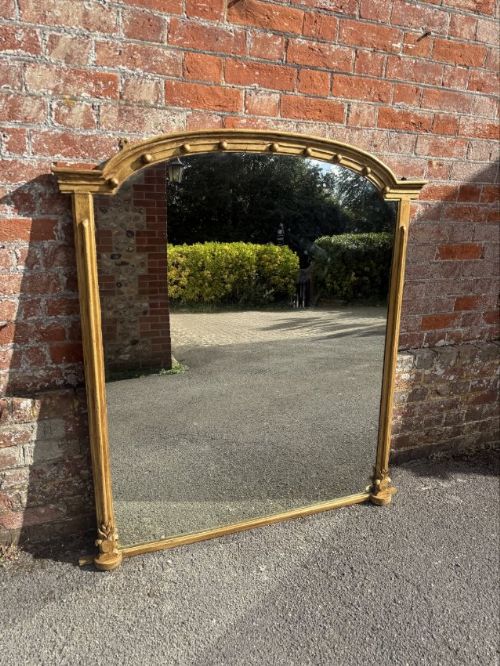
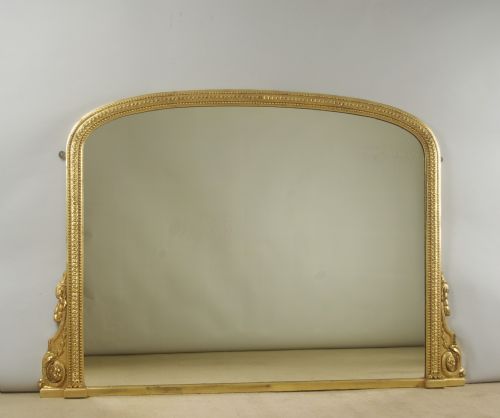
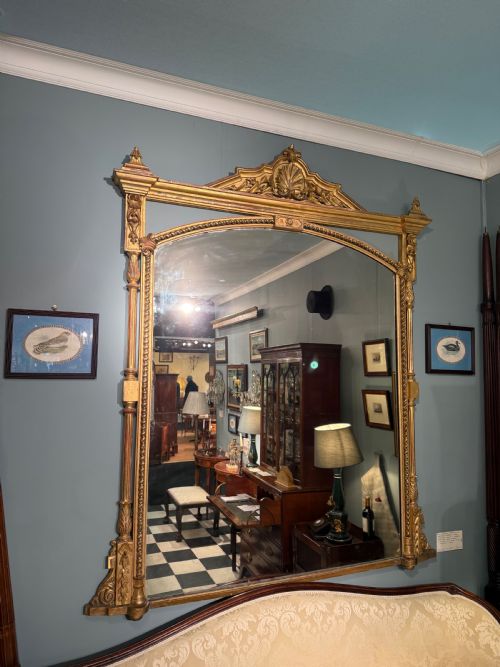
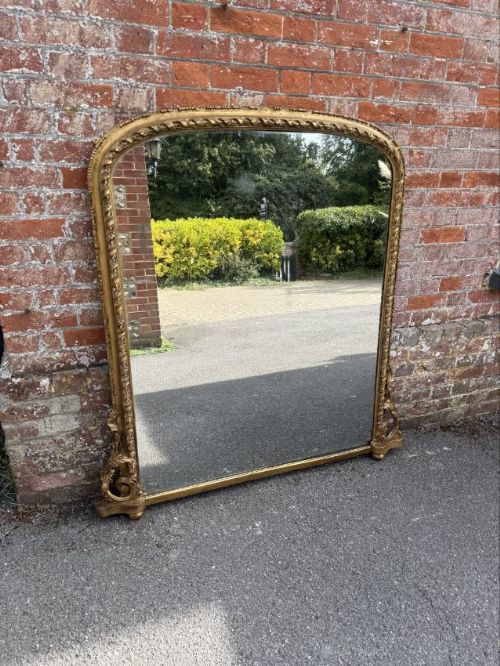
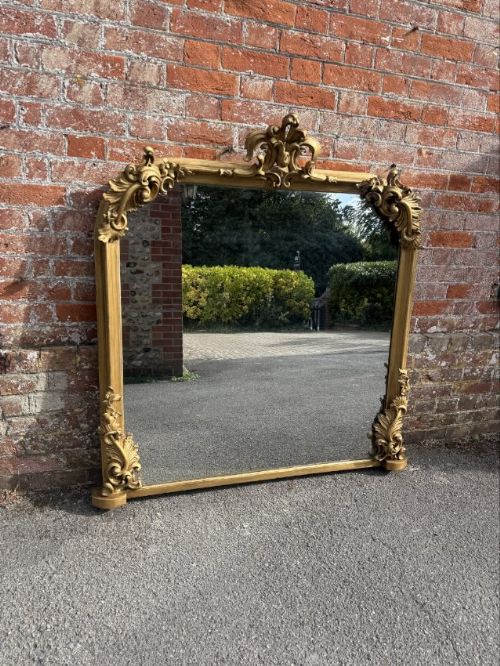
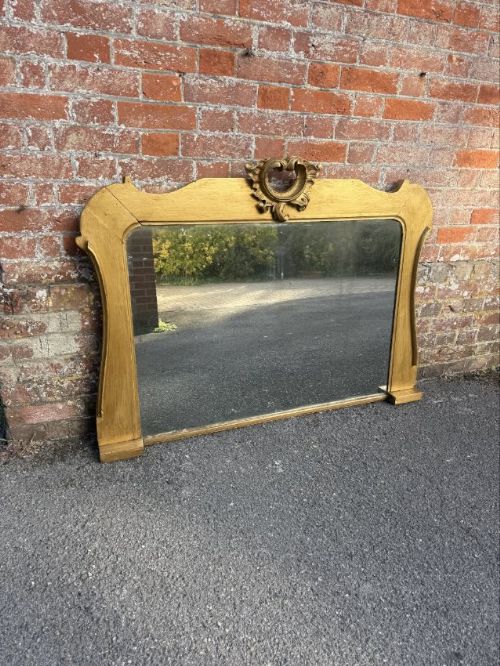
A gilt overmantle is a large mirror built to occupy the expansive wall space directly above a fireplace mantel. The pieces available here span the nineteenth century, including Victorian examples alongside earlier Regency and French influences.
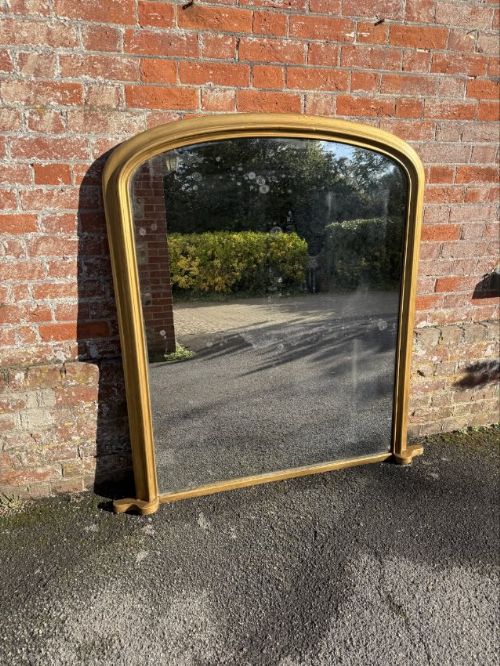
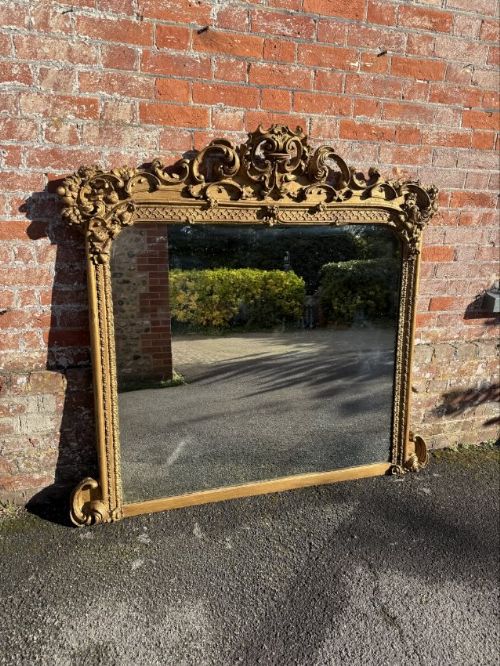
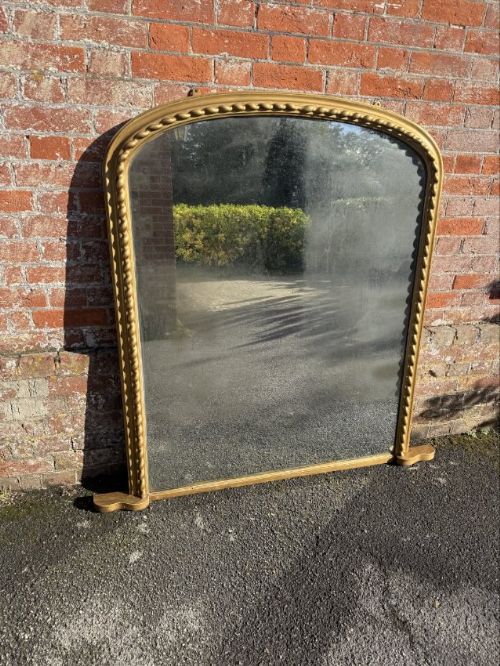
Most entries follow traditional formats, such as arched tops and rectangular frames designed to draw the eye upward in a drawing room or parlour. Variations range from plain moulded surrounds to ornate interpretations incorporating rope twists, columns, and floral motifs.
How they were made
Makers constructed the primary framework using solid timber before applying layers of gesso to build up intricate surface details and mouldings. Artisans then applied gold leaf or gilding over the prepared surface to achieve the characteristic metallic sheen.
Mirror glass of the period was set within these heavy wooden carcases, often secured at the rear with traditional timber backing boards. Relief ornaments on the frames typically combined carved wood elements with moulded composition details.
Gilt Overmantle Retail Price Guide 2026
Typical asking prices for gilt overmantle among the pieces listed under this phrase on Sellingantiques today, from the lower quarter to the upper quarter. They describe what is for sale here now, not the wider market.
Several mirrors include rope twist frames that bring a subtle nautical flavour to the drawing room.
What varies in quality
Quality rests in the crispness of the carved details and the depth of the gesso mouldings rather than simple scale. Finer examples display sharp definition in rope twists, floral frames, and architectural columns without softening from successive layers of later touch-ups.
The integrity of the original mercury or silvered mirror glass also dictates the standing of a piece, alongside the preservation of the underlying gilt surface. Heavier timber construction and clean joinery separate standard production items from more ambitious workshops.
The Gilt Overmantle Glossary
- Gesso
- A plaster-like mixture applied to wood frames to create a smooth surface for gilding. It is often moulded into relief decoration before the gold leaf is laid down.
- Giltwood
- Timber that has been coated with gold leaf or metallic powder. This material forms the primary structure of traditional ornamental frames.
- Overmantel
- A large mirror or painting designed specifically to hang on the wall above a mantelpiece. The terms overmantle and overmantel are used interchangeably in trade descriptions.
- Composition
- A moulded mixture of whiting, resin, glue, and linseed oil pressed into decorative shapes. It is used alongside carved wood to ornament picture and mirror frames.
- Rope twist
- A carved or moulded decorative pattern resembling twisted rope. It frequently appears as a border motif on nineteenth-century mirror frames.
Gilt Overmantle: Frequently Asked Questions
Where should I hang a gilt overmantle?
These mirrors were originally scaled to anchor the space above a living room fireplace, where they reflect light and room proportions. They also function effectively along large expanses of hallway or dining room wall.
Because of their substantial weight and size, they require secure wall fixings tied directly into masonry or structural studs rather than standard plasterboard hooks.
What is the difference between Victorian and Regency styles?
Regency frames often lean towards classical restraint, featuring clean architectural lines, bolder mouldings, and neoclassical motifs. Victorian examples tend to be more exuberant, embracing ornate floral carvings, arched tops, and revival styles.
Both periods utilise heavy timber and gesso construction, but the decorative vocabulary on the surface shifts from severe symmetry to richer ornamentation.
Why do antique mirrors have dark spots?
Ageing mirror plates often develop foxing, which appears as small dark spots or cloudy patches where the backing silvering has oxidized over decades. This natural patina confirms the age of the glass and does not detract from the decorative character of the piece.
Replacement glass is uncommon in untouched pieces, as collectors generally prefer original plates with signs of historical wear.