

Gilt Mirrored Wall Sconces
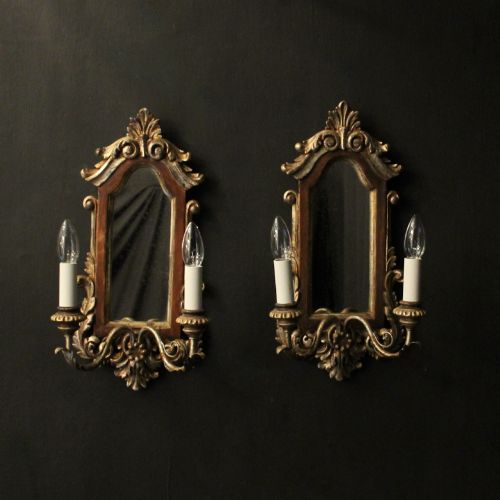
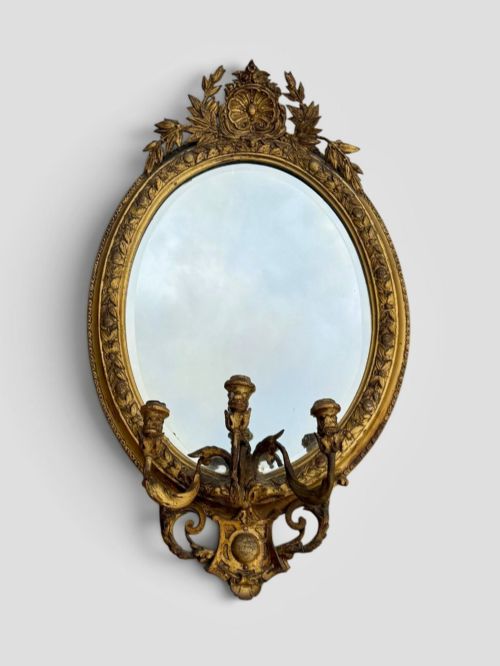
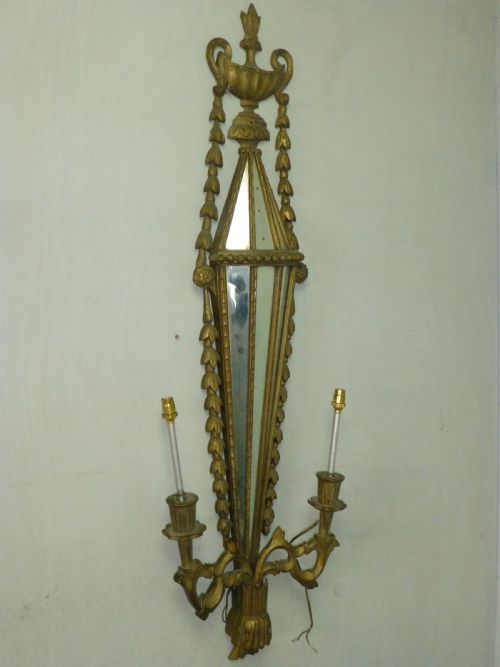
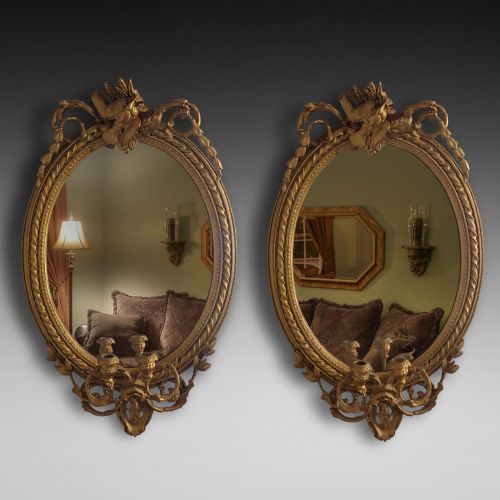
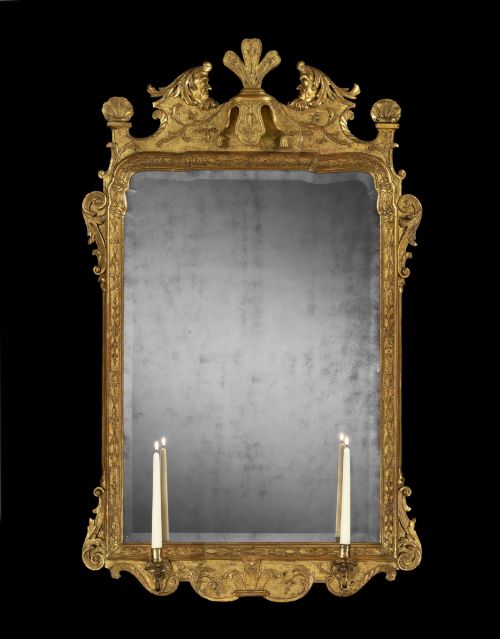
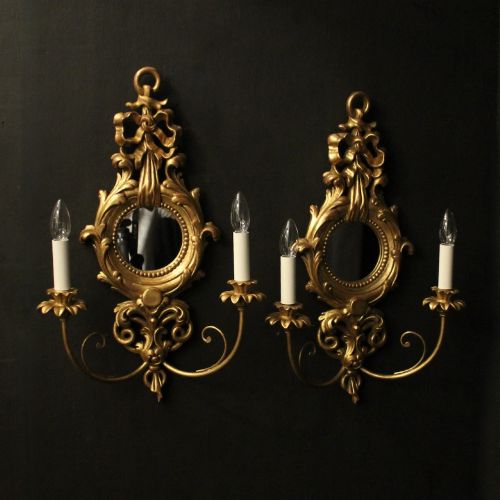
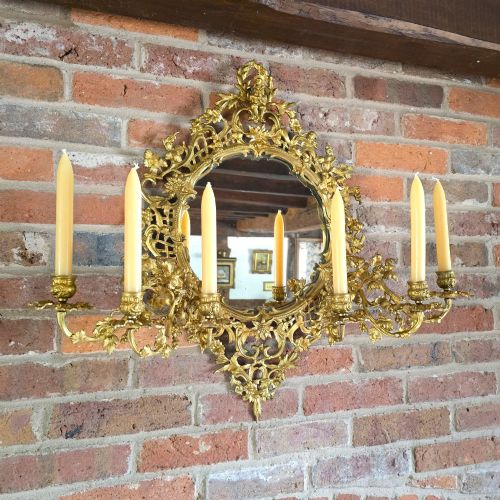
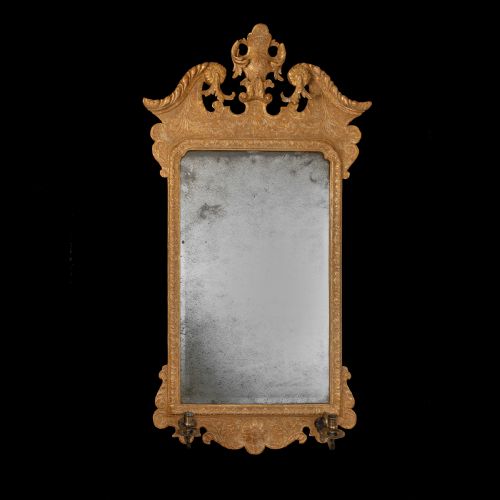
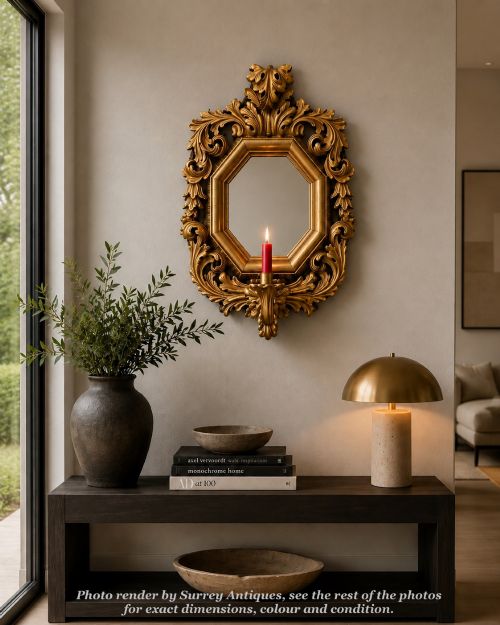
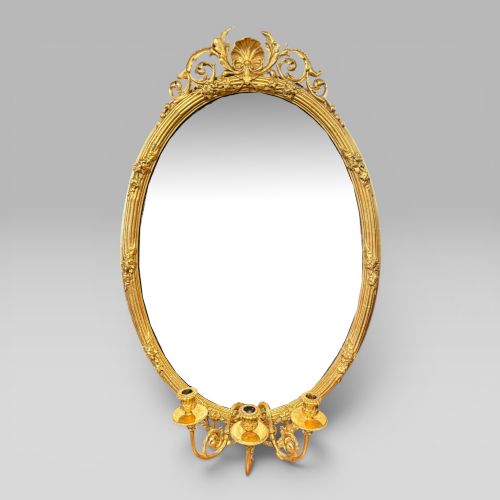
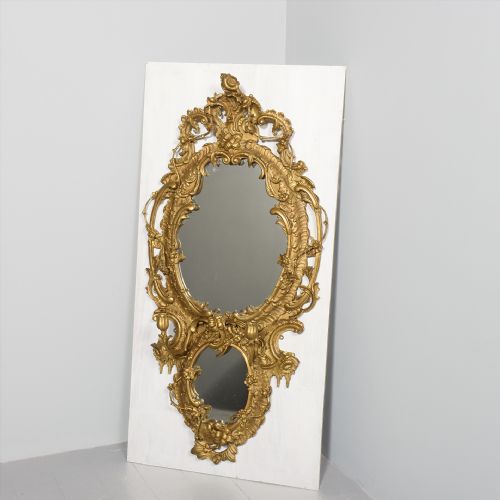
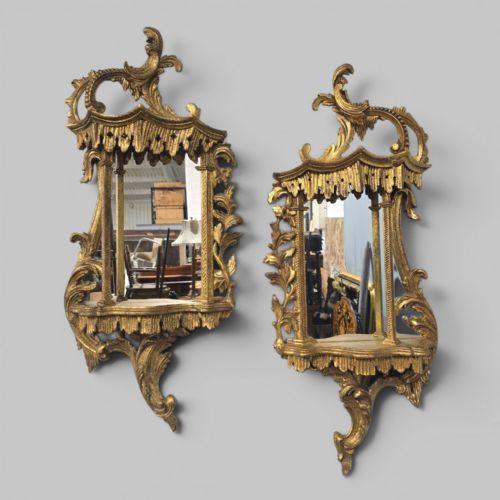
These gilt mirrored wall sconces catch and throw candlelight across a room, combining reflective glass with carved timber or metal frames.
Gilt Mirrored Wall Sconces
When you search for gilt mirrored wall sconces, you encounter pieces designed to multiply ambient light in darker domestic spaces. The selection spans the eighteenth century up through the nineteen-twenties, incorporating Georgian, Regency, Victorian, and later revival movements.
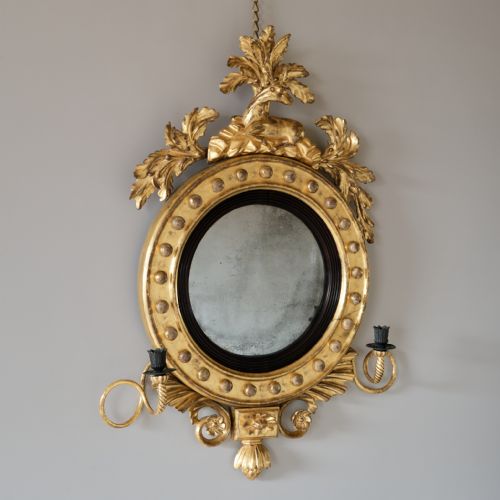
You meet Georgian and Regency examples alongside Victorian and later interpretations on this page. Forms range from girandoles with integral candle arms to convex mirrors and wall display brackets.
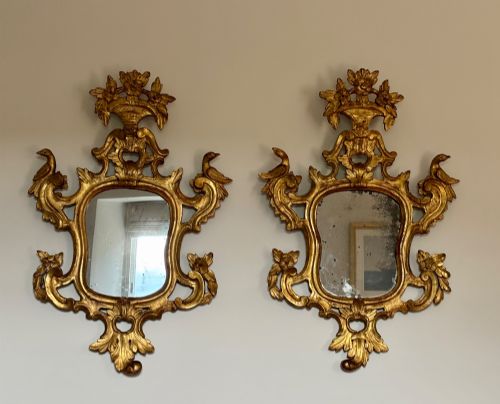
The origins stretch across English, French, and Italian workshops. Many survive in pairs, designed to flank a chimney piece or a pier glass.
Materials and construction
Makers shaped these pieces from timber such as pine or hardwood, applying layers of gesso to build up high-relief ornament. Artisans then laid gold leaf over the prepared surfaces or applied gilt paint.
Glass plates, occasionally showing original foxing, sit within rabbets at the back of the frames. Metal elements, including brass or ormolu, provide structural support for candle branches on girandole models.
The listings span the eighteenth to the twentieth centuries, featuring materials from gesso and giltwood to brass and ormolu.
Judging quality in gilded mirrors
The depth and crispness of the carving distinguish finer examples from massed production. Hand-chased gesso work retains sharp undercut details where machine-moulded composition ornament tends to soften.
The preservation of the original gilding alters the character of a piece. Traces of burnished gold over red bole show skilled historic craft, whereas modern over-painting flattens the texture.
Benjamin Goodison
The Gilt Mirrored Wall Sconces Glossary
- Girandole
- A decorative wall mirror fitted with candle branches or sconces. These arms allow the glass plate to reflect flickering candlelight.
- Gesso
- A mixture of chalk, gypsum, and size used to coat timber frames. It provides a smooth surface for subsequent gilding.
- Convex mirror
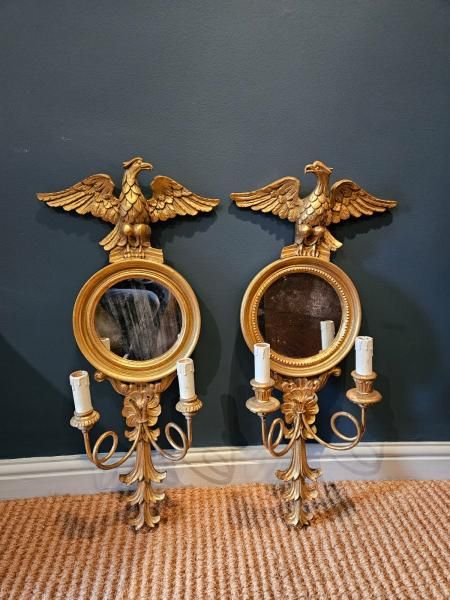
- A round mirror with a bulging glass plate that offers a wide-angled reflection of the interior. They often feature eagle crests and ball-stud bezels.
- Foxing
- Age-related spots and discoloration within the silver backing of mirror glass. This chemical change produces characteristic dark patches.
- Cartouche
- An ornamental frame resembling a scroll or rolled-up paper, often found on Italian Rococo mirrors. The shape provides an asymmetrical backdrop for the glass.
Gilt Mirrored Wall Sconces: Frequently Asked Questions
How do I hang a heavy antique girandole?
These frames require secure wall fixings distributed across the weight-bearing points of the timber structure. Heavy pieces need professional bracket support rather than simple picture wire.
Sconces with protruding candle arms demand careful clearance from passing foot traffic. Position them at eye level to maximise their reflective capacity.
Are the mirror plates original?
Older mirrors often display distortion, minor scratches, and foxing across the glass surface. These traits indicate age and help distinguish historic plates from modern replacements.
Replacement glass appears flatter and clearer. Inspect the bevel edges and backing paint to determine the likely period of the plate.
How do I clean gilded surfaces safely?
Dust these frames gently with a dry, soft brush to remove surface particles. Avoid liquid cleaners, water, and chemical polishes that strip fragile gold leaf.
Glass plates tolerate standard glass cleaner applied to a cloth rather than sprayed directly. Keep moisture away from the gesso edges.
What is the difference between a girandole and a sconce?
A girandole specifically combines a mirror with candle holders attached to the frame. A wall sconce or wall light may feature a mirror backplate but focuses primarily on illumination.
Both forms served similar decorative functions in period drawing rooms. The terminology often overlaps in historic inventory records.
How do I tell Regency style from Victorian revival?
Regency frames favour classical restraint, featuring convex round glasses, reeded bezels, and classical motifs like eagles or acanthus leaves. Victorian pieces lean towards heavier Rococo revival scrolls and ornate cartouches.
Examining the construction joints and backboards clarifies the period. Eighteenth and early nineteenth-century pieces show hand-cut timber joinery.