
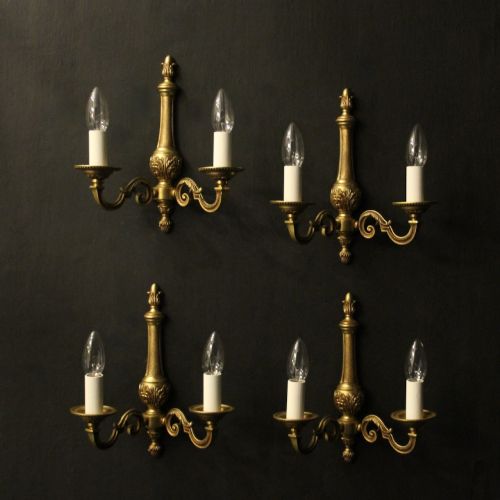
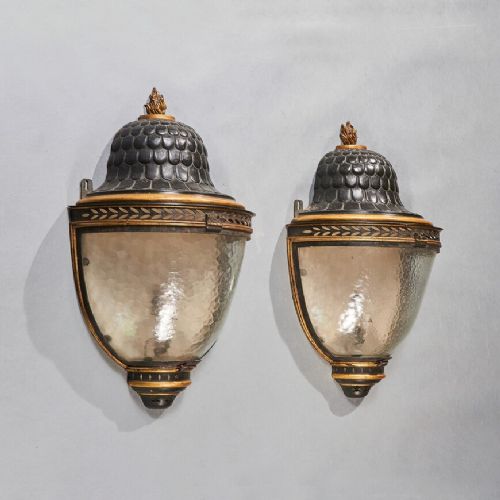
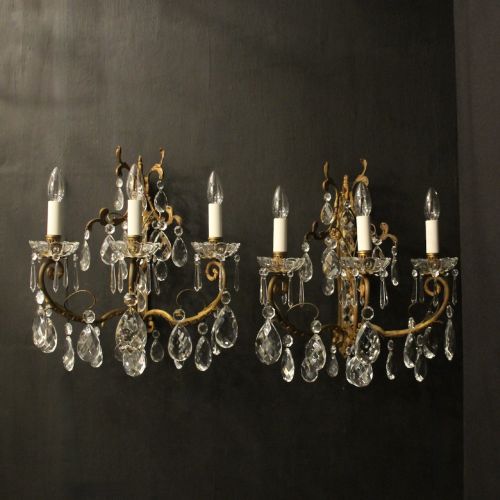
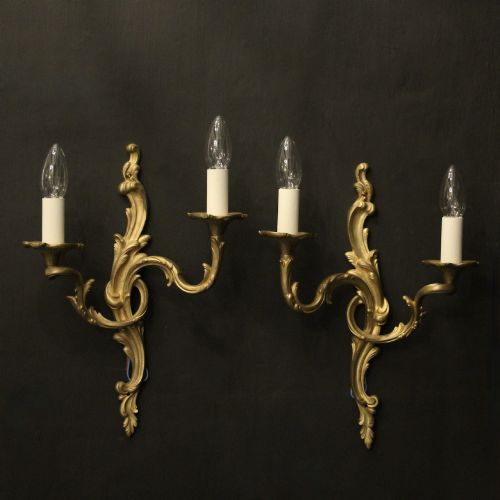


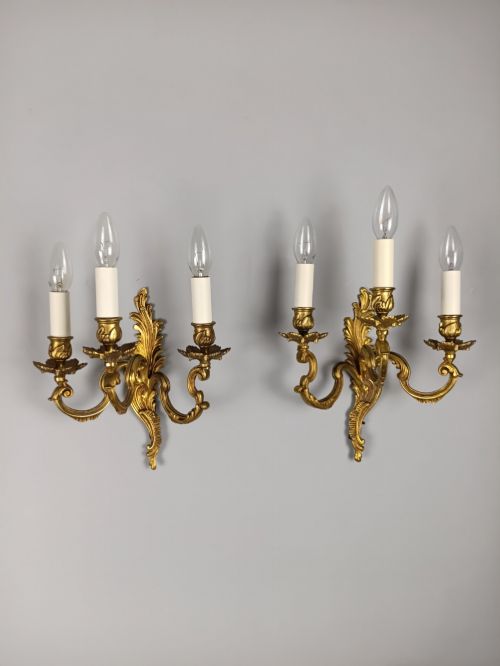
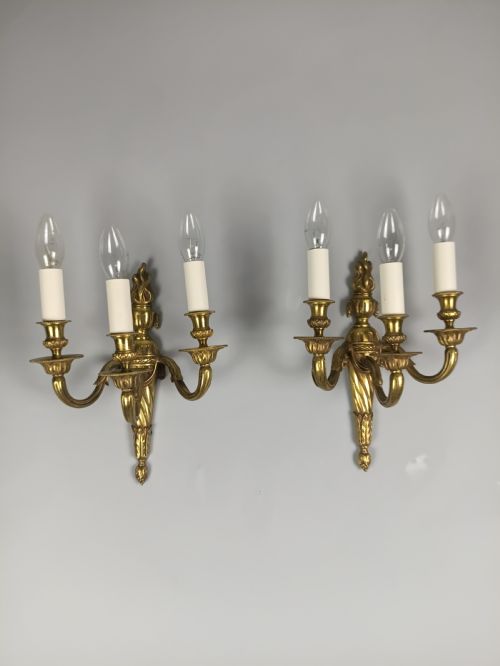
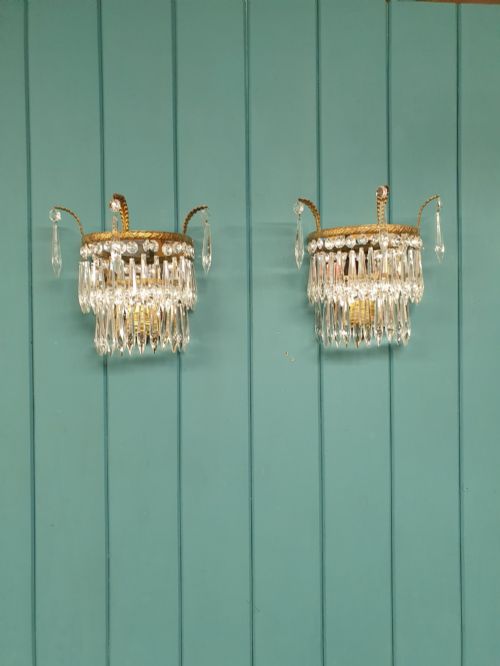
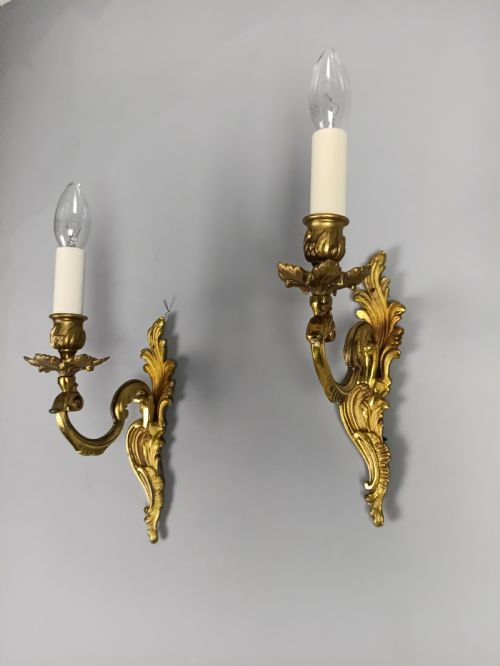
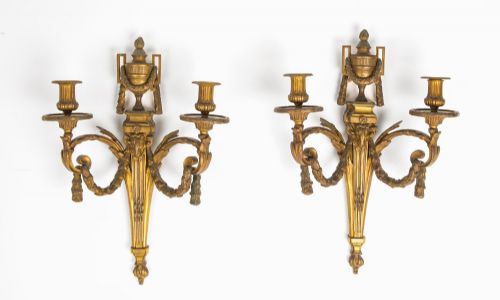

Gilt Metal Sconce Pair
A gilt metal sconce pair brings mirrored warmth and layered illumination to a room, drawing the eye upwards with period detail.
Gilt Metal Sconce Pair
A gilt metal sconce pair consists of matching wall-mounted light fixtures or candleholders designed to frame a mirror, fireplace, or architectural feature. When searching this phrase, a buyer encounters wall lights, girandoles, and candle-form brackets originating primarily from French and Italian workshops.
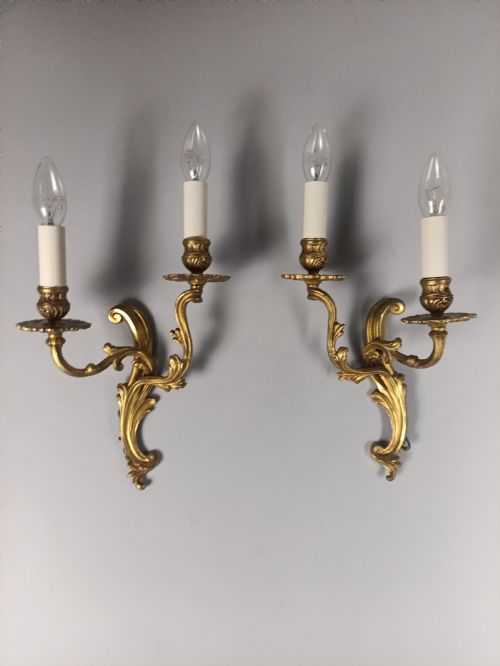
The most common versions on this page date from the early twentieth century and the nineteenth century, reflecting styles such as French Rococo, Louis XVI, and Regency. These fixtures utilise multiple arms, cast brass, and gilded bronze to project ambient light across a space.
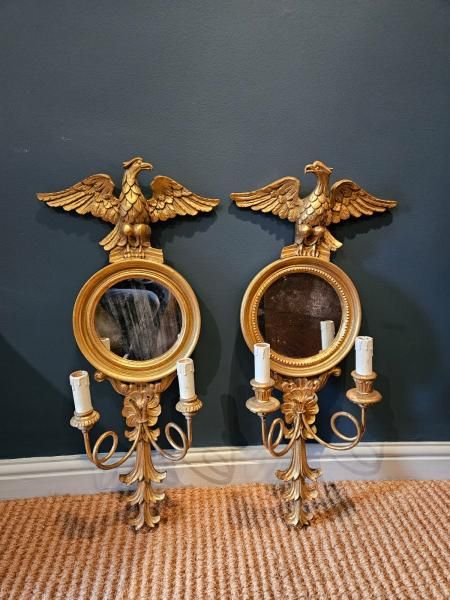
Beyond standard double or triple-arm wall lights, the category encompasses mirror-backed sconces and toleware variations that combine painted elements with metallic finishes. Each pair demonstrates the historical preference for symmetrical illumination in domestic interiors.
How they were made
Makers shaped these fixtures using cast brass, gilt bronze, and ormolu, employing metalworking techniques that allowed for intricate sculptural forms. Surface gilding was applied to base metals to create a lustrous finish that caught and reflected candlelight or early electric illumination.
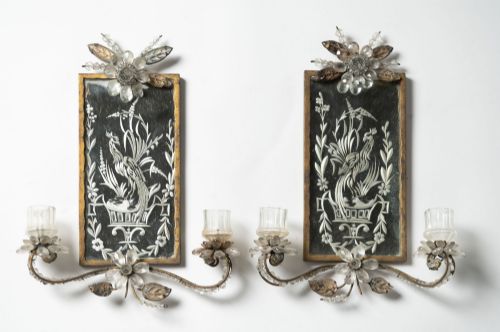
Many examples incorporate glass, crystal, or cut glass elements alongside gilt metal frames to enhance light dispersion. Toleware and polychrome painted details also appear, combining metal shaping with hand-painted surfaces in select French and Italian designs.
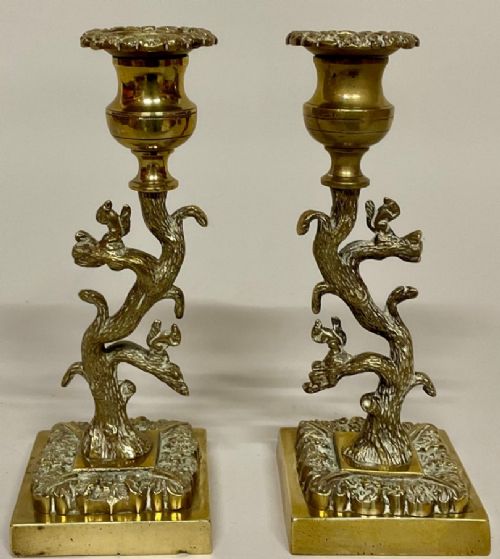
Squirrels occasionally peek out from gilt bronze tree branches, reminding us that early lighting makers enjoyed a touch of whimsy.
What varies in quality
Quality in these pieces rests upon the crispness of the casting and the depth of the metalwork. Sconces featuring sharply defined motifs such as ram's head masks, sculptural foliage, or cherubs demonstrate superior craftsmanship compared to softer, more generalised casts.
The finish of the gilt metal further distinguishes the tier of a piece. Hand-chased details on gilt bronze and ormolu show a level of artisan involvement that elevates the object above standard mass-produced brass alternatives.
Maison Baguès
The Gilt Metal Sconce Pair Glossary
- Ormolu
- Finely ground high-carat gold applied to a bronze base through a mercury amalgamation process. This historic technique produced a rich, durable golden surface seen on high-end nineteenth-century fixtures.
- Girandole
- An ornamental wall-mounted branching candlestick or light fixture incorporating a mirror backplate. The reflective glass amplified the flickering glow of the candles.
- Campana
- A bell-shaped urn or socket form frequently found on the top or drip pans of candlesticks and sconces. This classical silhouette derives from ancient Roman bronze vessels.
- Rococo
- An ornate design style characterised by asymmetrical scrolls, C-curves, and naturalistic shell motifs. It heavily influenced French wall light forms during the eighteenth and nineteenth centuries.
Gilt Metal Sconce Pair: Frequently Asked Questions
How were sconces used historically?
Wall lights and sconces were positioned in pairs to flank architectural focal points like fireplaces, doorways, and large mirrors. Their primary function was to multiply available light by reflecting flames off polished metal and glass surfaces.
In grand interiors, they supplemented central chandeliers and helped illuminate darker corners of reception rooms. Candlelight from these brackets created intimate pools of light before the advent of electricity.
Are these wired for electricity?
Many surviving examples have been adapted for modern electrical wiring over the course of their long lives. Some retain original candle-form dummy tubes, while others show evidence of multiple conversions.
Buyers should inspect the internal wiring setup of any historic wall light upon arrival. Professional rewiring ensures safety while preserving the structural integrity of the metal arms.
How do I date a sconce pair?
Dating relies on stylistic markers, casting techniques, and material composition. Pieces exhibiting strict symmetry and classical revival details often point to the nineteenth century, while lighter, more whimsical forms frequently date to the early twentieth century.
Backplates, screw types, and mounting brackets also offer clues to the manufacturing era. Comparing the weight and patina helps differentiate nineteenth-century work from later revivals.
How do I clean gilt metal?
Historic gilt surfaces require gentle maintenance to preserve the underlying metal and gold leaf. Dusting with a soft, dry brush prevents particulate buildup without abrasive friction.
Harsh chemical polishes must be avoided entirely, as they strip away thin layers of gilding. Light wiping with a damp microfiber cloth is usually sufficient for routine care.