

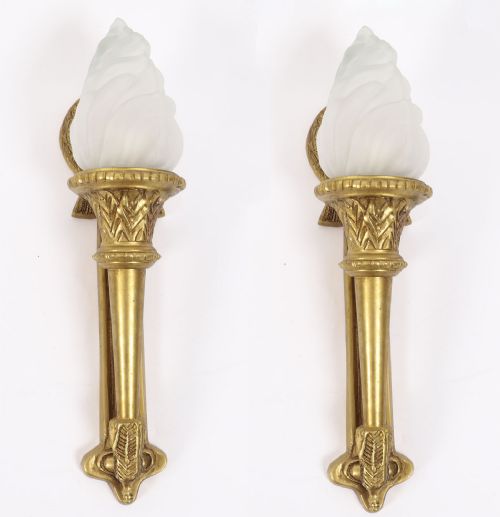


Classical Leaf Wall Light
These classical leaf wall light fixtures bring historical illumination and ornate natural motifs into a room, offering both decorative presence and warm ambient light.
Classical Leaf Wall Light
A classical leaf wall light is a fixture designed to mount onto a wall, typically featuring decorative foliage patterns derived from historical motifs. When searching for a classical leaf wall light, buyers encounter pieces originating primarily from the 19th century and the 1920 to 1930 period.
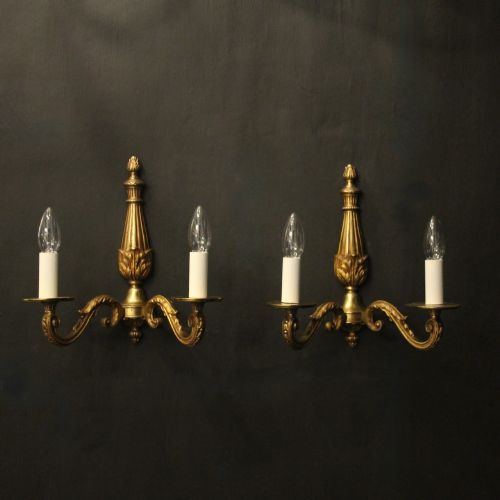
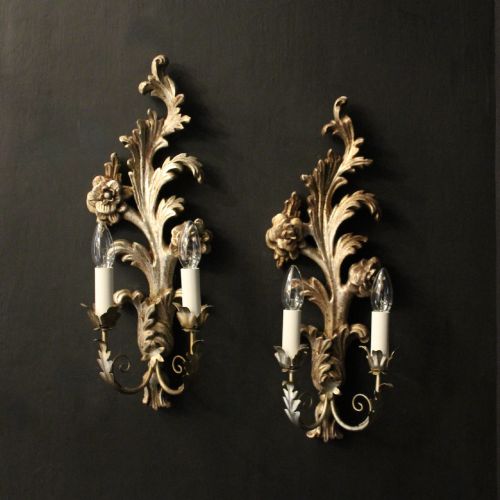
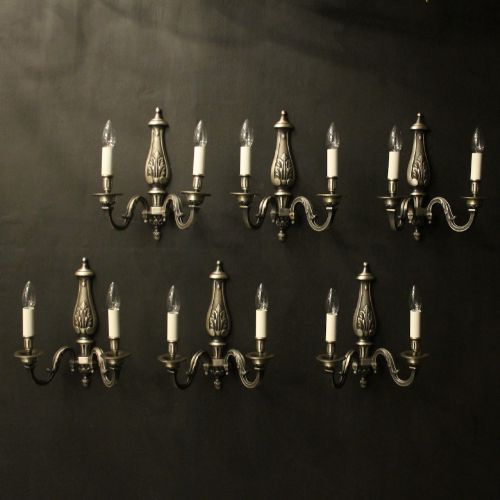
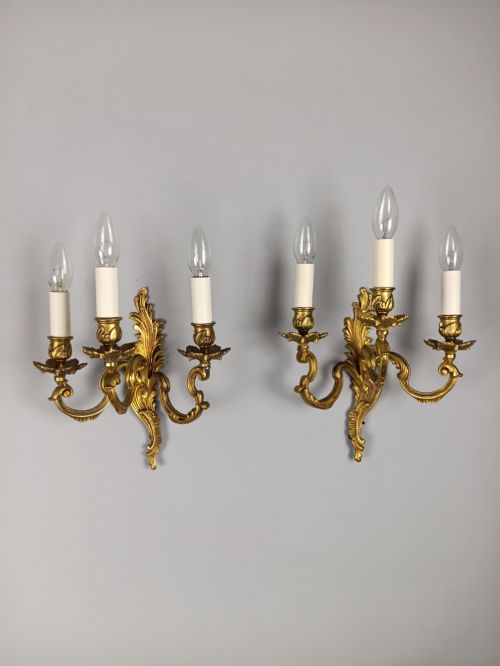
The inventory on this page demonstrates several distinct stylistic approaches, including Florentine, French Rococo, and Neo-Classical designs. Formats range from simple twin-arm configurations to more elaborate triple-arm arrangements and architectural wall light brackets.
Many examples utilise paired configurations, which suit symmetrical placement beside mirrors, fireplaces, or doorways. The predominant visual character relies heavily on carved wood, gilt finishes, and metallic structures that reflect light across a room.
Materials and Construction
Makers constructed these fixtures using traditional metallic and wooden mediums, frequently employing brass, bronze, and ormolu alongside carved wood. Surface treatments often incorporate giltwood, gold leaf, and silver leaf to achieve a reflective, metallic sheen.
Techniques range from fine wood carving seen in Florentine and Corinthian pieces to cast metalwork found in French gilded bronze and ormolu iterations. Some examples also incorporate glass elements, such as flaming torch designs paired with metallic structures.
Classical Leaf Wall Light Retail Price Guide 2026
Typical asking prices for classical leaf wall light among the pieces listed under this phrase on Sellingantiques today, from the lower quarter to the upper quarter. They describe what is for sale here now, not the wider market.
Listings feature items spanning the 19th century up to the 1930 period, constructed from ormolu, brass, giltwood, and bronze.
Assessing Quality and Execution
Quality in these wall fixtures is determined by the crispness of the carving and the depth of the metal casting. Finer pieces display sharp detail in the leaf motifs and acanthus scrolls, whereas lesser examples show softer, more generalised contours.
The application of the surface finish also distinguishes higher-grade items, with genuine gold or silver leaf and carefully preserved giltwood demonstrating superior craftsmanship compared to flat or uniform modern paints.
The Classical Leaf Wall Light Glossary
- Ormolu
- A method of applying finely ground high-carat gold to a bronze object, creating a rich golden surface. This technique was widely used in French decorative metalwork.
- Giltwood
- Timber that has been coated with a thin layer of gold leaf or powder, frequently seen on carved decorative brackets and frames. It provides a bright, reflective finish.
- Neoclassical
- A style originating in the 18th century that draws inspiration from the classical art and culture of ancient Greece and Rome. It emphasises symmetry, restraint, and classical motifs like acanthus leaves.
- Rococo
- An ornate style characterised by asymmetry, scrollwork, and naturalistic curves. French Rococo pieces often feature elaborate floral and leaf patterns.
Classical Leaf Wall Light: Frequently Asked Questions
How do I identify a neoclassical design?
Neoclassical pieces feature restrained geometric forms, symmetry, and classical decorative vocabulary such as flaming torches and Corinthian capitals. They feel more orderly compared to the asymmetrical curves of Rococo pieces.
The materials often include ormolu and bronze with crisp, architectural detailing.
What is the difference between giltwood and gilded bronze?
Giltwood consists of a wooden base, often intricately carved, covered with gold leaf. Gilded bronze involves a metal core shaped through casting.
Both materials achieve a luminous metallic appearance, but they offer distinct tactile qualities and weights.
How are twin-arm and triple-arm lights used?
Twin-arm and triple-arm configurations hold multiple candle or bulb points, increasing the illumination output of the fixture. They provide broader light distribution for larger spaces.
Such multi-arm designs function as primary wall sconces in principal reception rooms.