
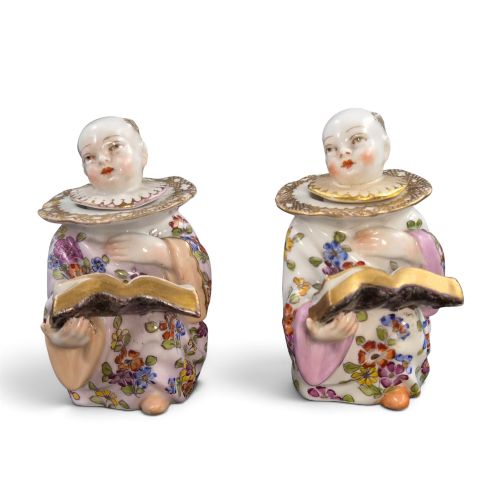


Gilt Meissen Porcelain Figurine
A gilt meissen porcelain figurine brings cabinet elegance to any room through hard-paste porcelain modelled with enamels and gilding.
Gilt Meissen Porcelain Figurine
When you search for a gilt meissen porcelain figurine, you encounter hard-paste porcelain sculptures and decorative objects created in European workshops. These pieces depict figures such as street traders, harlequins, angels, and mythological subjects.
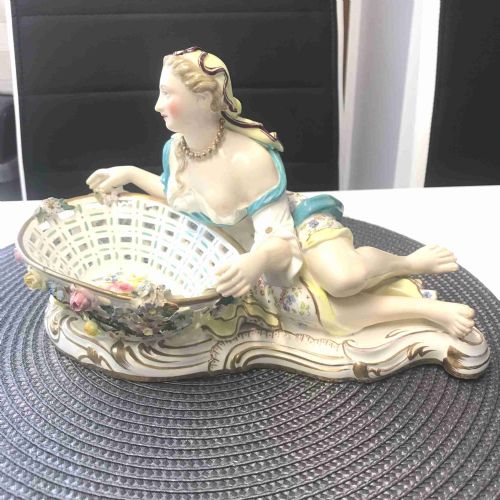
You are most likely to meet eighteenth-century examples alongside nineteenth-century revivals on this page. The forms range from standalone figures and sweetmeat dishes to figural inkwells and mounted ormolu compositions.
Makers and modellers shaped these porcelain figures with enamel painting and gilding to catch the light. The selection includes pairs, sets, and individual decorative objects.
How they were made
Hard-paste porcelain forms the base of every piece, shaped through moulding or modelling before kiln firing. Artisans then applied enamel colours and gold leaf or gilt details by hand.
Some sculptures incorporate additional materials such as gilt bronze ormolu mounts and wooden elements. These combined media created decorative objects for eighteenth-century and nineteenth-century interiors.
Alexander the Great conquers India in miniature on a pair of porcelain elephants.
What varies in quality
The precision of the hand-painted enamel work and the crispness of the modelling separate different tiers of these porcelain figures. Finer pieces display careful detailing in facial expressions, garments, and naturalistic bases.
The application of gilding and the quality of any associated metal mounts contribute to the visual weight of an object. Better examples maintain balance between the porcelain body and its decorative enrichment.
Edmé Samson·Johann Joachim Kändler·Marcolini
The Gilt Meissen Porcelain Figurine Glossary
- Hard-paste porcelain
- A dense, vitreous ceramic composition fired at high temperatures using kaolin and petuntse. This material forms the durable white body characteristic of these figures.
- Enamel
- A vitreous substance fused to the porcelain surface through kiln firing to produce permanent coloured decoration. Artisans used these pigments for garments, hair, and floral motifs.
- Gilt
- A thin application of gold or gold leaf applied to portions of the porcelain or mounts. This technique highlights raised details such as borders and decorative motifs.
- Ormolu
- Cast bronze mounted with a fine gold finish. These metal additions often frame or support porcelain figures in decorative compositions.
- Sweetmeat dish
- A small vessel designed for confectioneries or sweetmeats, frequently incorporated into figural porcelain groups. These functional forms combined utility with ornamental display.
Gilt Meissen Porcelain Figurine: Frequently Asked Questions
What were sweetmeat dishes used for?
Sweetmeat dishes served small confectionery items during formal dining and entertaining in wealthy households. They combined utility with decorative porcelain sculpture.
Guests would select sweet treats from these vessels displayed on tables or mantelpieces.
How do I clean porcelain figures?
Cleaning requires a soft, dry brush to remove dust from delicate surfaces and intricate enamel areas. Moisture should be avoided to protect applied gilding and painted details.
Harsh cleaning agents will damage the soft enamel and gold leaf on antique porcelain.
What is hard-paste porcelain?
Hard-paste porcelain is a true ceramic composition fired at high temperatures to create a strong, impermeable body. It differs from soft-paste alternatives through its durability and bright white appearance.
European factories developed this formula to replicate imported Asian wares.