
Gilt Leather Desk
When you search for a gilt leather desk, you encounter nineteenth-century writing tables and bureau plat forms designed for formal studies and grand libraries.
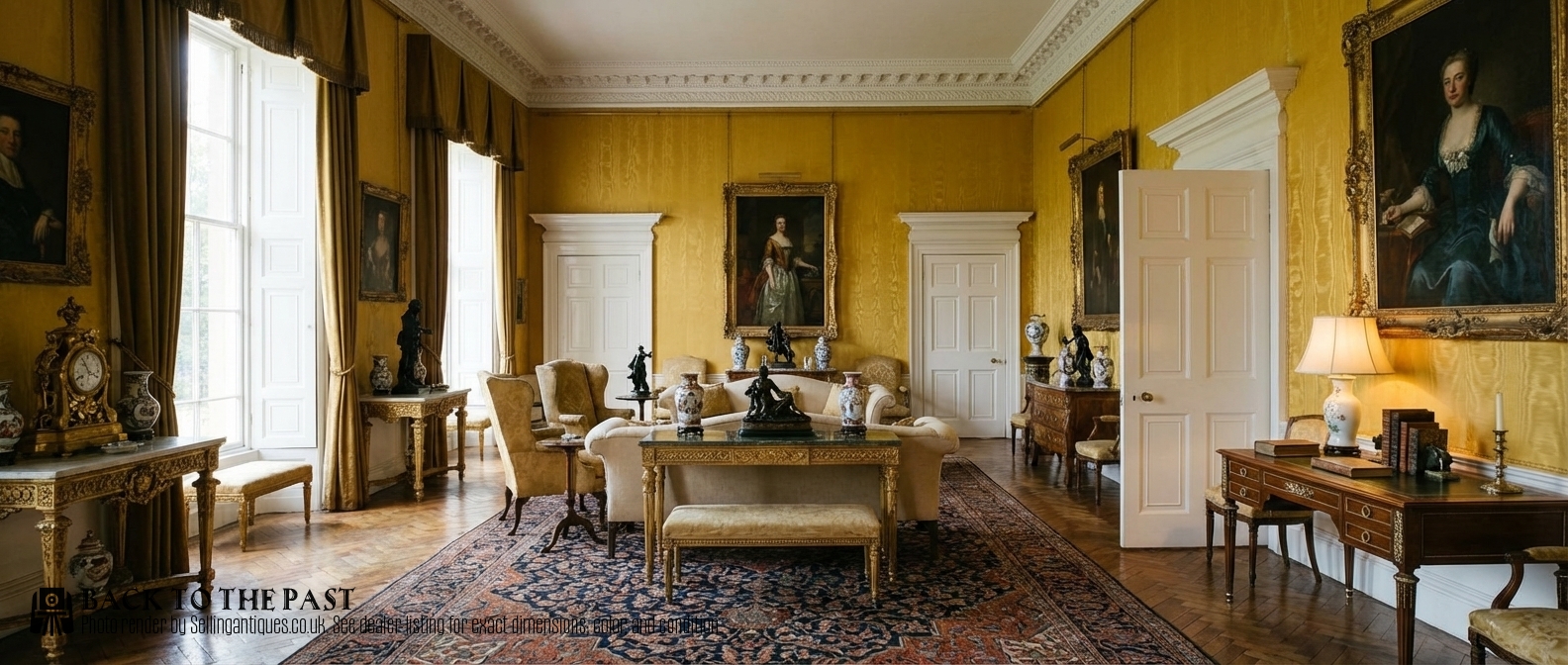
Gilt Leather Desk
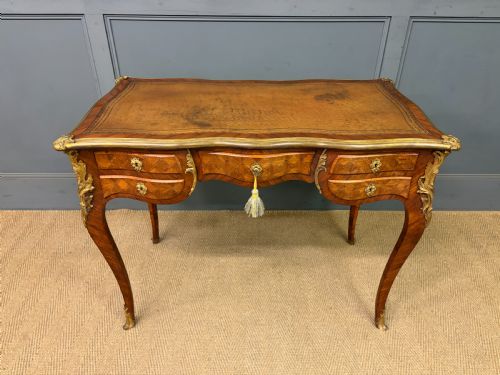
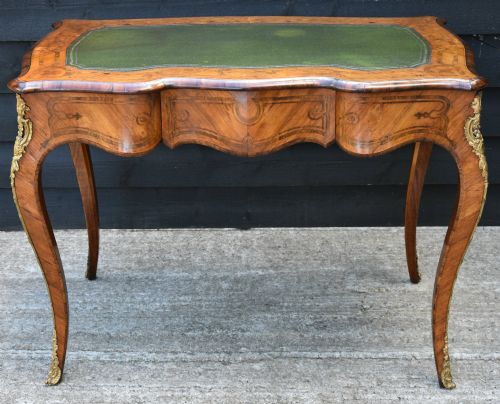
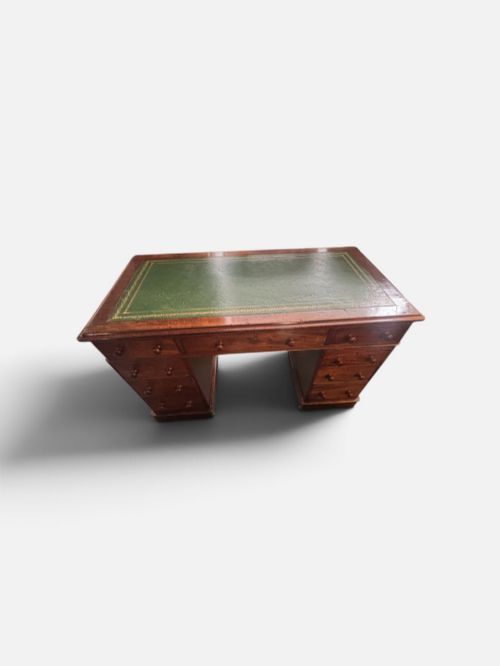
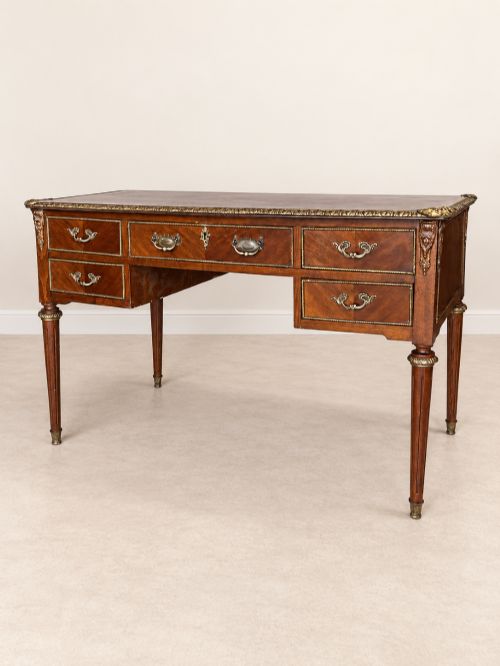
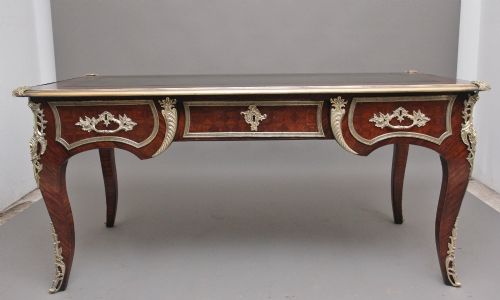
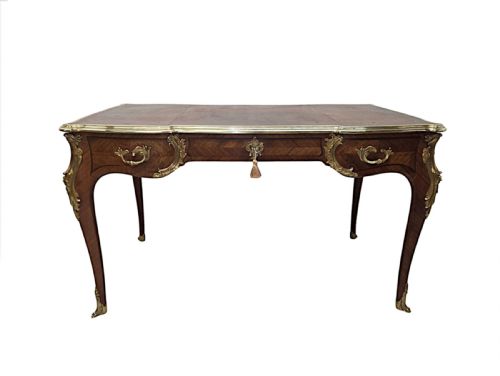
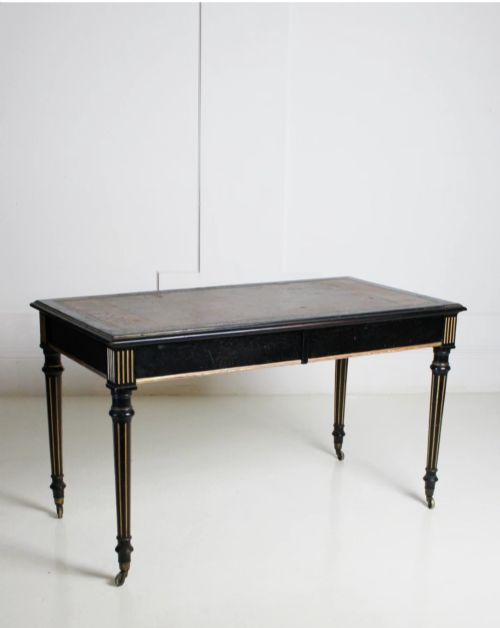
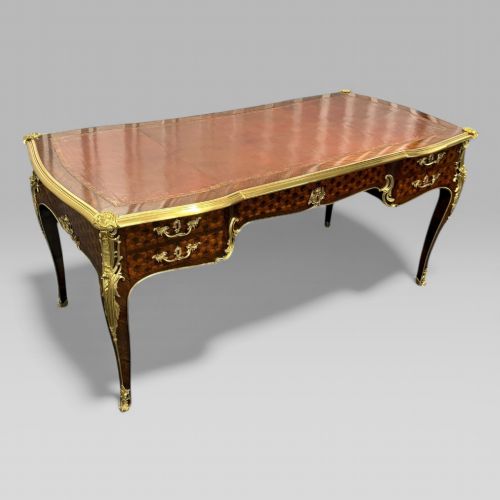
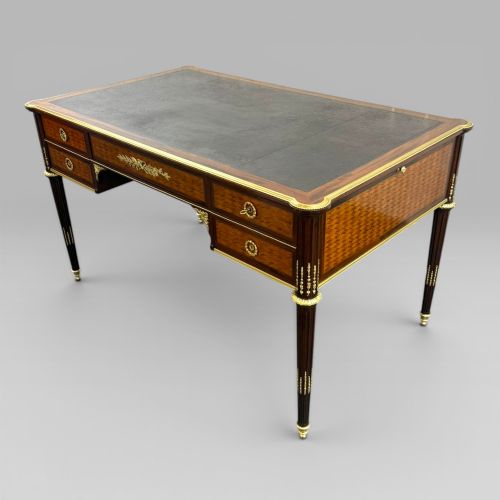
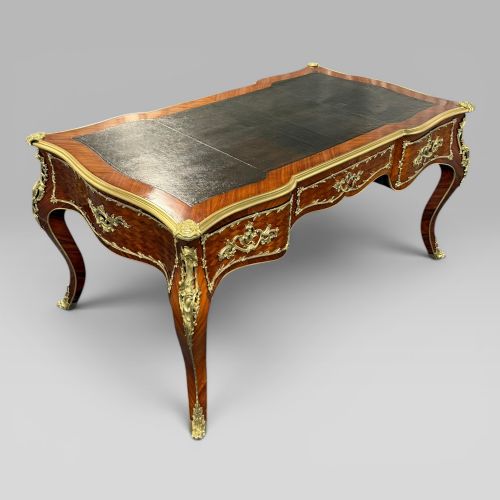
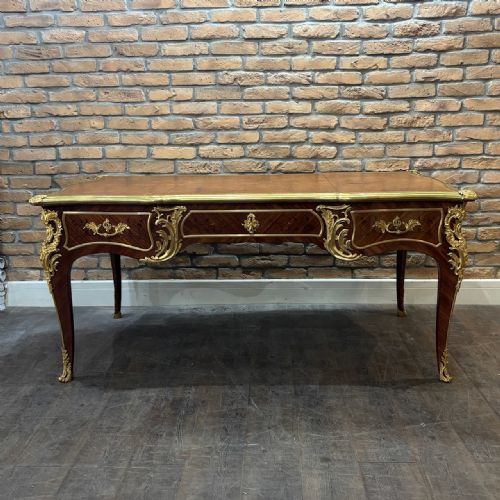
A gilt leather desk brings together classic writing surfaces and decorative mounts, appearing predominantly in nineteenth-century French and Victorian iterations. Buyers seeking a gilt leather desk often encounter the bureau plat form, characterised by a wide rectangular top inset with leather and bordered by gilt tooling.
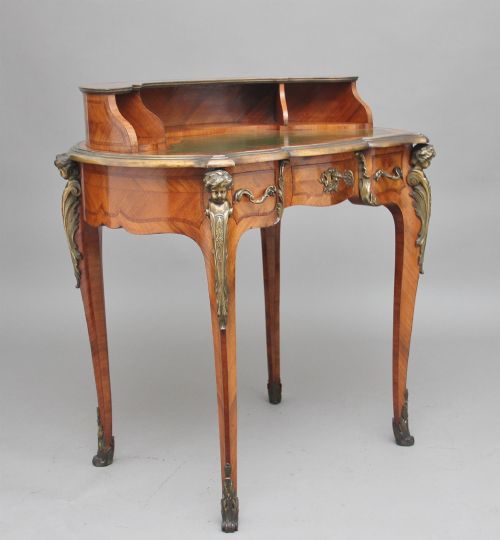
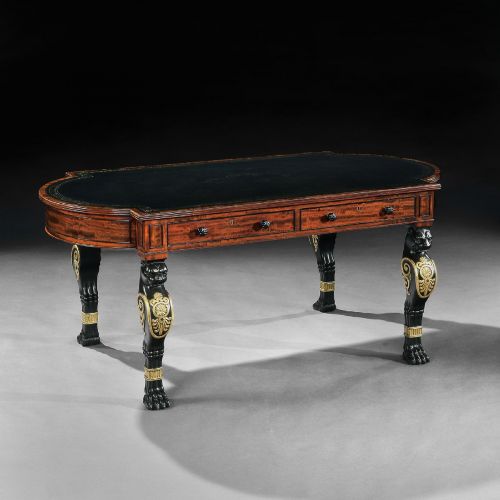
The selection ranges from kidney-shaped ladies writing tables to large partners desks and pedestal forms. Workshops in France and Britain produced these pieces across the Victorian era and into the early twentieth century, drawing heavily on Louis XV and Louis XVI revivals.
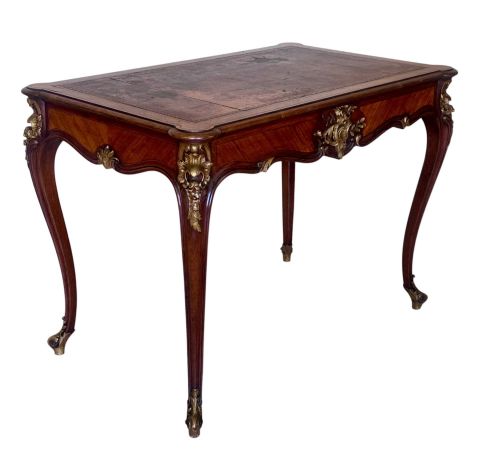
Many examples incorporate multiple drawers integrated into the frieze, supported by cabriole legs or tapering supports. These surfaces served as functional writing spaces for correspondence and administrative work in elite domestic interiors.
Materials and construction
Cabinetmakers built these desks using foundational timbers such as mahogany, oak, walnut, and exotic hardwoods including kingwood, rosewood, and tulipwood. Parquetry and marquetry patterns frequently decorate the surfaces, combining contrasting veneers to create geometric or floral designs.
Gilt bronze and ormolu mounts embellish the corners, legs, and drawer edges, providing architectural definition and ornamental contrast. The writing surfaces incorporate leather panels tooled in gold leaf around the perimeter, fitted neatly into the wooden frames.
Materials recorded across the inventory include kingwood, mahogany, walnut, oak, amboyna, ormolu, and gilt bronze.
Distinctions in quality
Quality rests upon the crispness of the ormolu mounts and the precision of the underlying cabinetwork. Finer pieces display hand-chased gilt bronze mounts that integrate seamlessly with the timber structure, rather than cast elements with softened details.
The selection of veneers and the execution of the parquetry mark the difference between standard production and master workshops. Superior leather inserts feature deep, clear gold tooling that remains sharp across the entire border.
François Linke·Henri Jacot·CH. Jeanselme & Co·Edwards & Roberts
The Gilt Leather Desk Glossary
- Bureau plat
- A freestanding French writing table featuring a rectangular top and drawers within the frieze. These desks typically display ornamental mounts on the legs and corners.
- Ormolu
- Gilt bronze ornamentation applied to furniture and decorative objects. The technique involves coating cast bronze in gold amalgam to create a bright metallic finish.
- Parquetry
- Geometric wood inlay work arranged in repeating patterns across furniture surfaces. Craftsmen utilise contrasting timber veneers to achieve the visual effect.
- Skiver
- A thin split sheepskin leather used traditionally for desk inserts. This material accepts gold tooling effectively along the borders.
- Sabot
- A metal shoe fitted to the foot of a cabriole leg for protection and decoration. These mounts frequently match the ormolu detailing on the rest of the piece.
Gilt Leather Desk: Frequently Asked Questions
How do I care for the leather top?
Clean the surface gently using a dry cloth and avoid harsh chemical cleaners that might damage the gold tooling. Apply specialised leather conditioners periodically to maintain suppleness and prevent cracking.
Keep the desk away from direct sunlight and excessive heat sources to protect both the leather insert and the underlying timber frame.
How do I distinguish French and English styles?
French designs from this category frequently incorporate prominent ormolu mounts, kingwood veneers, and curved cabriole legs inspired by Louis XV and Louis XVI periods. The overall aesthetic prioritises ornate decorative elements.
English alternatives, such as Victorian pedestal desks, generally rely on solid mahogany or oak construction with simpler lines, panelled sides, and integrated drawer pedestals.
Where should I place the desk?
Freestanding forms with finished backs suit placement in the centre of a study or library where they remain visible from all angles. Pedestal configurations function effectively against walls or within executive office layouts.
Ensure adequate natural light across the writing surface while avoiding direct exposure to windows that could fade the leather and wood veneers.