


Edwardian French Desk
These pieces for an edwardian french desk bring continental refinement and practical writing surfaces into a room.
Edwardian French Desk
When you search for an edwardian french desk, you encounter writing tables, writing desks, and related compact writing furniture from the late nineteenth and early twentieth centuries. These pieces reflect revival styles such as Louis XV and Louis XVI alongside Edwardian adaptations, often combining slender proportions with refined surface details.
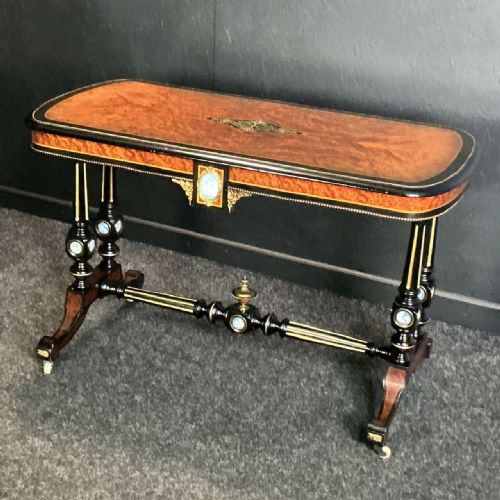
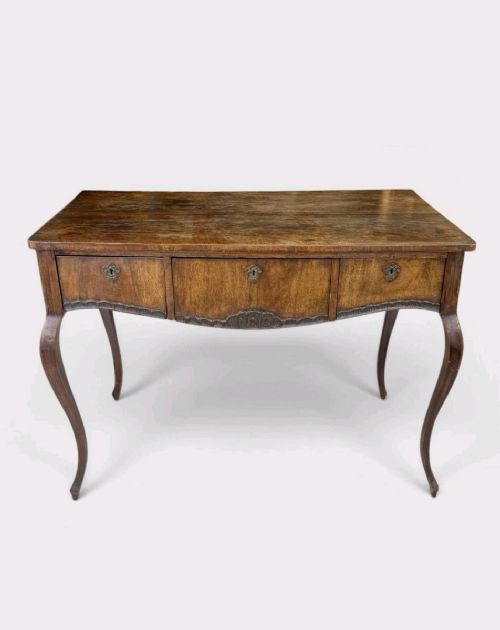
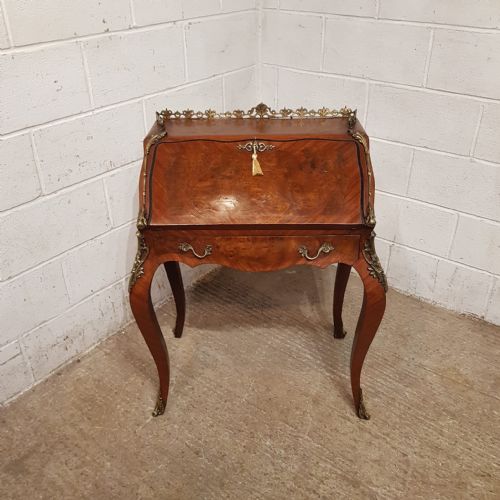
The versions most likely to appear on this page include mahogany and walnut writing tables, kidney-shaped writing desks, and small bonheur du jour cabinets. They frequently incorporate decorative brass mounts, ormolu trims, and fitted writing surfaces designed for domestic writing and correspondence rather than heavy administrative work.
Materials and construction
Makers constructed these desks primarily using timber frames of mahogany, walnut, and rosewood, sometimes enhanced with lighter wood veneers and inlaid details. Structural stability relied on traditional joinery techniques, while supporting elements utilised turned and tapered timber legs.
Decorative embellishments often involved cast brass and ormolu mounts, bronze fittings, and gilt metal details applied along borders and aprons. Writing surfaces were frequently inset with leather panels, complemented by small drawers and fitted compartments.
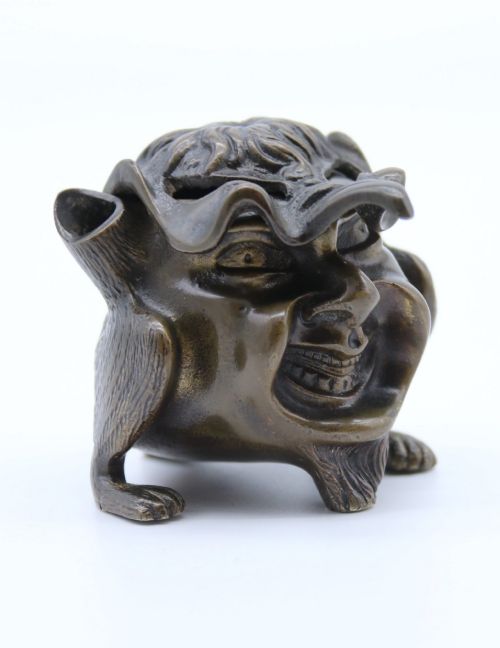
One listed desk lamp takes the unusual form of a grotesque bronze creature ready to illuminate a dark study.
Distinctions in quality
Quality across these desks is determined by the crispness of the bronze and ormolu mounts and the precision of the timber veneers. Finer examples display cleanly cast metalwork with well-defined chased details rather than soft, mass-produced casts.
The integrity of the internal drawer construction and the quality of the inset leather surface also distinguish better pieces. Superior items maintain balanced proportions and harmonious proportions between the timber body and its metal ornamentation.
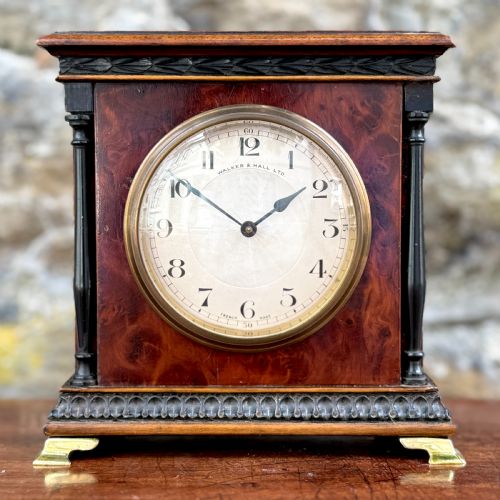
R Varnier·Walker and Hall·Georges Leleu·Latshea and Sons
The Edwardian French Desk Glossary
- Bonheur du jour
- A light lady's writing desk featuring a small tiered cabinet or superstructure with drawers and pigeonholes above the writing surface. This form gained popularity during the eighteenth century and continued through later revival periods.
- Ormolu
- Gilded bronze ornamentation applied to furniture and decorative objects. The technique involves creating a mercury gilding finish over cast bronze.
- Bureau plat
- A flat-topped freestanding writing table, typically fitted with one or more drawers along the frieze. These tables were designed to sit away from the wall in the centre of a room.
- Frieze
- The horizontal decorative band running beneath the top surface of a desk or table, frequently housing small storage drawers.
- Inlay
- A decorative technique where contrasting pieces of wood, metal, or shell are inserted into recess channels cut into the timber surface to form patterns.
Edwardian French Desk: Frequently Asked Questions
What is an edwardian french desk used for?
These desks served as elegant writing surfaces for personal correspondence, keeping small records, and managing household accounts.
Today they function effectively as compact home office desks or statement writing tables in a study or drawing room.
How do I identify a french style desk?
French style desks typically feature slender cabriole or tapered legs, decorative bronze or ormolu mounts, and polished hardwood surfaces.
They often incorporate curved contours and delicate brass handles that distinguish them from heavier domestic furniture.
Where should I place a writing table?
Many of these writing tables are finished on all sides, allowing them to stand freely in the centre of a room rather than against a wall.
They also fit well beneath windows or within alcoves where their refined proportions can be fully appreciated.
How do I care for the leather surface?
The leather inserts benefit from gentle dusting with a dry cloth and occasional treatment with suitable leather balms to prevent drying.
Avoid placing damp items or direct heat sources directly onto the writing surface to protect the material.