


Gilt Inlaid Mirror
These gilt inlaid mirror examples combine reflective glass with polished wood and metallic leaf, offering a decorative focus for any interior wall.
Gilt Inlaid Mirror
A gilt inlaid mirror brings together reflective glass, warm timber frames, and gold leaf or brass highlights. When you search for a gilt inlaid mirror, you encounter pieces designed to hang upon walls or rest above mantelpieces.
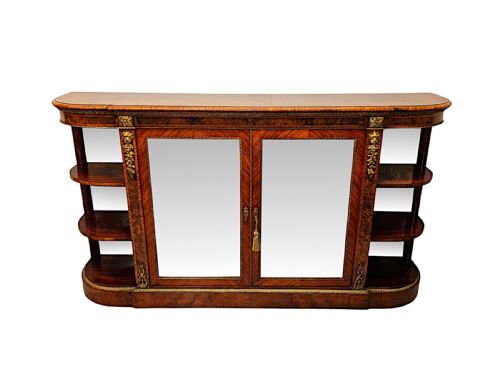
The selections span the nineteenth and early twentieth centuries, drawing on Victorian, Edwardian, and George II revival styles. Wall mirrors and overmantel mirrors dominate the forms, alongside large furniture pieces incorporating glass.
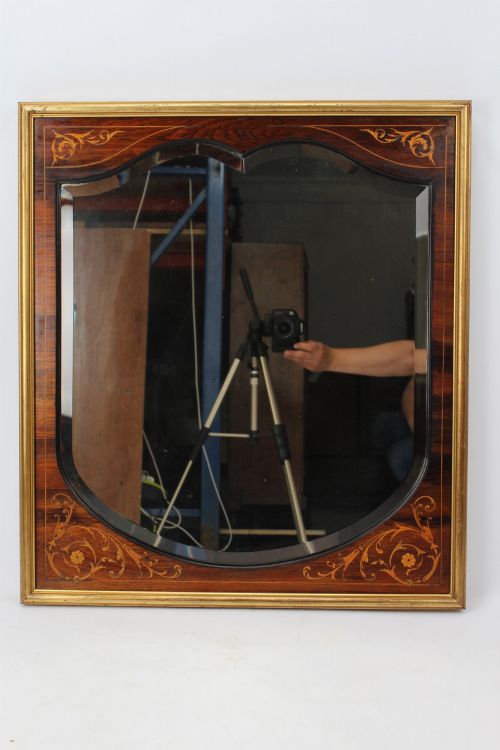
Makers utilised woods such as mahogany, walnut, burr walnut, rosewood, and ebonised timber. These materials provide a dark, rich ground that contrasts sharply with the gleam of parcel gilding and ormolu mounts.
What Varies in Quality
The precision of the cabinetwork and the crispness of the fretwork set better examples apart from simpler items. Hand-cut marquetry inlay and finely carved parcel gilding demonstrate superior workshop standards.
The integration of materials dictates distinction, particularly where ormolu mounts align seamlessly with burr walnut or rosewood carcases. Original mirrored glass with appropriate age patination maintains the integrity of the piece.
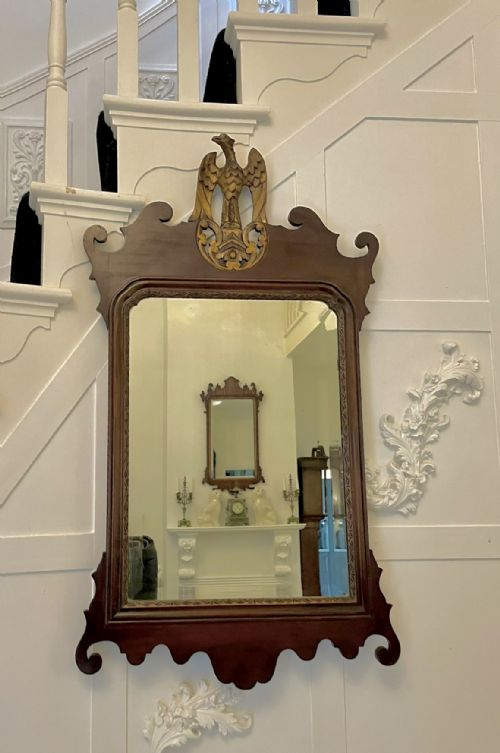
Certain pier mirrors retain carved wooden birds perched upon their scrolling crests, watching over the room from above the glass.
Gillows·A.J Rowley
The Gilt Inlaid Mirror Glossary
- Giltwood
- Wood that has been coated with gold leaf or gold powder. This finish creates a bright reflective surface that catches natural light in a room.
- Ormolu
- Cast brass that has been finished with a mercury gilding process to resemble solid gold. It provides metallic ornament on nineteenth-century furniture frames.
- Fretwork
- Openwork carving produced by piercing thin wood with a saw. It frequently defines the scrolling borders of Edwardian and Georgian style wall mirrors.
- Marquetry
- Inlaid patterns of wood veneer fitted into a backing material to form decorative pictures or geometric designs. Craftsmen used various tinted woods for contrast.
- Overmantel mirror
- A large horizontal mirror designed specifically to hang on the wall directly above a fireplace mantel. These pieces often incorporate elaborate wooden frames.
Gilt Inlaid Mirror: Frequently Asked Questions
Where should a gilt inlaid mirror be hung?
These mirrors suit principal reception rooms, hallways, or above fireplaces where they reflect natural light and open up interior spaces. Their decorative frames act as focal points on plain or papered walls.
Ensure the wall construction supports the weight of denser timber frames, particularly larger overmantel and credenza variants.
How do I care for antique gilded frames?
Dust the gilded surfaces gently with a soft, dry brush to prevent damage to the delicate gold leaf layer. Avoid liquid cleaning products and chemical sprays which can dissolve or tarnish the metallic finish.
Keep the mirrors away from direct sources of heat and damp environments to protect the underlying wood and gesso.
What is the difference between an overmantel and a wall mirror?
Overmantel mirrors are traditionally wider than they are tall, built to span the horizontal space above a fireplace opening. Wall mirrors come in various vertical and square proportions suited for general room placement.
Both types utilise similar framing techniques, including parcel gilding and wood inlay.
How do I identify an Edwardian mirror?
Edwardian mirrors often feature lighter mahogany frames with refined fretwork and delicate inlaid details. They reflect the stylistic revivals popular at the turn of the twentieth century.
Construction methods and timber selection help distinguish these pieces from heavier mid-Victorian examples.