


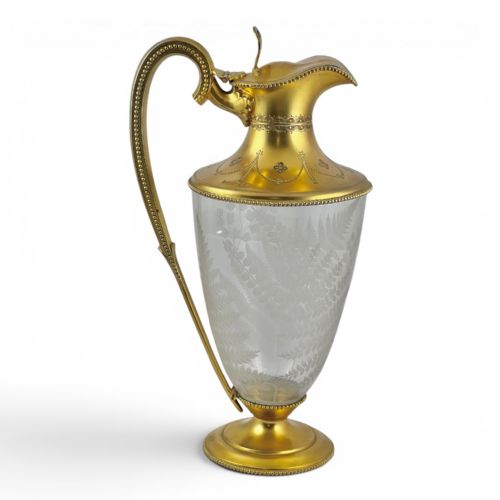
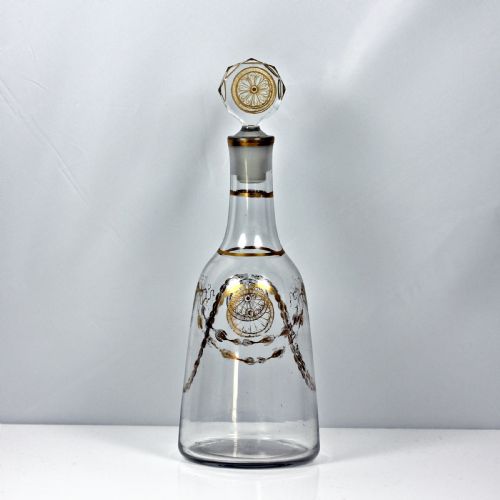


Gilt Glass Decanter
A gilt glass decanter brings richness to the table through polished metal mounts and bright gilding on clear or coloured crystal.
Gilt Glass Decanter
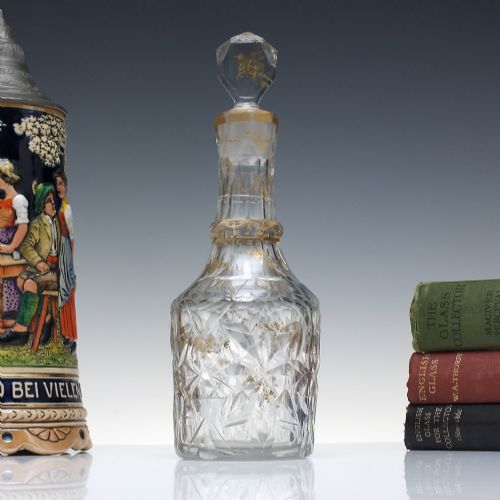
When you search for a gilt glass decanter, you are looking at serving vessels and spirit bottles embellished with gold leaf, hand-painted gold applications, or precious metal mounts. The pieces meeting this description span several periods from the Georgian era through the Victorian years to the mid-twentieth century, encompassing both English and continental origins.
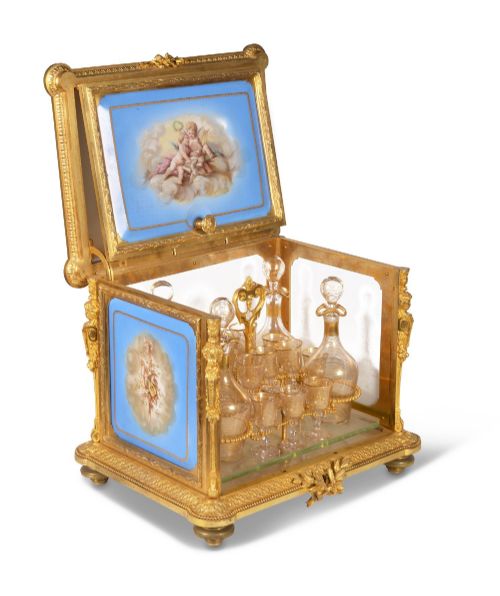
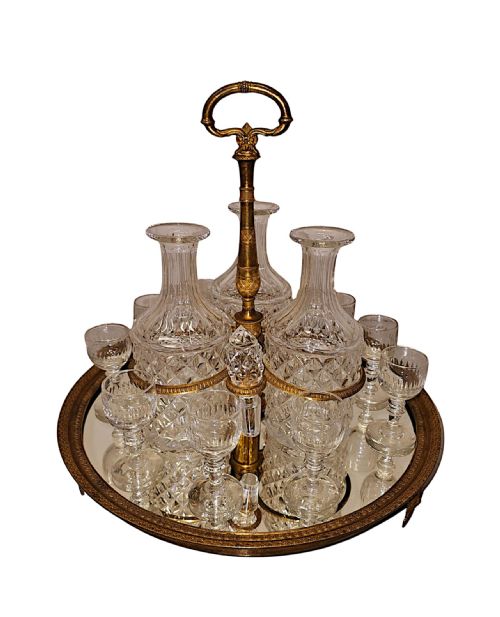
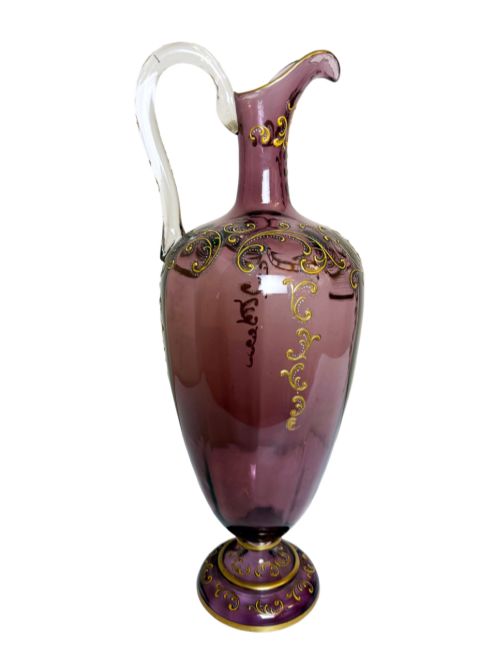
The forms extend beyond standard wine bottles to include claret jugs, tantalus sets, liqueur bottles, ewers, and apothecary jars. Among these, nineteenth-century French and English decanters mounted in ormolu or silver gilt appear frequently, often paired with matching stoppers or housed in fitted wooden boxes.
How they were made
Makers shaped vessels from clear glass, crystal, or coloured glass such as cranberry, violet, and green overlay using traditional blowing and cutting techniques. Artisans then applied gold leaf or hand-painted gilt decoration directly onto the glass surface, firing the pieces to bond the metallic finish.
Mounts and hardware utilised cast ormolu, silver gilt, bronze, and sterling silver, secured to the glass body with collars, handles, and Bacchus masks. Workshops combined glass-blowing mastery with metal-casting precision to create fitted frames, stoppers, and hinged lids.
Gilt Glass Decanter Retail Price Guide 2026
Typical asking prices for gilt glass decanter among the pieces listed under this phrase on Sellingantiques today, from the lower quarter to the upper quarter. They describe what is for sale here now, not the wider market.
James Giles decorated eighteenth-century glasses in London so brilliantly that collectors still hunt for his whispered signatures on gilded decanters.
What varies in quality
The standard of a gilt glass decanter depends upon the clarity and weight of the glass, the depth of the cut crystal facets, and the precision of the hand-applied gilding. Heavy crystal and intact gold decoration indicate superior execution by skilled ateliers.
The refinement of the metal mounts, whether cast ormolu or hallmarked silver gilt, sets the finer examples apart from standard production. Well-fitted stoppers, crisp chasing on the bronze or silver, and makers' marks contribute significantly to the standing of the piece.
Asprey and Co. Ltd·James Giles·Baccarat·Freeman and Son Ltd·Mappin and Webb
The Gilt Glass Decanter Glossary
- Ormolu
- Gilded bronze used widely for decorative mounts, handles, and frames on nineteenth-century French glassware. The technique involves applying a mercury-gilt finish to cast bronze.
- Silver gilt
- Sterling silver that has been coated with a thin layer of gold. This treatment provides the durability of silver with the warm appearance of gold.
- Latticinio
- A glass-making technique featuring intricate white or coloured opaque glass threads embedded within clear crystal. It appears in mid-nineteenth-century French decanters and jugs.
- Bacchus mask
- A decorative cast metal motif depicting the face of the Roman god of wine, commonly found on nineteenth-century claret jug spouts and mounts.
Gilt Glass Decanter: Frequently Asked Questions
How do I clean a gilt glass decanter?
Wash the interior gently with warm water and mild soap, avoiding harsh brushes that might scratch the surface. Keep water away from external gold leaf, hand-painted gilt details, and metal mounts.
Dry the glass thoroughly and leave the stopper out until the interior is completely dry. Polish silver gilt or ormolu mounts with a dry, soft cloth, taking care not to let polish touch the glass.
Can I use these decanters for serving wine?
Many antique decanters and claret jugs remain fully functional for serving wine and spirits today. Check that the interior is clean and free from old sediment before filling.
Avoid serving acidic liquids in pieces with delicate hand-painted gilt or damaged glass linings. Hand wash the vessel immediately after use to protect the historic materials.
How do I date a gilt glass decanter?
Examine the style of the glass cutting, the colour palette, and the form of the vessel to narrow down the period. Georgian pieces often feature distinct hand-cut facets, while Victorian examples embrace rich cranberry glass or elaborate ormolu mounts.
Look for silver hallmarks on the mounts, which provide exact assay office dates and maker marks. Unmarked pieces rely on stylistic indicators such as Napoleon III or Gothic Revival design traits.
What is a tantalus set?
A tantalus is a locking wooden or metal frame that holds decanters securely while displaying their contents through glass panels. The mechanism prevents people from removing the decanters without the key.
These sets became popular in the nineteenth century for entertaining in the dining room or drawing room. They often feature cut crystal bottles enhanced with gilt decoration or silver mounts.