


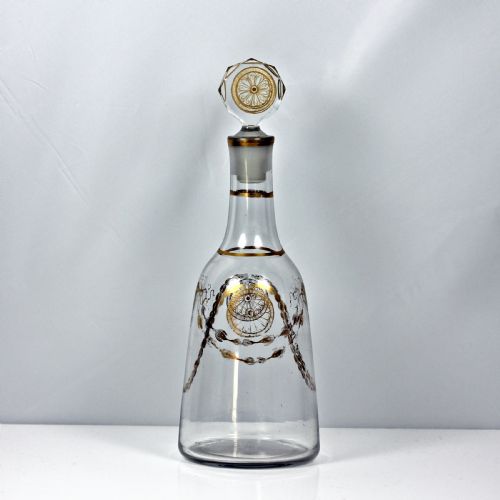
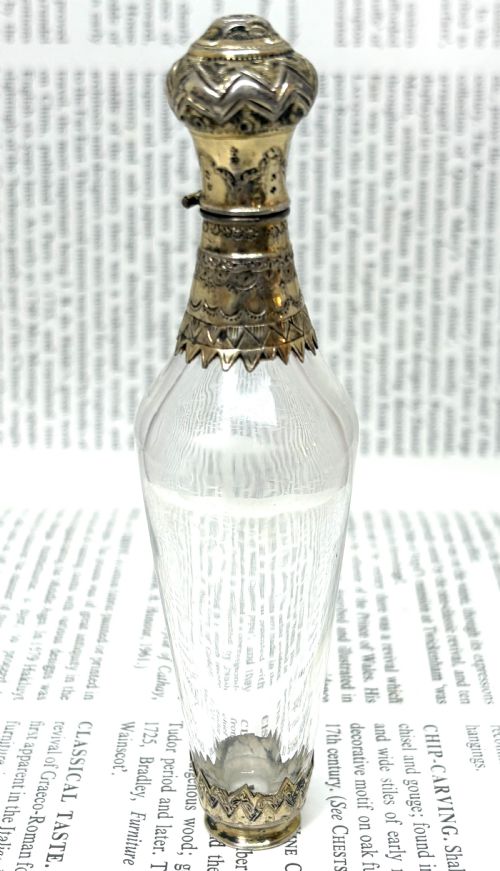

Gilt Glass Bottles
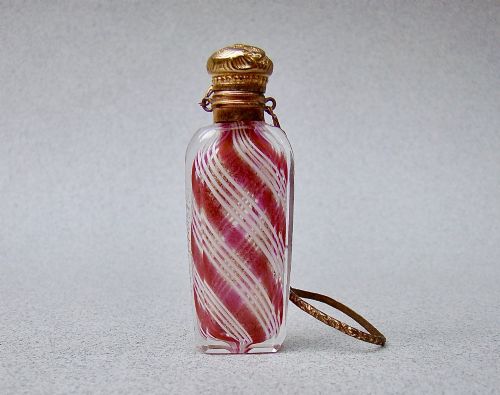
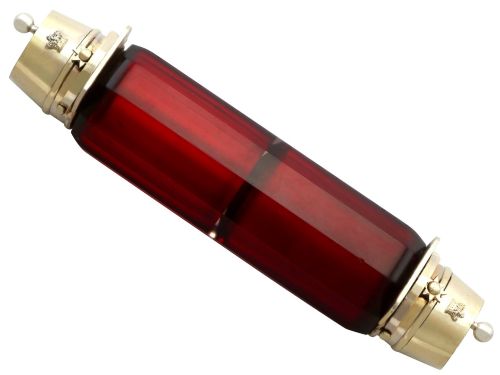
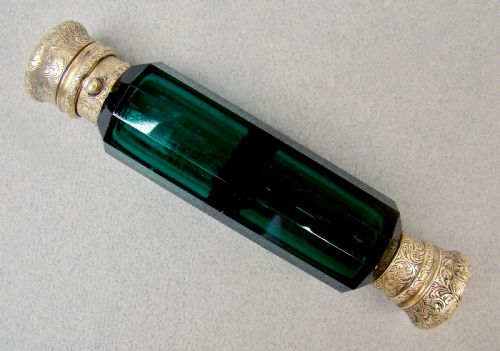
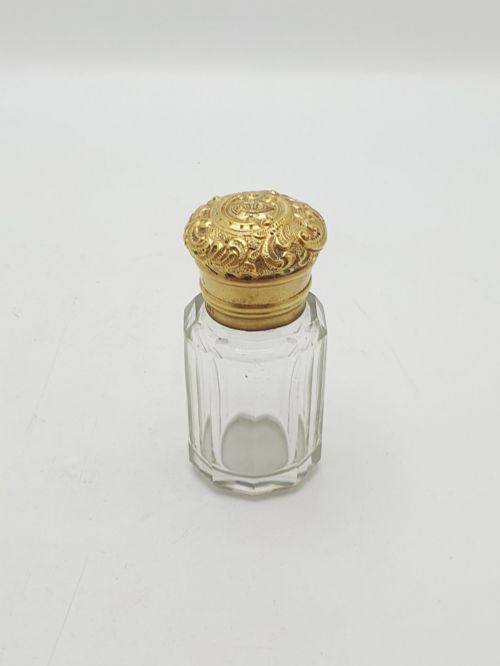
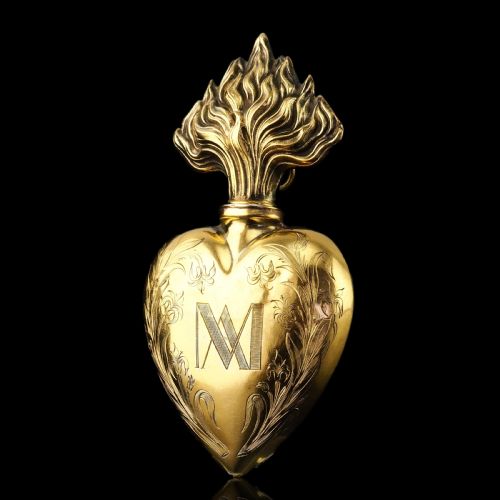
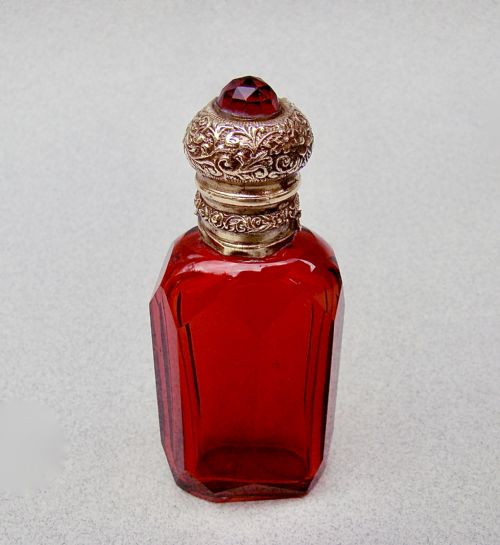
Gilt glass bottles bring together bright metallic decoration and coloured vessels, spanning Georgian decanters and Victorian scent flasks.
Gilt Glass Bottles
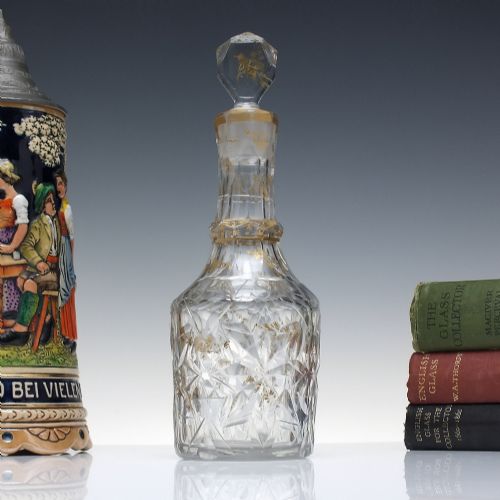
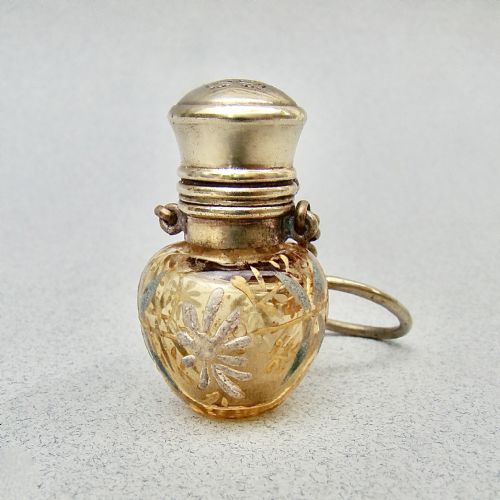
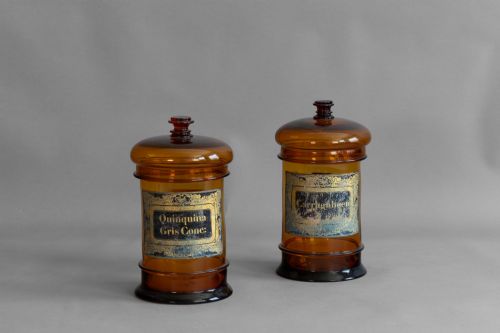
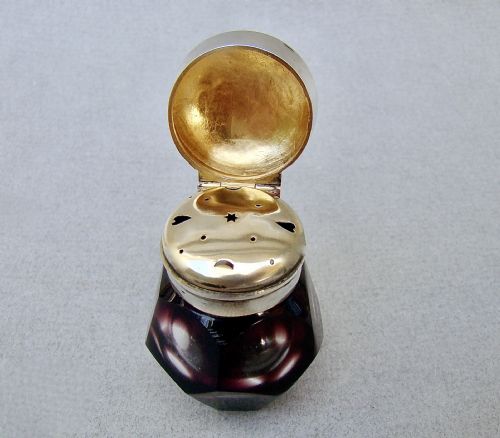
These gilt glass bottles include scent flasks, decanters, apothecary jars, and vinaigrettes spanning the Georgian, Victorian, and early twentieth-century periods.
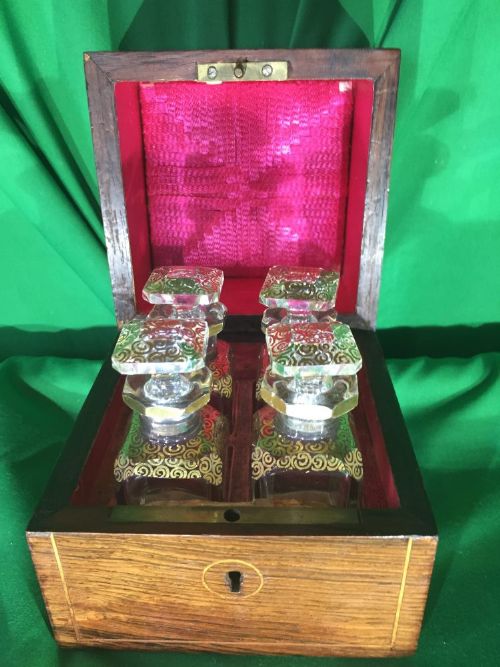
Buyers searching for gilt glass bottles most frequently encounter nineteenth-century English and French examples mounted in silver gilt or brass, often houseable in fitted rosewood or leather caskets.
The selection also accommodates larger chemist jars, carafes, and spirit barrels alongside smaller pocket and chatelaine containers.
Materials and construction
Makers shaped the glass bodies using blowing, cutting, and moulding techniques in colours ranging from ruby and Bristol green to amethyst, amber, and clear crystal.
Decoration relies on applied gold leaf, silver-gilt mounts, and ormolu framing, secured with hinged caps or stoppers in silver and brass.
Gilt Glass Bottles Retail Price Guide 2026
Typical asking prices for gilt glass bottles among the pieces listed under this phrase on Sellingantiques today, from the lower quarter to the upper quarter. They describe what is for sale here now, not the wider market.
Listed periods range from the Georgian era through Victorian times to the early twentieth century.
Quality differences
Quality rests on the crispness of the glass cutting, the weight and purity of the metal mounts, and the integration between the glass body and its collar or cap.
Makers such as James Giles, Moser, or Sampson Morden demonstrate superior finishing through precise gilding and securely fitted hardware that elevates standard utility vessels into decorative pieces.
Sampson Morden·James Giles·Moser·Franchini And Bigaglia·René Lalique·Freeman And Son Ltd
The Gilt Glass Bottles Glossary
- Silver-gilt
- Silver that has been coated with a thin layer of gold. This treatment provides the durability of silver with the warm appearance of gold.
- Chatelaine
- A decorative belt hook worn with a chain to suspend small utilitarian items. Scent bottles were frequently mounted this way for easy access.
- Ormolu
- Finely ground high-carat gold applied to a bronze base. It is common on French nineteenth-century mounts and frames.
- Vinaigrette
- A small ornamental box or bottle containing a sponge soaked in aromatic vinegar. These pieces typically feature an internal pierced grille.
Gilt Glass Bottles: Frequently Asked Questions
How were these bottles used?
Owners used smaller flasks to carry perfume, smelling salts, or cologne during travel and social outings. Larger vessels served as decanters for spirits or storage containers in apothecary settings.
Fitted boxes and caskets kept delicate double-ended scent bottles and vinaigrettes secure on dressing tables.
How do I identify a Victorian piece?
Victorian examples often feature heavier silver mounts, maker marks corresponding to London assay offices, and intense glass colours like ruby and Bristol green. Hallmarks on the metal collars provide precise decade markers.
Stilderivates from the mid-to-late nineteenth century also incorporate fitted leather or rosewood caskets.
What is the difference between French and English bottles?
French pieces from the nineteenth century frequently employ ormolu mounts, rich coloured glass, and decorative touches like guilloche enamel or chatelaine chains. English manufacturing leans towards sterling silver mounts and maker stamps.
English designs also heavily feature cut glass decanters and double-ended apothecary styles.
How should I clean a gilt glass bottle?
Gentle dusting with a dry cloth protects the delicate gold leaf and silver-gilt surfaces from wear. Moisture can damage old adhesives and tarnish exposed base metals.
Avoid abrasive cleaners entirely to preserve the original gilding on the glass.