
Gilt Framed Genre Scenes
These gilt framed genre scenes bring Victorian and nineteenth century domestic life and tavern interiors directly into your room through detailed oil paintings and framed prints.
Gilt Framed Genre Scenes
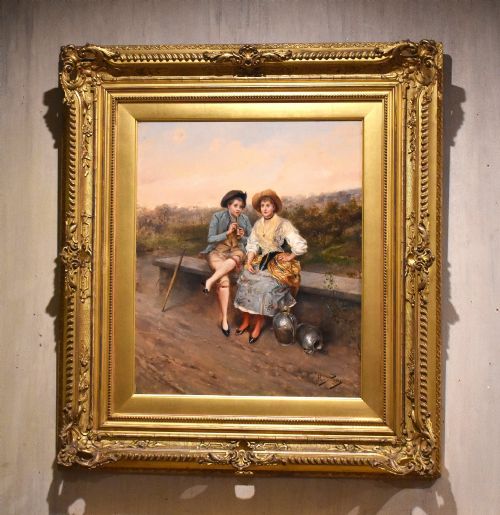
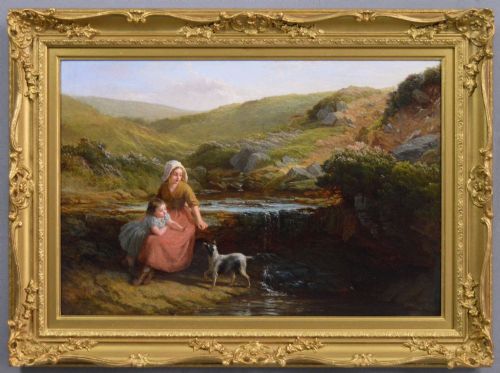
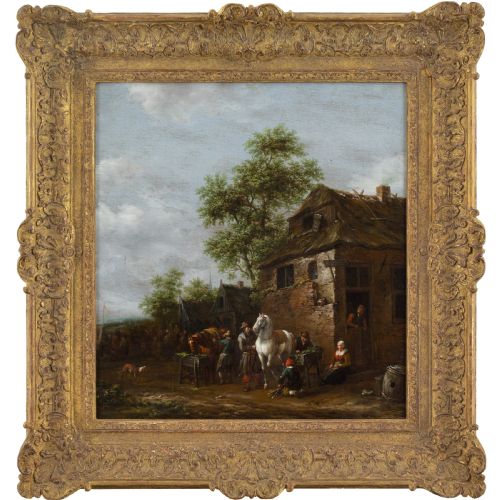
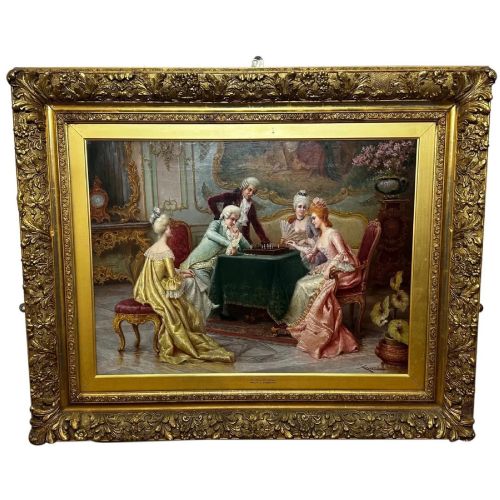
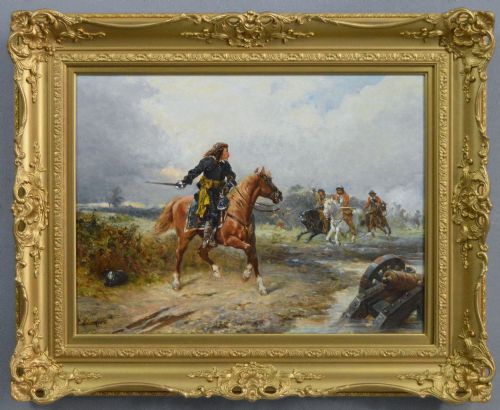
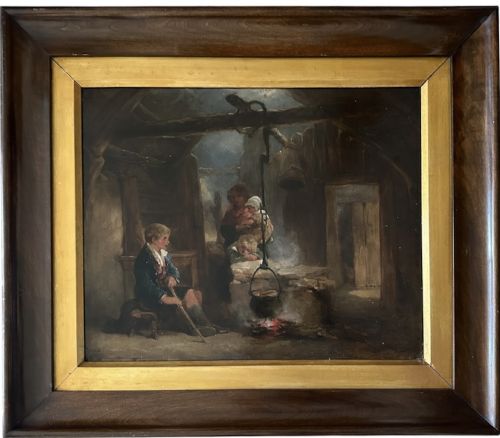
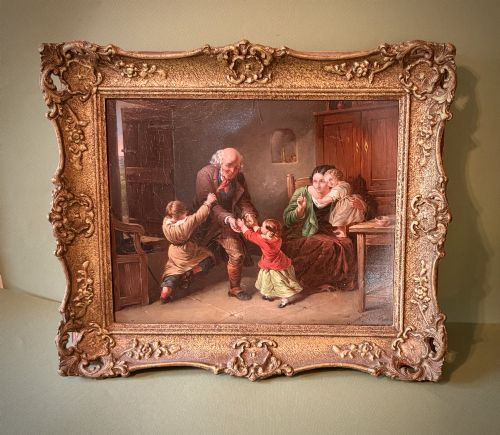
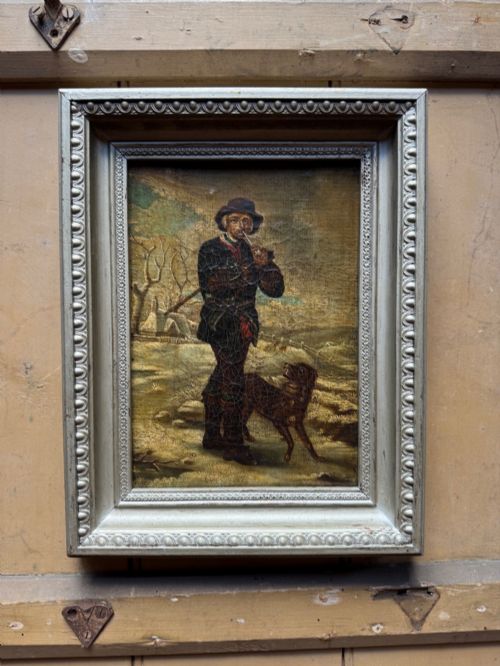
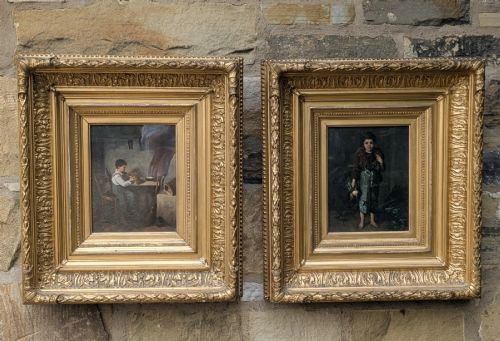
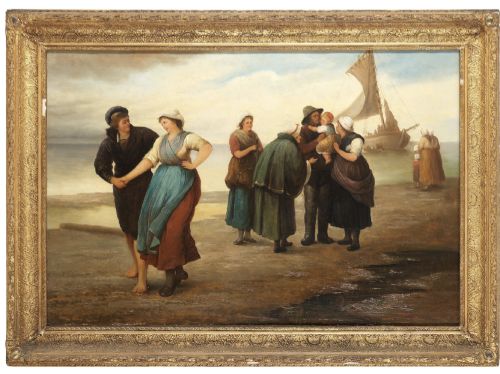
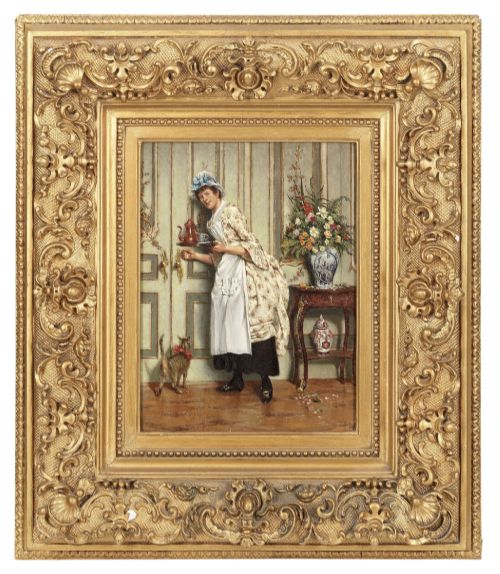
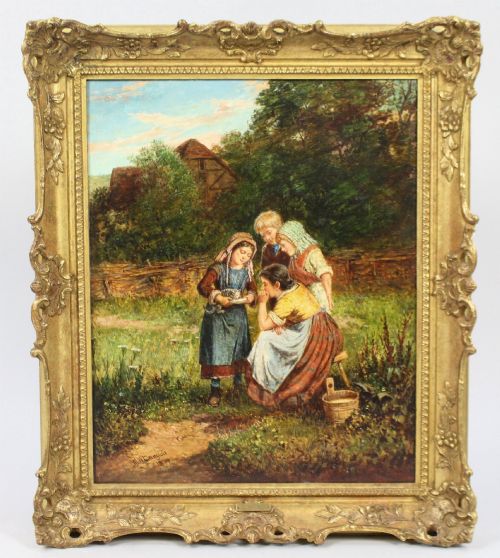
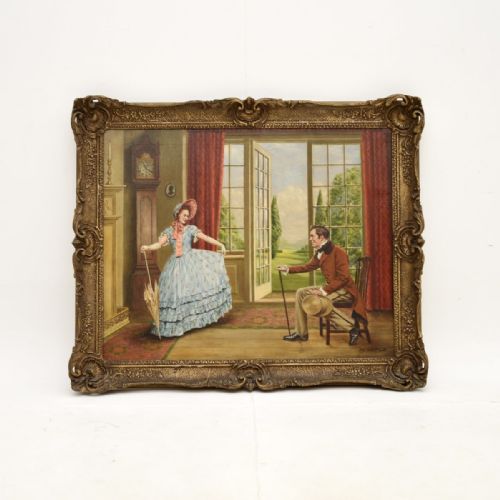
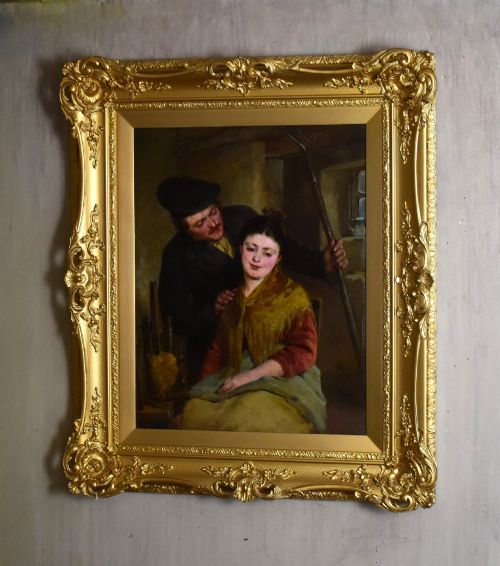
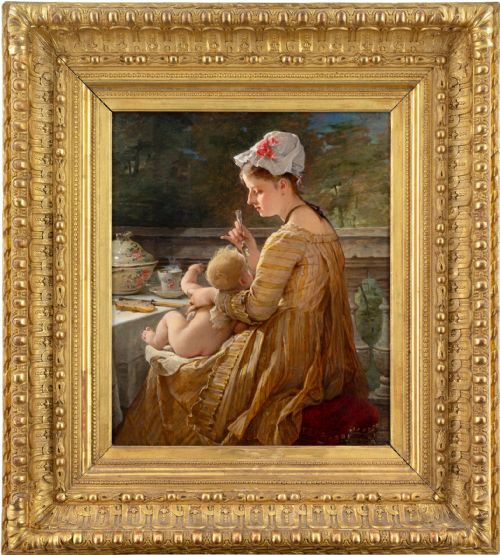
These works capture everyday human moments, from quiet tea times and cottage interiors to lively tavern gatherings and historical scenes, framed in ornate gold leaf and gesso. You will most frequently encounter nineteenth-century oil paintings on canvas executed in academic realism or Dutch Golden Age styles.
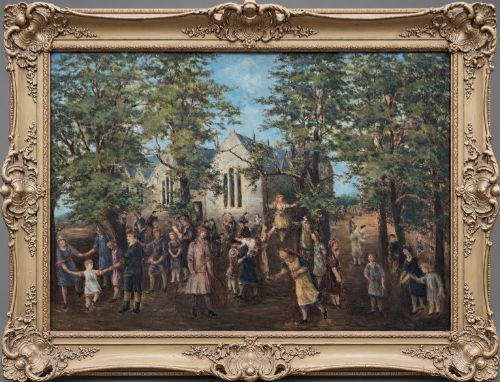
The subjects range from children feeding kittens and women sewing by windows to card players and village fetes, each piece reflecting the social history and domestic narratives of the period. Artists often depicted ordinary people engaged in daily routines, capturing subtle expressions and narrative tension within a single enclosed composition.
Materials and construction
Painters applied oil on canvas or wood panels, utilising pigment mixtures that achieved chiaroscuro lighting effects and rich interior shadows. These surfaces were then housed in wooden frames finished with layered gesso and applied gold leaf to create the characteristic ornate metallic border.
Moulded gesso ornamentations on the timber framework provided decorative relief detail that caught ambient light, accentuating the painted narrative within. The combination of canvas, oil pigment, and gilded wood represents the standard workshop construction for fine art of this era.
The listings show nineteenth-century oil paintings on canvas alongside watercolours, engravings, and lithographs from British and European schools.
Assessing quality and execution
Superior examples demonstrate meticulous brushwork in facial expressions, textile textures, and interior lighting, whereas lesser works rely on formulaic repetition and stiff figures. The depth of the gesso moulding and the preservation of the original gilding also distinguish finer frames from later replacements.
The reputation of the painter and the complexity of the narrative composition heavily influence the standing of a piece within this category. Well-documented academic signatures and closely observed interior details elevate individual works above standard provincial output.
Felix Stone Moscheles·Stephen Samuel Lewin·Mark William Langlois·Alfred Lyndon Grace·Howard Helmick·Adelaïde Salles-Wagner·Max Kaltenmoser·Joseph H Barnes·Frederick Walker·Charles Hunt·Hendrik Valkenberg·Joseph Farquharson·Bernard De Hoog·Renato Moretti·Jacob Akkersdijk·Delapoer Downing·Miles Birkett Foster·J De Ninville·Charles Edward Wilson·George Kilburne·Alexander Rosell·David Teniers·Benjamin Eugene Fichel·Charles Zacharie Landelle·John Arthur Lomax
The Gilt Framed Genre Scenes Glossary
- Genre painting
- The pictorial representation of scenes from everyday life, typically depicting ordinary people in domestic, street, or tavern settings. This approach contrasts with history painting or portraiture by focusing on narrative moments of common human experience.
- Gesso
- A plaster-like mixture used as a base for moulding decorative relief details onto wooden picture frames before gilding. It provides a smooth white surface that accepts metallic leaf.
- Chiaroscuro
- An artistic technique employing strong contrasts between light and dark to give a three-dimensional volume to figures and objects within an interior scene. Painters used this method to focus viewer attention on central narrative interactions.
- Academic realism
- A style of painting produced under the influence of European art academies, characterised by strict observational accuracy, polished surfaces, and high technical finish. Works in this mode display careful attention to anatomy, perspective, and period costume.
Gilt Framed Genre Scenes: Frequently Asked Questions
What defines a genre scene?
A genre scene depicts ordinary people engaged in everyday activities rather than grand historical or mythological events. These compositions capture moments from domestic life, work, or leisure.
Subjects might include tea times, tavern gatherings, or children playing indoors, offering a window into the social habits of past centuries.
Are these paintings original oils?
The listings comprise a mixture of original oil paintings on canvas or wood panel alongside period framed prints, lithographs, and watercolours. Oil works feature textured pigment layers applied by hand.
Prints and engravings offer accessible alternatives while retaining the traditional aesthetic of the period frame.
How do I identify a Victorian frame?
Victorian frames typically consist of wooden cores covered in moulded gesso and finished with gold leaf or giltwood. The ornamentation often includes repeating botanical or geometric motifs characteristic of the nineteenth century.
Closer inspection of the corner joints and backing boards helps determine whether a frame is original to the artwork.
Where were these scenes usually painted?
Artists working in these styles operated across Britain, France, the Netherlands, and wider Europe, recording both rural cottage interiors and urban drawing rooms. Many painters studied at prominent continental academies before establishing their studios.
Regional dress and interior furnishings often provide clues to the specific geographic origin of a composition.