

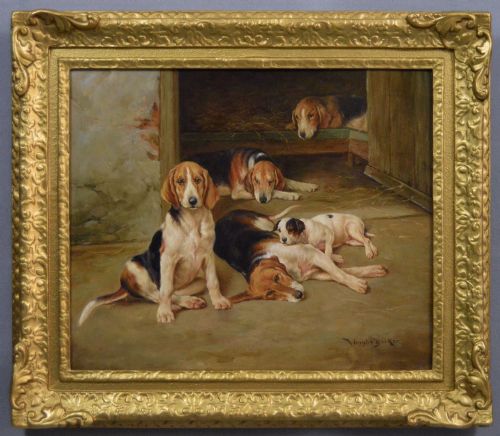
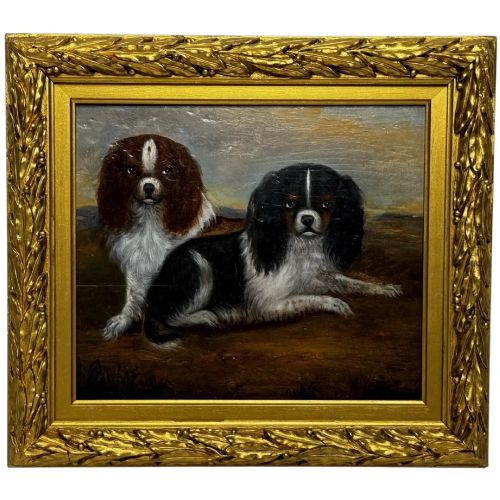
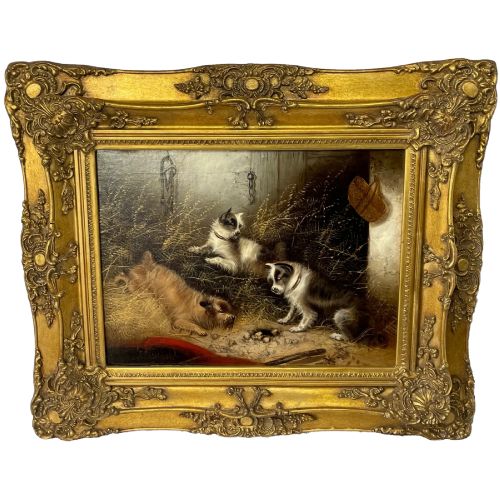
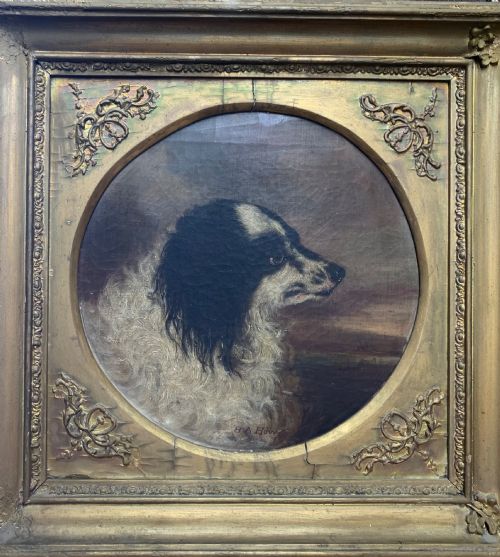
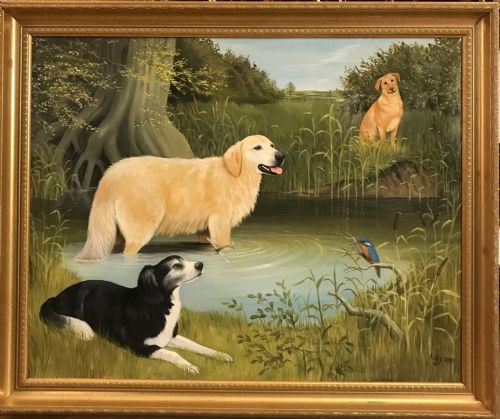

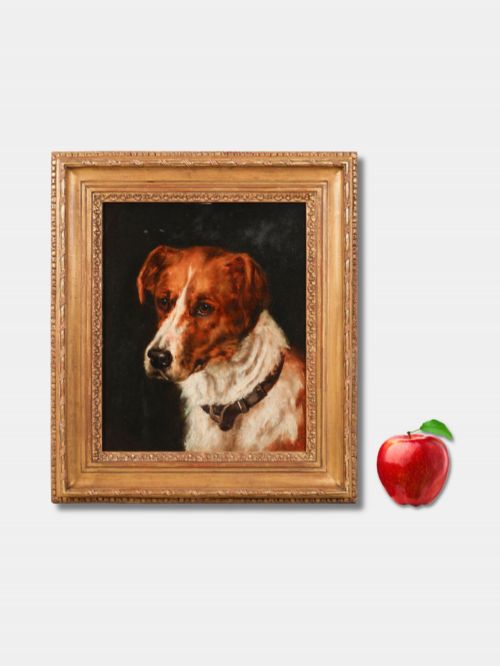


Gilt Framed Canine Artwork
Gilt framed canine artwork brings together centuries of painted hounds, gundogs and terriers set within traditional gold leaf surrounds.
Gilt Framed Canine Artwork
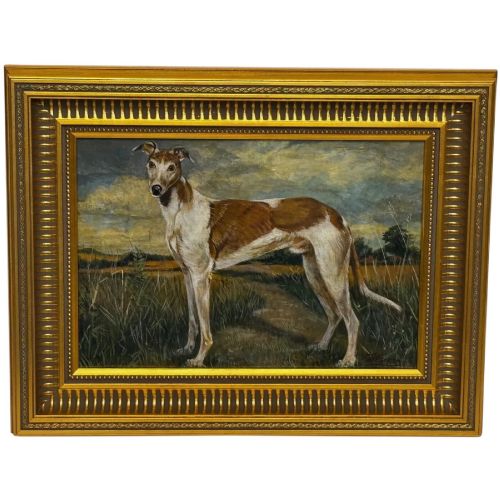
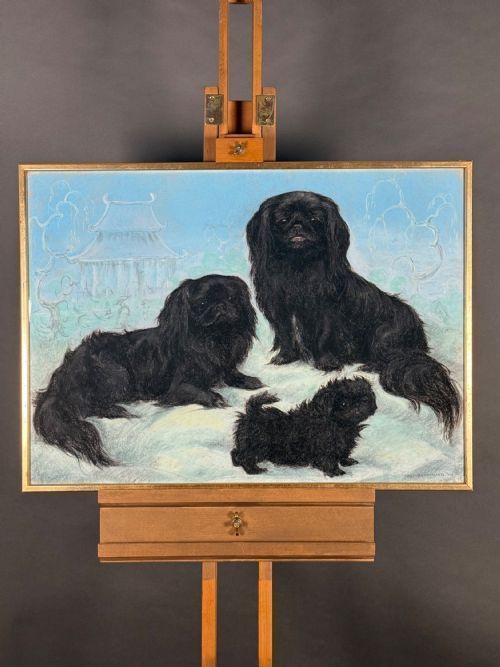
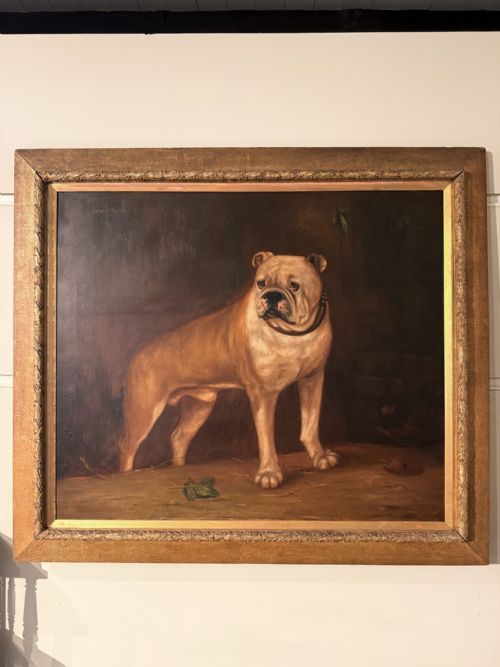
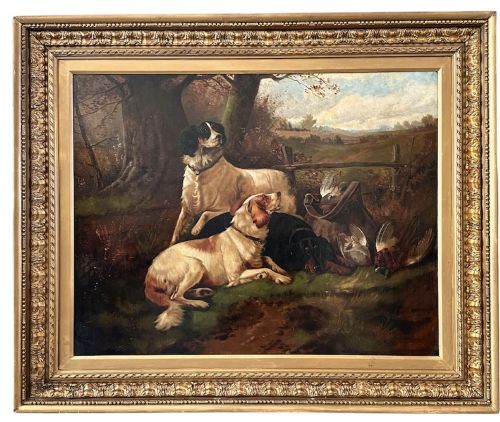
When buyers search for gilt framed canine artwork, they encounter centuries of painted dogs depicted in oils, watercolours and pastels. These pieces range from intimate studies of Pekingese and spaniels to large sporting canvases of lurchers, setters and hunt packs in landscapes.
The selections available here lean heavily into Victorian fine art and the nineteenth century, reflecting a period when canine portraiture flourished across Britain. Collectors find both named artist works and pieces from the British or French school within ornate wooden surrounds.
Subject matter varies from working terriers guarding a barn to prized gundogs resting by the hearth. Each piece records historical breeds and individual animals preserved through traditional media.
Materials and construction
The physical objects combine painted surfaces on canvas, board or paper with heavy wooden surrounds finished in gold leaf, gilt or gilded wood. Artists applied oil paint or watercolour to capture the texture of a dog's coat, whether the dense curls of a retriever or the sleek lines of a hound.
Makers shaped timber mouldings to house the artwork, applying layers of gesso and gold leaf to create the traditional luminous frame. These gilded surrounds provide a distinct boundary that lifts the painted subject from its background.
Gilt Framed Canine Artwork Retail Price Guide 2026
Typical asking prices for gilt framed canine artwork among the pieces listed under this phrase on Sellingantiques today, from the lower quarter to the upper quarter. They describe what is for sale here now, not the wider market.
Listings feature oil on canvas, oil on board, and watercolour paintings dated from the eighteenth century through to the mid twentieth century.
Distinctions in quality
Quality rests primarily in the anatomical precision of the dog and the handling of light across the fur and landscape. Superior works capture the distinct character and breed characteristics with confident brushwork, whereas lesser examples rely on stiff repetition.
The integrity of the surrounding woodwork also defines the tier of the piece, with hand-carved gesso details and original gold leaf retaining more authority than later replacements. The reputation of the artist, from notable Victorian painters to circle followers, further elevates the stature of the object.
Martin Theodore Ward·John Sargent Noble·John Emms·Arthur Wardle·William Barraud·Colin Graeme Roe·Valentine Thomas Garland·John Trivett Nettleship·George Earl·Florence Mabel Hollams·Philip Eustace Stretton·James Ward·Charles Bilger Spalding·George Stubbs
The Gilt Framed Canine Artwork Glossary
- Giltwood
- Wood carved and surfaced with gold leaf or metallic powder. This finish ages to a warm, muted tone over the centuries.
- Sporting art
- Depictions of hunting, shooting and working animals. These works record the pivotal role of dogs in country pursuits.
- Gesso
- A plaster mixture applied to wooden frames as a smooth base for gilding. It allows intricate moulded details along the border.
- Oil on canvas
- Pigment bound in drying oil applied to a woven fabric support. This technique permits deep blending of tones for animal coats.
- Circle of
- An artwork produced by an unidentified hand closely associated with a master. It reflects the working methods of a known studio.
Gilt Framed Canine Artwork: Frequently Asked Questions
How do I identify the period?
Periods are determined by examining the painting style, canvas preparation, and the construction techniques of the wooden frame. Victorian works often feature heavier gilded surrounds and distinct academic realism.
Changes in canine breeding standards over time also help date the artwork accurately. Comparing the depicted dogs to historical breed registries narrows down the decade.
Were these painted as pets?
Many canine artworks recorded prized gundogs, working terriers or beloved family companions owned by gentry and nobility. Wealthy patrons commissioned artists to immortalise their favourite animals in landscapes or interior settings.
Other pieces served as decorative sporting art celebrating the success of a hunt pack or the utility of working dogs. Both personal portraits and general sporting scenes remain common.
How should I hang these?
These pieces require sturdy picture hooks capable of supporting the combined weight of the heavy wooden frame and canvas. Position them away from direct sunlight and damp environments to protect the organic materials.
Grouping them with other sporting or animal subjects creates a traditional display wall. Ensure the lighting highlights the gold leaf without causing glare on the painted surface.
What is a follower piece?
A follower piece is an artwork created in the distinct style of a prominent master by an anonymous contemporary or student. These works share the technical approach and subject matter of the primary artist without bearing their signature.
Such pieces offer a window into the broader artistic output of a specific period. They allow collectors to acquire the aesthetic of a celebrated hand from the same era.