



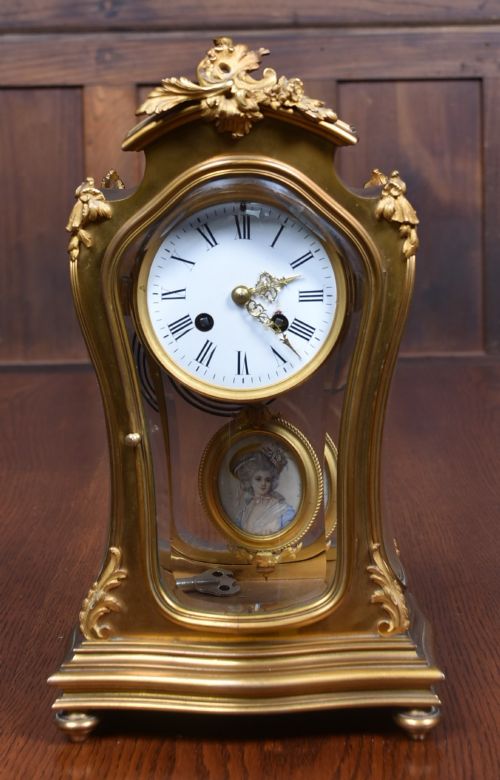


Gilt Enamel Clock
A gilt enamel clock brings together polished metal and coloured glass decoration, offering an ornate timepiece for mantelpieces, desks and travel.
Gilt Enamel Clock
A gilt enamel clock encompasses various formats including carriage clocks, mantel clocks, wall clocks and desk clocks originating from the Victorian era, Edwardian period and the nineteenth century. These pieces frequently draw upon French Rococo Revival, Louis XVI, and Napoleon III styles.
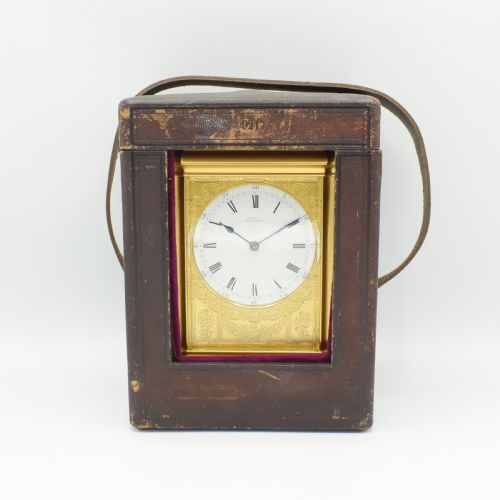
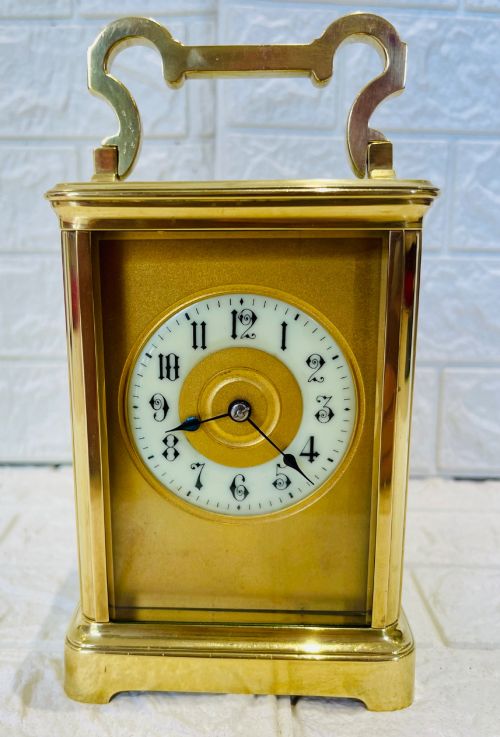
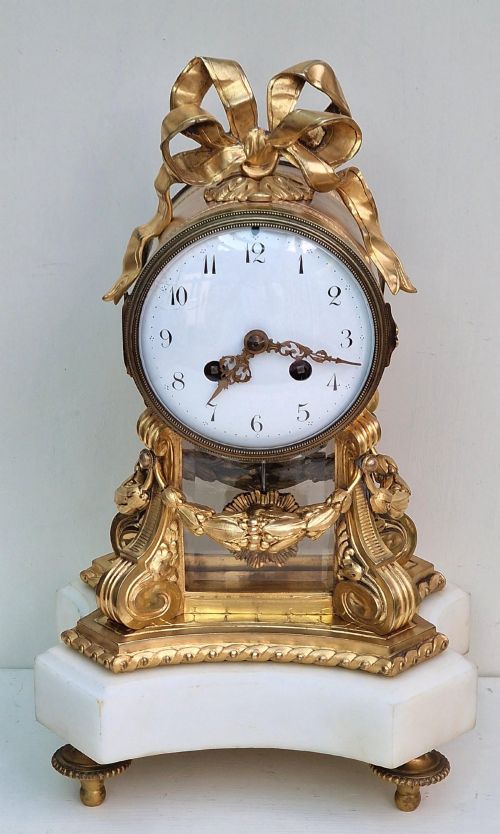
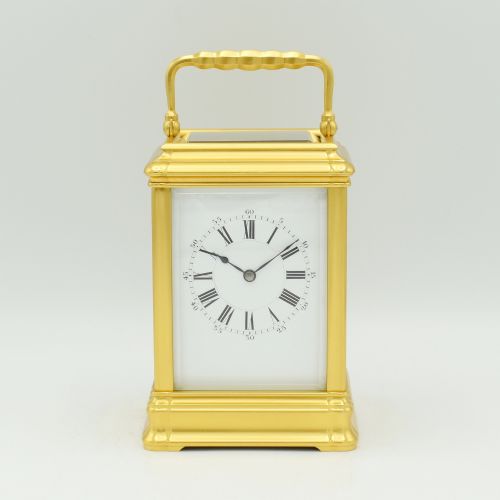
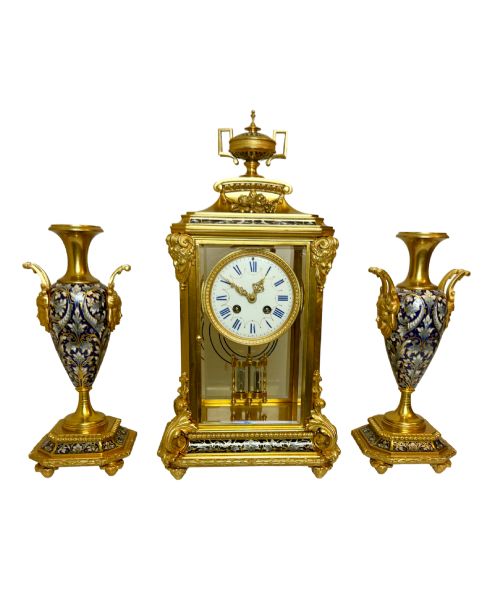
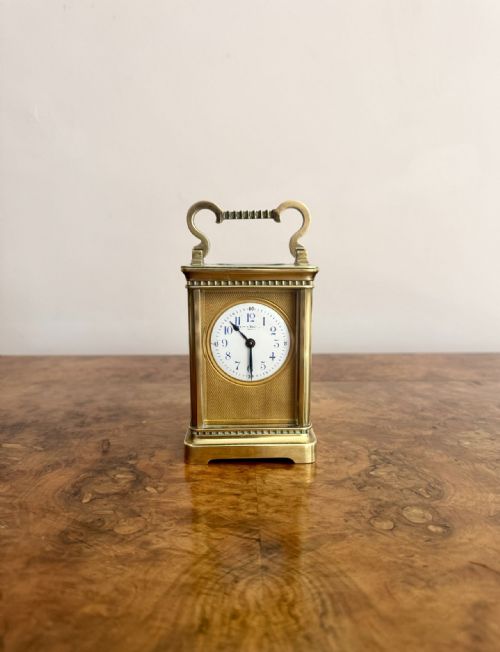
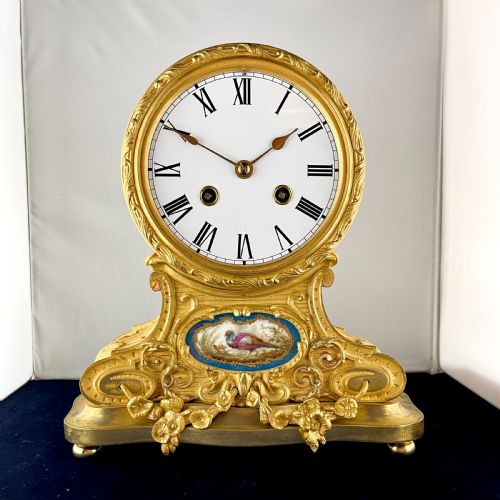
The carriage clock version appears frequently in the selection, often housed in a brass or gilt bronze case with an enamel dial or painted enamel panels. Mantel and table clocks also feature prominently, sometimes arranged as a clock garniture set alongside matching ornaments.
Originating largely from French workshops and makers of the late nineteenth century, these timepieces combine metalwork with decorative enamel techniques such as champlevé and cloisonné.
Materials and construction
Makers utilised gilt bronze, ormolu, brass and silver gilt to construct the structural cases and mounts, often combining these metals with white marble, glass or leather travel cases.
Enamel work appears on dials and inset panels, utilising glass pastes fused to metal surfaces to create intricate patterns and miniature painted scenes.
Movements range from standard eight-day mechanisms to striking clocks, repeaters and grand sonnerie systems, frequently paired with platform escapements.
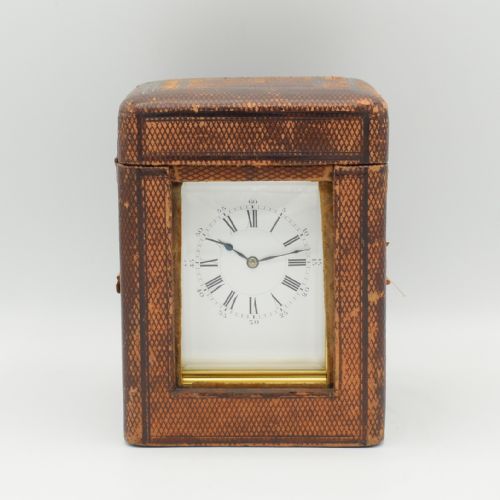
Some travel clocks survived with their original leather cases, having journeyed across Europe before resting on a quiet mantelpiece.
Distinctions in execution
The standard of a gilt enamel clock rests upon the crispness of the cast metal mountings and the depth of the gilding, alongside the fineness of any hand-painted enamel details or miniature portraits on the dial.
Complexities within the movement itself, such as repeating mechanisms, bell striking functions or engraved gilt brass framing, separate standard production pieces from more accomplished works.
The integration of decorative techniques like champlevé enamel with coordinated marble or bronze garniture elements indicates higher levels of original craftsmanship.
Henri Jacot·Japy Freres·Paul Garnier·Gontard and Bolviller·Leon Message·Jollet et Cie·Sacre
The Gilt Enamel Clock Glossary
- Ormolu
- Gilded bronze, produced by applying a mercury and gold amalgam to a bronze base and heating it. This technique creates a rich golden finish found on nineteenth-century French clock cases.
- Champlevé
- An enamelling technique where troughs or cells are hollowed out of a metal surface and filled with vitreous enamel powder before firing. The surrounding metal lines remain visible as part of the design.
- Cloisonné
- A method of decorating metal objects by soldering flat metal wire to the surface to create compartments, which are then filled with enamel paste. These wire boundaries contain the colours during the firing process.
- Carriage clock
- A portable spring-driven timepiece designed for travellers, typically featuring a rectangular brass or gilt bronze case with glass panels. They often include a carrying handle on top.
- Garniture
- A set of matching decorative objects designed to be displayed together on a mantelpiece or sideboard, usually consisting of a central clock flanked by two matching urns or candelabra.
Gilt Enamel Clock: Frequently Asked Questions
What is a carriage clock?
A carriage clock is a small, portable spring-driven timepiece developed for travel in the nineteenth century. These clocks typically feature glass panels allowing the movement to be viewed from the sides.
Most examples are housed in brass or gilt bronze cases with a folding handle on top, designed to fit inside a protective leather travel case.
How do champleve and cloisonne differ?
Champleve enamel involves carving or sinking troughs directly into the metal surface to hold the coloured enamel paste. The raised metal portions form the outline of the design.
Cloisonne enamel builds the design upwards by soldering thin metal wires onto a solid metal base to create compartments for the enamel. Both techniques are common on nineteenth-century clock cases and dials.
How do repeater clocks function?
A repeater clock is a mechanical timepiece that can strike the hours and quarters on demand when a lever or button is pressed. This complication was particularly useful for telling the time in the dark.
Many nineteenth-century carriage clocks include five-minute repeating or grand sonnerie functions, sounding the time automatically or upon request.