
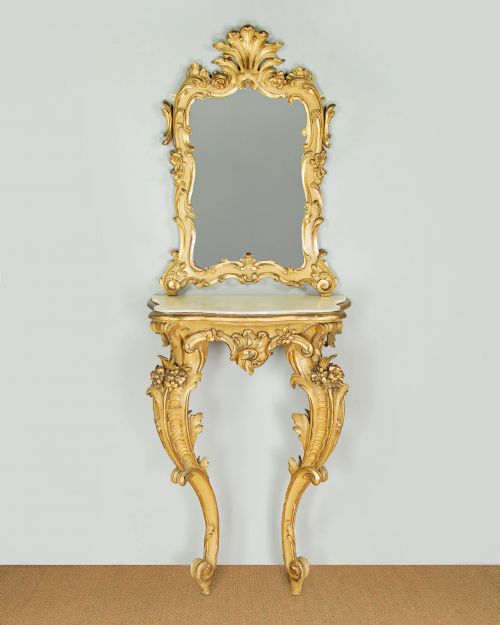
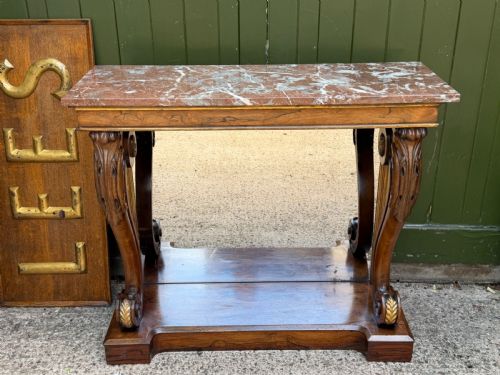


Gilt Console and Mirror
These gilded table and glass sets bring architectural presence and bright reflection to a room.
Gilt Console and Mirror
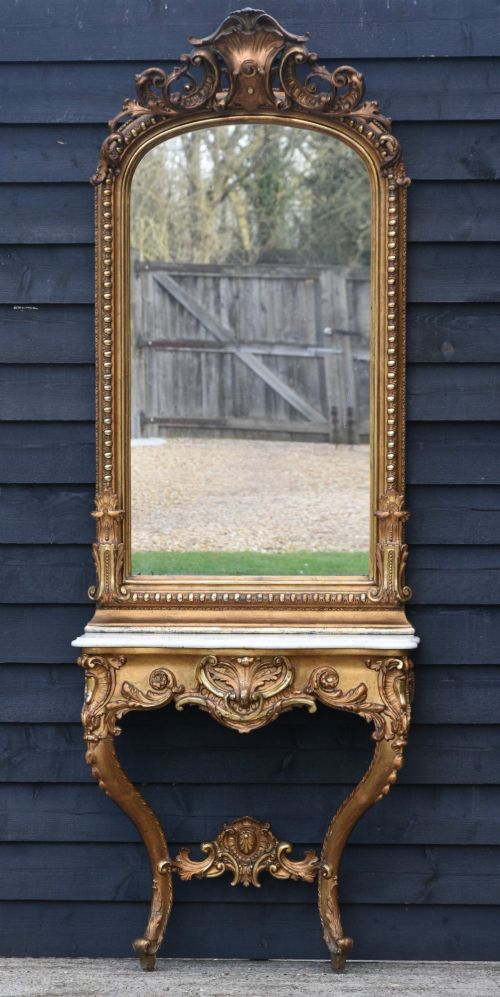
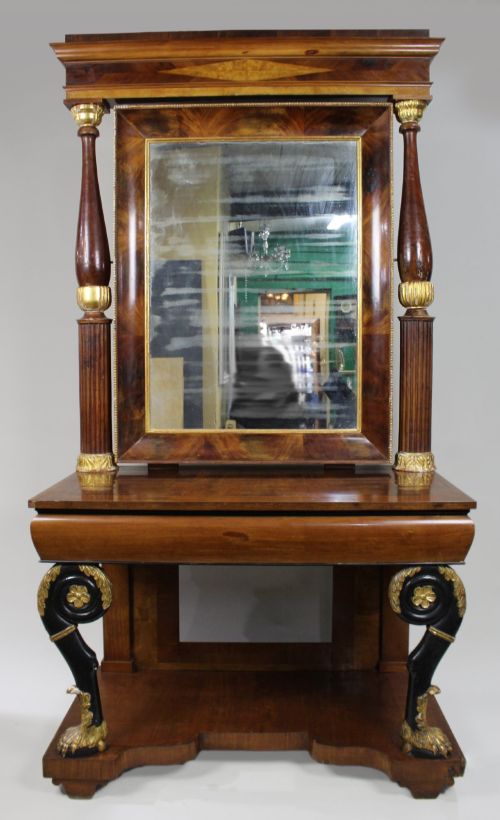
A gilt console and mirror pairs a wall glass with a matching support table designed to sit flat against a wall, frequently positioned beneath the looking glass itself. These matched ensembles appear across nineteenth-century Victorian and Regency periods, often reflecting French Rococo, Neoclassical, or Empire design influences.
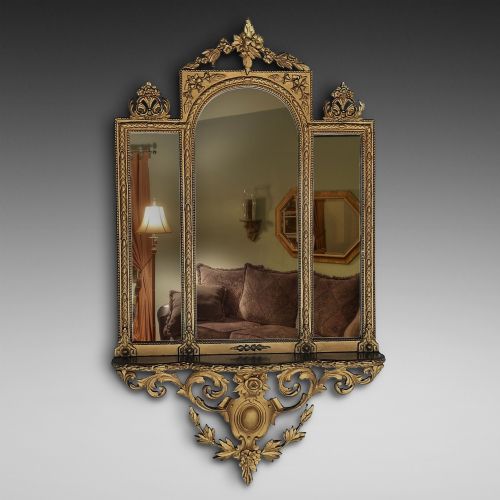
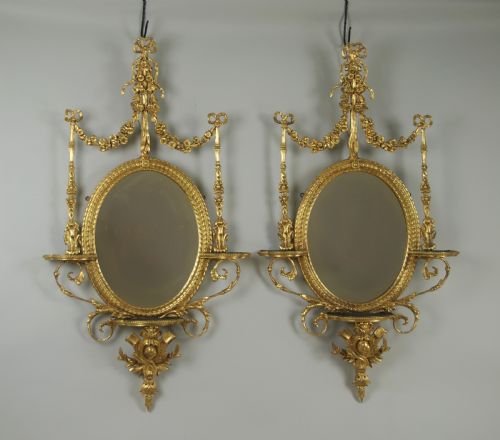
The table surfaces frequently feature figured marble or solid timber construction, while the accompanying frames range from tall pier glasses to large overmantel mirrors. Many examples arrive as unified sets incorporating carved wood, gesso, and display brackets designed for formal reception rooms or halls.
How they were made
Carvers shaped the foundational forms from timbers such as walnut, rosewood, and pine before applying layers of gesso to build up intricate scrollwork and foliage. Artisans then applied gold leaf using water gilding or oil gilding techniques to achieve the characteristic metallic brilliance.
Table tops utilised heavy slabs of figured marble, fitted precisely to the wooden frames, while the vertical glasses employed mirrored glass plates secured within heavy carved wooden rebates.
Listings feature pieces from the Victorian and Regency eras alongside nineteenth-century French Rococo and Neoclassical revival designs.
What varies in quality
The depth and crispness of the hand-carving separate ordinary production from superior examples, particularly where leaves, scrolls, and figures meet the wooden frame. Original water gilding shows a warmer, burnished metallic texture compared to later flat metallic paints.
The integration of the set reveals much about the original commission, as matched pairs sharing identical carving hands and complementary marble tops command greater visual harmony than assembled combinations.
The Gilt Console and Mirror Glossary
- Giltwood
- Timber that has been covered with a thin layer of gold leaf. This material forms the primary metallic finish on nineteenth-century frames and tables.
- Pier glass
- A tall mirror designed to hang on the wall space between two windows. These vertical glasses frequently sit directly above a matching console table.
- Gesso
- A plaster mixture applied to wood frames to create a smooth surface for carving and gilding. Artisans model intricate relief decoration directly into this pliable ground.
- Console table
- A table supported by wall brackets or front legs, designed to stand flat against a wall. Examples in this selection often feature shaped marble tops.
- Parcel-gilt
- Woodwork where only specific carved details or raised ornaments are gilded, leaving the underlying timber exposed elsewhere on the piece.
Gilt Console and Mirror: Frequently Asked Questions
How do I style a console and mirror?
Mount the glass securely to the wall at a height that allows the console table to sit flush underneath without obstruction.
Keep the marble surface uncluttered, perhaps adding a single decorative object or display bracket to balance the visual weight of the frame.
Were tables and mirrors always sold together?
Many makers produced these sets as unified commissions for specific rooms, ensuring the carving styles and dimensions matched precisely.
Over the years, some tables and mirrors became separated, though matched sets remain highly sought after by collectors.
What is a pier mirror?
A pier mirror is a tall, narrow glass originally built to hang on the solid wall between two windows. Their vertical proportions helped bounce natural light back into grand nineteenth-century rooms.
They frequently appear paired with matching console tables positioned right beneath the glass.
How do I identify Regency pieces?
Regency items date from the early nineteenth century and often incorporate rosewood, parcel-gilt highlights, and classical architectural motifs.
Look for refined proportions, Egyptian-inspired details, and inset mirror-backs that distinguish them from later Victorian revivals.