


Gilt Carver Chairs
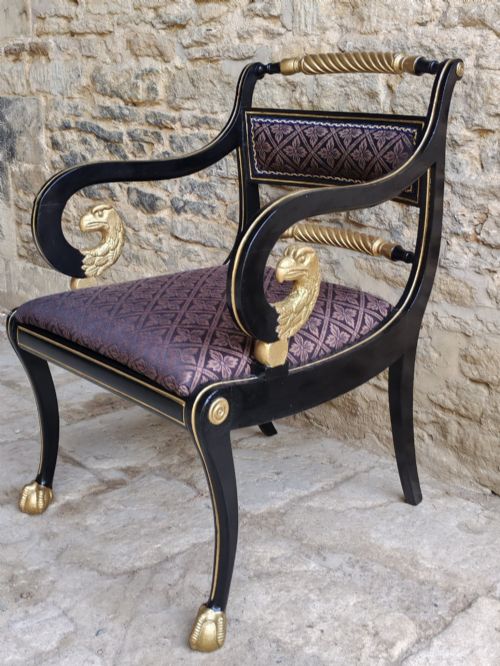
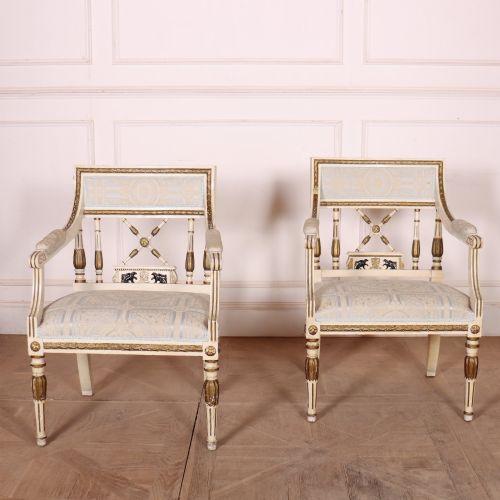
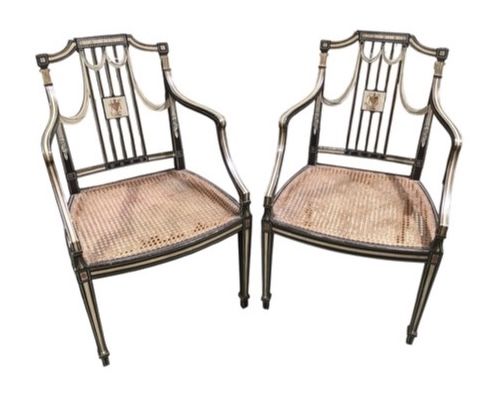
These gilt carver chairs bring gilded timber and generous armrests to a room, offering both formal presence and a comfortable seat.
Gilt Carver Chairs
When you search for gilt carver chairs, you encounter large seating designed with armrests for the head of a table or a prominent corner of a room. The selections here span dining chairs and armchairs, taking forms such as library chairs and elbow chairs.
The pieces on this page draw from the eighteenth and nineteenth centuries alongside later revivals, reflecting Regency, Louis XVI, Swedish Empire, and Italian Neoclassical styles.
Most examples you meet here pair gilded finishes with upholstered seats and backs, often using silk damask or decorative fabric.
How they were made
The makers of these chairs worked primarily in wood, utilising mahogany, walnut, ebonised wood, and painted timber as foundational bases for gilding and gesso decoration.
Surface finish relies on traditional techniques of applying gold leaf or silver gilt directly onto prepared gesso grounds, alongside parcel gilt highlights on painted or dark wood surfaces.
Materials recorded across the inventory include solid walnut, mahogany, ebonised wood, and fabric upholstery.
What varies in quality
Quality rests upon the crispness of the carved detail in the timber and gesso, where sharper enrichment indicates a more careful hand than soft or rounded moulding.
The integrity of the gilded surface and the underlying timber structure dictate the standing of a piece, alongside the cohesion of period upholstery choices.
Gillows
The Gilt Carver Chairs Glossary
- Carver chair
- An armchair designed with supportive elbow rests, historically placed at the head of a dining table. These pieces provide a wider seat than standard side chairs.
- Giltwood
- Timber that has been coated with thin sheets of gold leaf over a prepared gesso layer. This finish creates a luminous metallic surface across the wooden frame.
- Gesso
- A plaster mixture applied to wood surfaces as a smooth base before gilding. Carved details are often modelled directly in this material.
- Parcel gilt
- A decorative technique where only specific carved elements or raised details are gilded, leaving the underlying painted or polished wood visible.
- Elbow chair
- An alternative term for an armchair with distinct arm supports. These frequently appear in sets alongside matching dining chairs without arms.
Gilt Carver Chairs: Frequently Asked Questions
How were gilt carver chairs used?
These armchairs served primarily as prestigious seating at the ends of dining tables or as formal occasional chairs in drawing rooms and libraries. Their generous proportions marked them out for hosts or readers.
Over time, they moved between formal dining spaces and quiet reception rooms, functioning both as practical seating and as decorative statements of status.
How do I spot a revival piece?
Revival pieces often date from the late nineteenth or early twentieth centuries, mimicking earlier Regency or neoclassical forms with modern construction methods. Examining the timber beneath the gilding helps reveal the true age.
Tool marks and the composition of the gesso layer underneath the gold leaf also offer clear clues to distinguish an eighteenth-century original from a later twentieth-century interpretation.
What is ebonised wood?
Ebonised wood is timber treated with a chemical stain or dark finish to imitate expensive ebony. This dark surface frequently serves as a stark contrast to gilt details.
In many Regency and revival pieces, this dark finish highlights the carved gilding, creating a dramatic visual effect across the frame.
Can I use them every day?
These chairs are built from sturdy timbers like mahogany and walnut, making them suitable for regular use when handled with care. The primary concern is protecting the delicate gilded surfaces from knocks.
Upholstery fabrics may require gentle maintenance or reupholstering depending on their age and condition, but the wooden frames remain remarkably robust.