




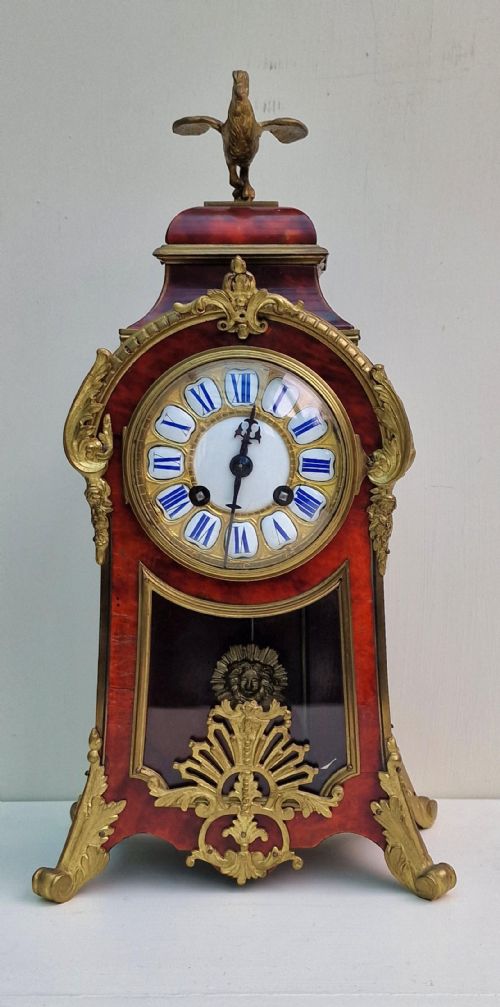


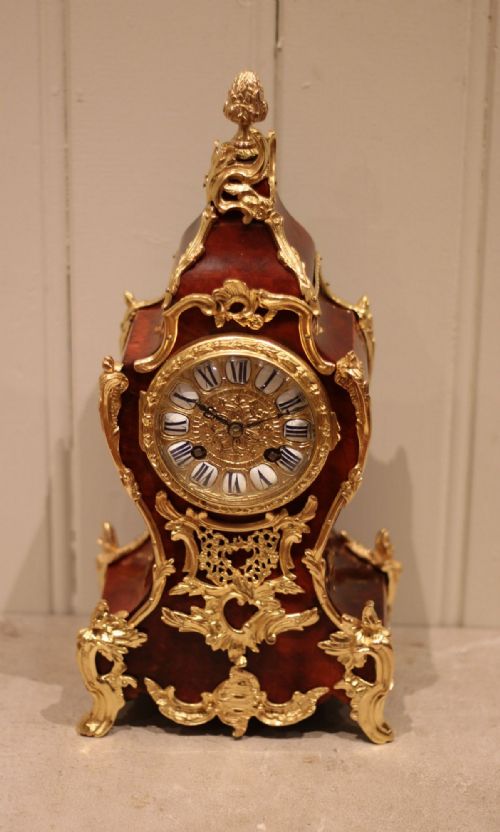
Gilt Bronze Mounted Clock
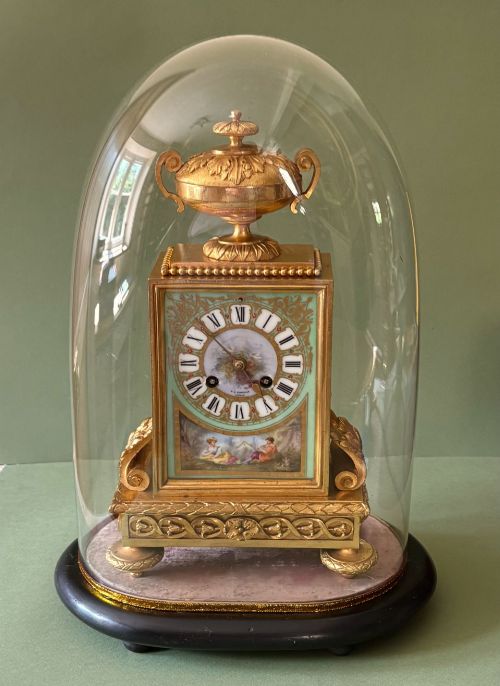
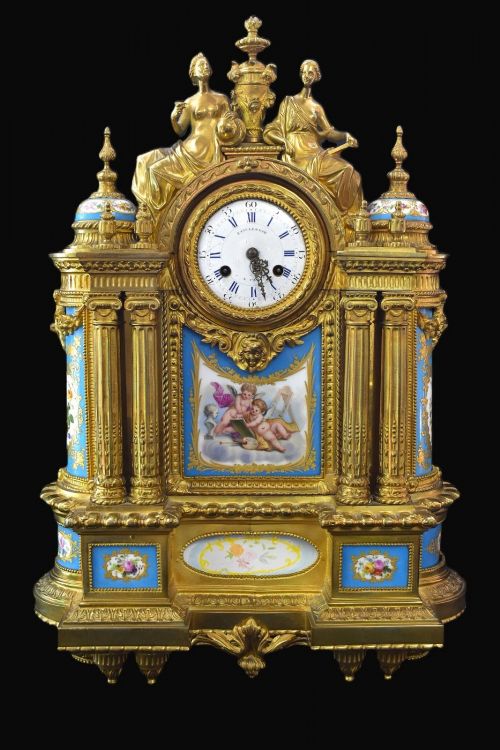
A gilt bronze mounted clock brings together cast metal and precision movement, dominated here by French 19th-century mantel designs.
Gilt Bronze Mounted Clock
A gilt bronze mounted clock combines functional timekeeping with sculptural metalwork, serving primarily as mantel decoration. These pieces range from substantial portico models to intricate table and bracket designs.
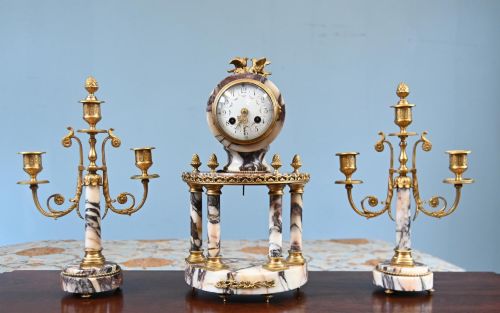
The objects appearing most frequently on this page are French mantel clocks and clock garnitures dating from the 19th century. Many incorporate decorative side pieces such as candelabras alongside the central clock.
Makers and workshops integrated brass, ormolu, and bronze mounts with materials like marble, porcelain, and tortoiseshell. The resulting forms span revival styles including Louis XV, Louis XVI, and Boulle work.
How They Were Made
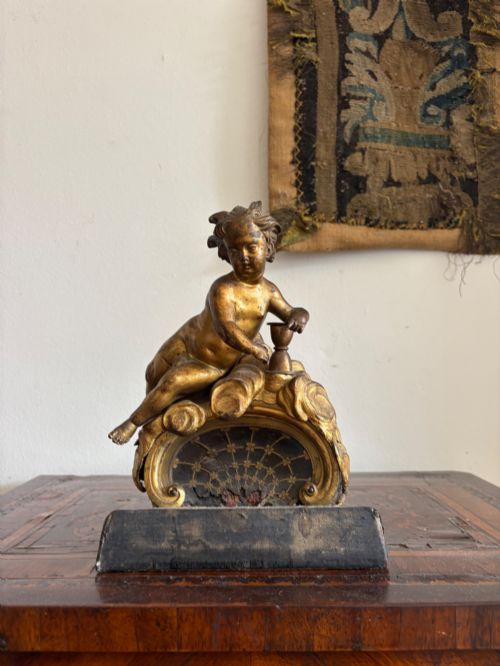
Craftsmen cast gilt bronze and ormolu mounts to embellish wooden, marble, or ebonised foundations. These metal elements required detailed chasing and gilding to achieve their characteristic surface finish.
Clockmakers housed mechanical movements, such as eight-day systems and fusee mechanisms, inside cases decorated with enamel dials, porcelain panels, and tortoiseshell veneer.
Gilt Bronze Mounted Clock Retail Price Guide 2026
Typical asking prices for gilt bronze mounted clock among the pieces listed under this phrase on Sellingantiques today, from the lower quarter to the upper quarter. They describe what is for sale here now, not the wider market.
An adventurous elephant occasionally supports a marble mantel clock, proving that time waits for no beast.
What Varies In Quality
The refinement of the cast bronze mounts separates standard production from finer work, visible in the depth of the chasing and the warmth of the gilding. Better examples display crisp detailing in foliage, figures, and architectural motifs.
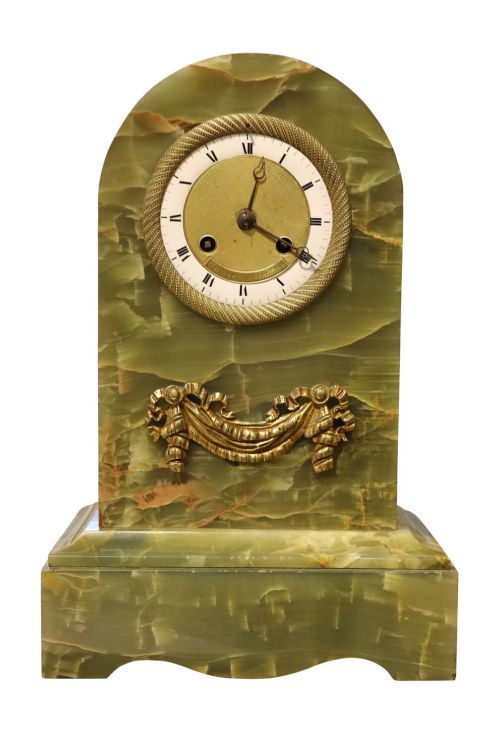
The integration of materials dictates the overall success of the piece, as seen in the precision of tortoiseshell inlay, the selection of marble or onyx, and the hand-painted quality of porcelain dials and panels.
Charles à Orléans·Paul Sormani·Etienne Lenoir·Louis Goret·Lenzkirch·Payne & Co London·Achille Brocot·A.D. Mougin·Miroy Frères·J.B. Delettrez
The Gilt Bronze Mounted Clock Glossary
- Ormolu
- Gilded bronze produced through a mercury amalgamation process used extensively on decorative mounts in the 18th and 19th centuries. This technique yields a distinctive bright gold surface texture.
- Boulle
- Marquetry technique utilising brass and tortoiseshell inlaid in intricate patterns, popular in French furniture and clock cases. Named after the royal cabinetmaker André-Charles Boulle.
- Garniture
- A set of matching decorative objects, typically comprising a central clock flanked by two matching candelabras or urns. These sets were designed to adorn a mantelpiece as a cohesive display.
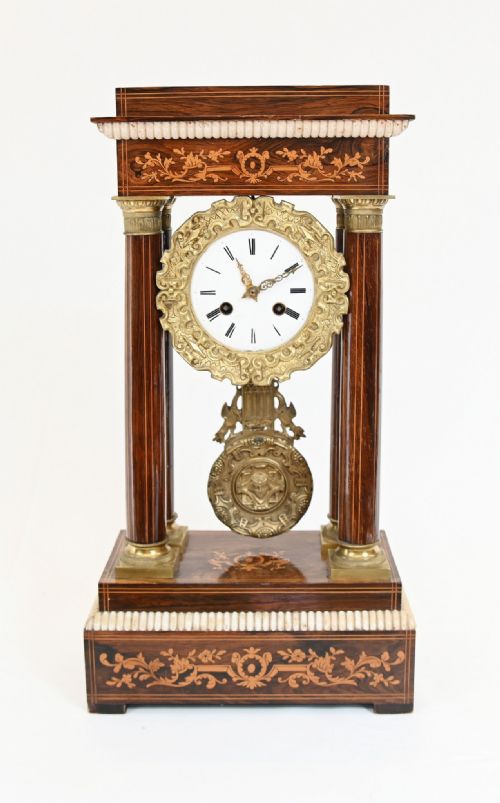
- Portico clock
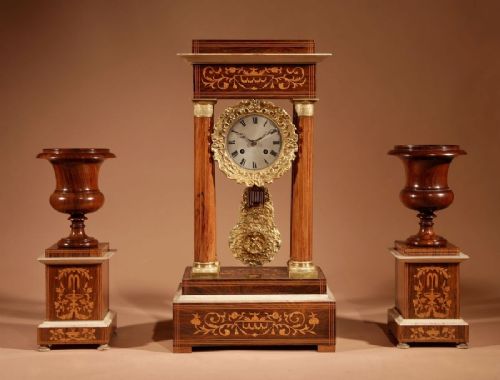
- A mantel clock featuring a architectural case supported by columns resembling a classical portico. These designs often incorporate a suspended pendulum visible within the central opening.
- Fusee
- A conical pulley connected to the mainspring by a chain or cord, designed to equalise the drive force as the spring unwinds. This mechanism improves timekeeping accuracy in mechanical clocks.
Gilt Bronze Mounted Clock: Frequently Asked Questions
How do I wind an antique clock?
Most mechanical clocks require a key to wind the springs through holes on the dial face. Care must be taken not to overwind the mechanism.
Consult the specific movement type, such as an eight-day movement, to determine the correct winding interval and prevent damage to the gear train.
What is a clock garniture?
A clock garniture consists of a central mantel clock accompanied by matching decorative side pieces, frequently a pair of candelabras or vases. These matched sets were manufactured to create a balanced display on a mantelpiece.
The components share materials, such as gilt bronze mounts and marble bases, uniting the grouping aesthetically.
How do I identify French revival styles?
French revival clocks draw inspiration from earlier royal periods, showing specific decorative vocabulary. Louis XV and Rococo styles feature asymmetrical scrolls and floral forms, while Louis XVI pieces emphasise symmetry, columns, and neoclassical motifs.
Boulle work points towards Louis XIV interpretations through tortoiseshell and brass marquetry.
Where should I place a heavy marble clock?
Heavy marble and slate clocks require a sturdy, level surface capable of supporting considerable weight. Mantelpieces or low heavy furniture serve best to ensure stability.
Positioning the clock away from direct heat sources and vibrations helps maintain the integrity of both the stone case and the internal mechanical movement.