



Gilt Bronze Mounted Bookcase
A gilt bronze mounted bookcase brings architectural gravitas and refined display space to a room, combining rich cabinet woods with cast metallic mounts.
Gilt Bronze Mounted Bookcase
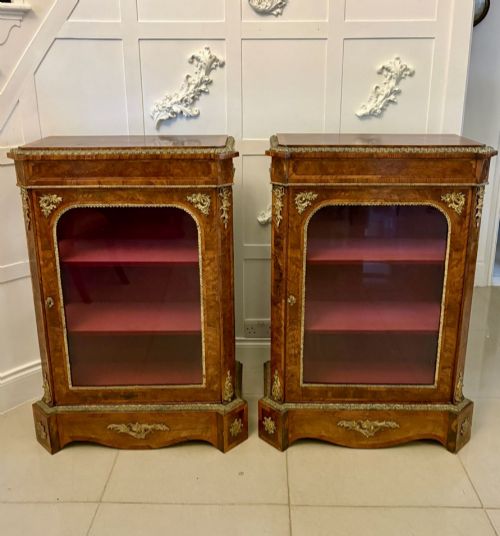
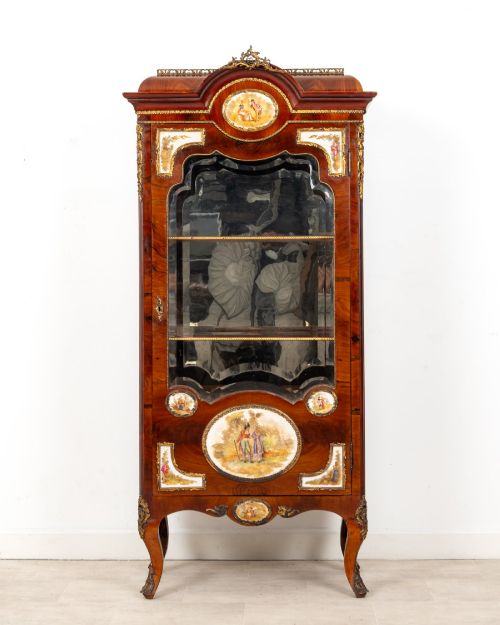
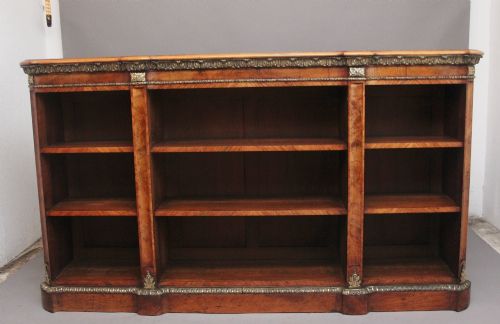
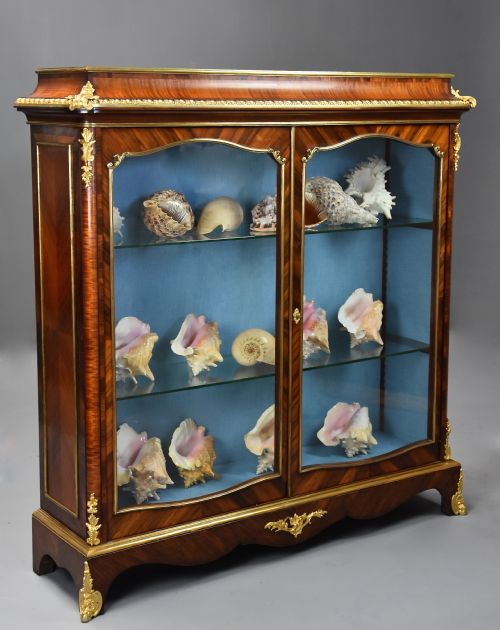
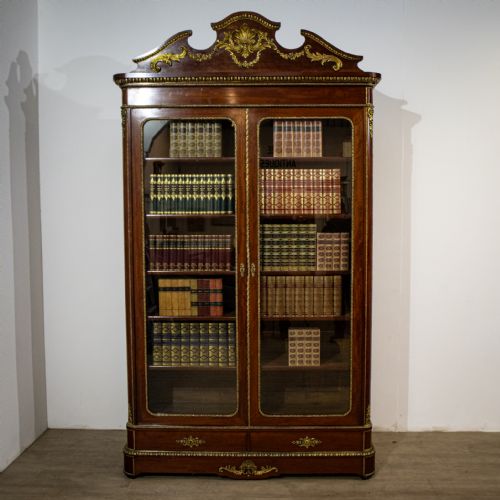
A gilt bronze mounted bookcase serves as both a functional library piece and a grand display cabinet, frequently appearing alongside related forms such as pier cabinets, vitrines, and bibliotheques. These pieces combine timber shelving or glazed display areas with robust metal embellishments that frame doors, corners, and plinths.
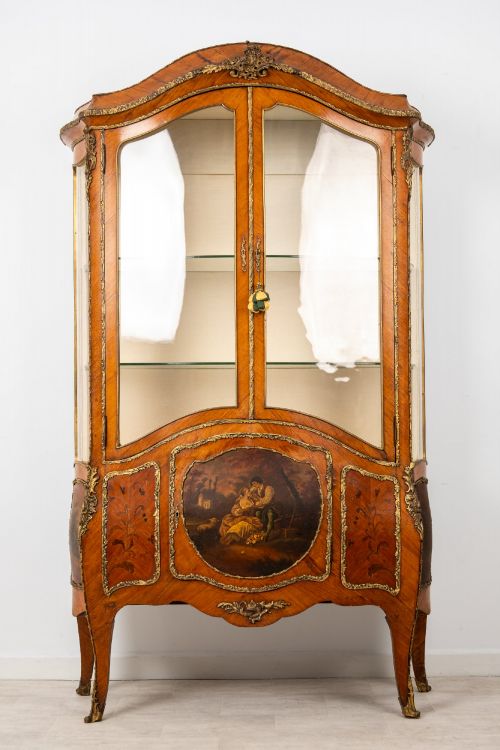
The pieces encountered on this page stem predominantly from the nineteenth century, encompassing Victorian English workshops and French ateliers influenced by Louis XV, Louis XVI, and Empire revivals. Makers utilise rich foundational woods like walnut, kingwood, mahogany, and satinwood to support elaborate decorative schemes.
Forms range from open library shelving to serpentine-front display cabinets and towering cartonnier cabinets fitted with drawers. Many examples incorporate glass panels or porcelain plaques, designed explicitly to showcase fine volumes and curated collections.
How they were made
Cabinetmakers constructed the carcases using dense timbers such as mahogany, walnut, and kingwood, frequently applying intricate marquetry or rich veneers across the exterior surfaces. The foundational structure required precise joinery to support heavy glass doors, marble tops, and internal shelving.
Ormolu and gilt bronze mounts were cast, chased, and fire-gilded before being meticulously fitted to the corners, friezes, and borders of the cabinet. These metal elements required exact hand-fitting to complement the natural grain and curvature of the underlying timber.
Some cabinets hide letters behind glazed doors while others hide documents in cartonnier drawers, proving Victorians loved secret paper trails.
What varies in quality
The refinement of the cast bronze mounts distinguishes standard production from exceptional examples, as sharper chisel work and deeper chasing create a more vivid play of light across the metal. Heavier, more substantial mounts that integrate harmoniously with the cabinet architecture indicate superior workshop standards.
The selection and execution of timber veneers, alongside the crispness of marquetry inlay, determine the visual depth of the piece. Master makers ensured that the grain alignment and the integration of secondary elements like porcelain plaques or Vernis Martin panels were executed with absolute precision.
Johnstone and Jeanes·Paul Sormani·Victor Raulin·Gillows·Maison Krieger
The Gilt Bronze Mounted Bookcase Glossary
- Ormolu
- Gilded bronze applied as decorative mounts to furniture. The technique involves a mercury gilding process that imparts a warm, enduring metallic lustre.
- Vitrine
- A glass-fronted display cabinet designed for porcelain and objects of vertu. These pieces allow light to pass across delicate collections while protecting them from dust.
- Vernis Martin
- A type of simulated Japanese lacquer developed in France. Artisans applied successive coats of varnish to create translucent painted panels depicting pastoral or fantastical scenes.
- Cartonnier
- A decorative cabinet fitted with internal compartments or drawers for holding papers and documents. They frequently incorporate grand architectural mounts and leather-accented drawers.
- Pier Cabinet
- A low cabinet designed specifically to stand against the wall space between windows. These pieces often feature glass doors and elaborate ormolu borders.
Gilt Bronze Mounted Bookcase: Frequently Asked Questions
Where were these cabinets placed in a nineteenth-century home?
These pieces found homes in formal libraries, drawing rooms, and studies where hosts displayed their literary collections and prized possessions. Pier cabinets were specifically scaled to occupy the narrow wall spaces situated between large windows.
Grander cabinet bookcases served as architectural focal points in reception rooms, anchoring the interior design scheme.
How do I care for gilt bronze mounts?
Gilt bronze and ormolu require gentle dusting with a soft, dry brush to prevent the accumulation of particles in the recessed chased details. Avoid abrasive cleaning agents or metal polishes that can strip the delicate historic gilding from the surface.
Maintaining a stable room humidity protects both the underlying timber carcase and the security of the metal fixings.
How do French and English styles differ?
French pieces from this period frequently draw upon Louis XV and Louis XVI revivals, favouring exotic woods like kingwood and elaborate, naturalistic ormolu mounts. English furniture of the era often employs burr walnut or mahogany, demonstrating a slightly more restrained architectural approach.
Both traditions shared a high standard of craftsmanship, often crossing cultural boundaries through shared design influences.