


Gilt Bronze Console
A gilt bronze console brings French nineteenth-century grandeur into a room through heavy gilt mounts and polished marble tops.
Gilt Bronze Console
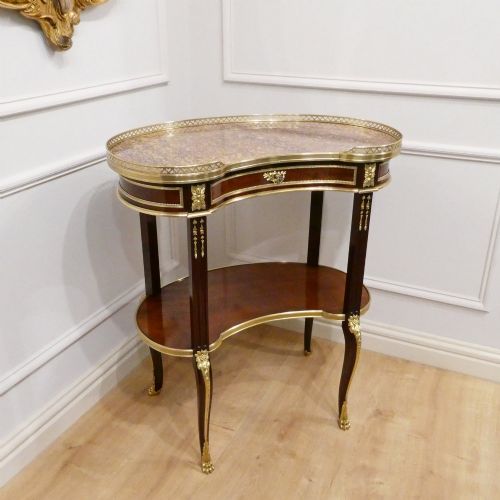
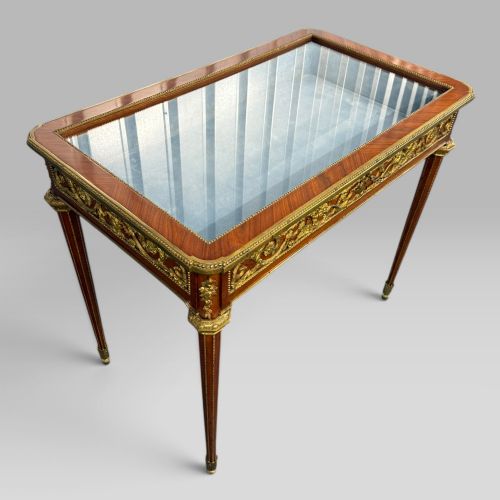
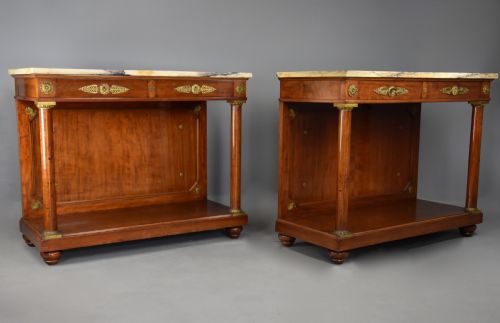
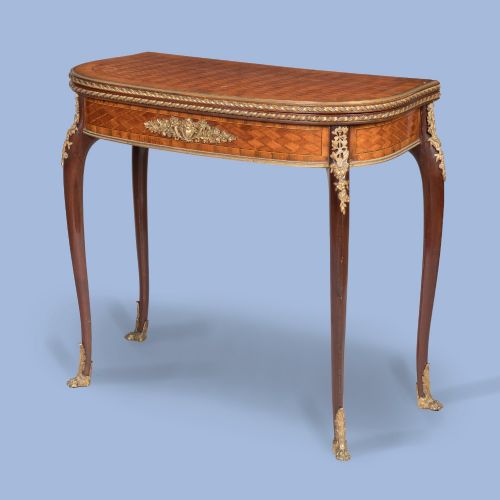
When searching for a gilt bronze console, a buyer examines tables designed for display and formal reception rooms, largely originating from nineteenth-century French workshops. The selection centres on console tables, side tables, and card tables, alongside wall brackets and occasional tables.
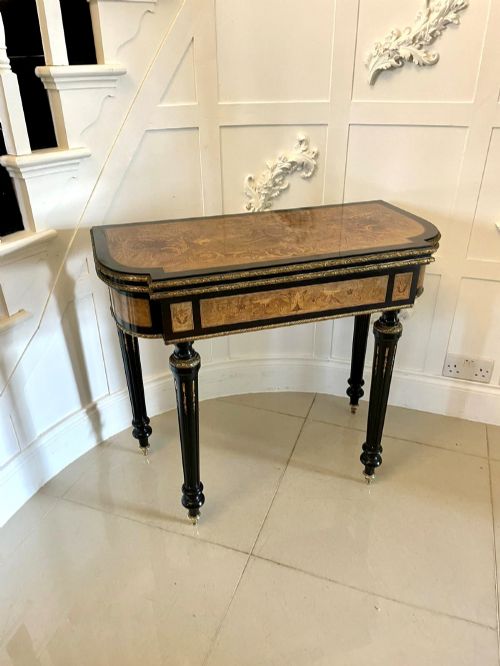
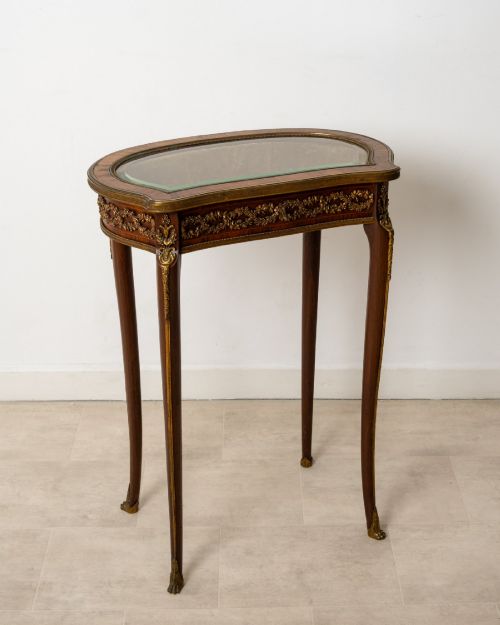
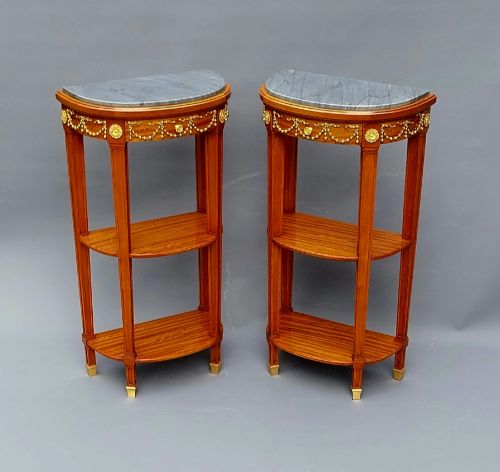
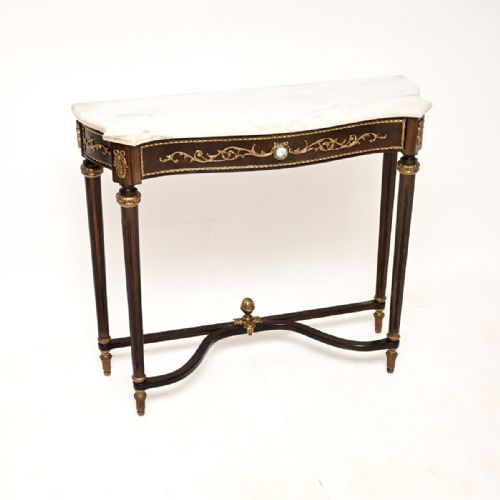
Most pieces meet the eye in revival styles, notably Louis XVI and Louis XV, alongside French Empire and Napoleon III designs. These forms combine architectural timber frames with cast metal mounts, marble surfaces, and intricate marquetry or parquetry inlays.
How they were made
Cabinetmakers constructed carcass frames using mahogany, kingwood, walnut, and rosewood, often applying veneers in geometric parquetry or floral marquetry patterns. Ebonised wood and satinwood also appear as contrasting elements within the polished surfaces.
Mounts of ormolu and gilt bronze were cast, chased, and fire-gilded before being fixed to the timber frames. Heavy marble tops, frequently in white or veined varieties, completed the upper surfaces of the console and centre tables.
Card tables fold open to reveal hidden compartments where nineteenth-century players stored small counters and decks of cards.
What varies in quality
The distinction between standard production and exhibition-quality work rests on the crispness of the gilt bronze chasing and the precision of the timber marquetry. Finer pieces demonstrate meticulous hand-finishing in the mount details and seamless integration of veneers across folding table tops.
The weight and selection of the marble top, the depth of the cabinetwork timbers, and the presence of maker stamps or attributions separate ordinary decorative furniture from masterworks of the period.
Maison Millet·François Linke·Krieger Paris·Joseph-Emmanuel Zwiener·Henri Dasson·Gillows
The Gilt Bronze Console Glossary
- Ormolu
- Gilded bronze used for decorative mounts on furniture. The technique involves applying a mercury and gold amalgam to cast bronze before heating.
- Marquetry
- The art of applying small pieces of veneer to a structure to form decorative patterns and pictures. Makers used diverse woods to achieve tonal contrast.
- Parquetry
- Geometric mosaic woodwork used for flooring and furniture surfaces. It relies on symmetrical arrangements of timber veneers.
- Console table
- A table designed to stand against a wall, traditionally supported by wall brackets or console legs. Many examples feature fitted marble tops.
- Boulle
- A style of marquetry using brass and tortoiseshell inlaid into cabinet surfaces. It originated in seventeenth-century France and saw revival use in the nineteenth century.
Gilt Bronze Console: Frequently Asked Questions
What is a gilt bronze console?
A gilt bronze console is a nineteenth-century decorative table featuring cast metal mounts and timber construction. They were built primarily in France during revival periods.
These tables served formal reception rooms and hallways, often paired with matching marble slabs and elaborate marquetry inlays.
How were console tables used?
Console tables functioned as decorative furniture placed against drawing room walls, frequently beneath mirrors or wall brackets. They displayed decorative objects and provided surfaces for lamps.
Card and games tables adapted the form for evening entertainment, featuring folding tops that opened to baize-lined playing surfaces.
How do I identify Louis XVI style?
Louis XVI style furniture relies on straight tapering legs, neoclassical symmetry, and restrained geometric mounts. The forms contrast with the curved lines of earlier Rococo designs.
Marquetry patterns in this style often incorporate trellis designs, floral swags, and classical architectural motifs.
What woods were used in these tables?
Cabinetmakers utilised exotic and native hardwoods including mahogany, kingwood, walnut, and rosewood. These timbers provided rich natural grains for extensive veneer work.
Ebonised wood and tulipwood also appear, supplying contrasting dark and light tones for parquetry and stringing lines.