



Gilt Brass Hanging Lamp
A gilt brass hanging lamp brings heavy metalwork and clear glass together overhead, offering bright illumination and period character to a hall or room.
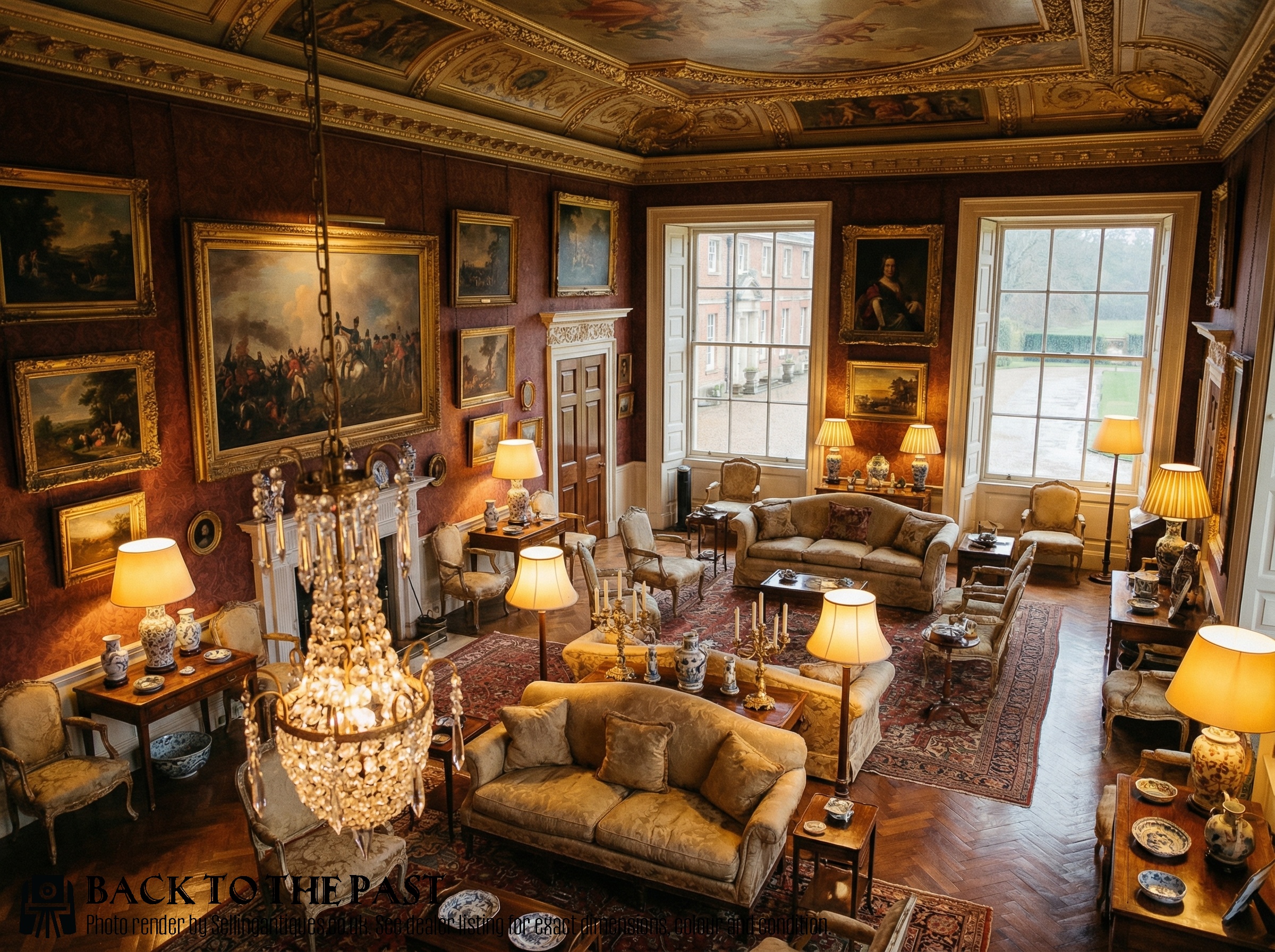
Gilt Brass Hanging Lamp
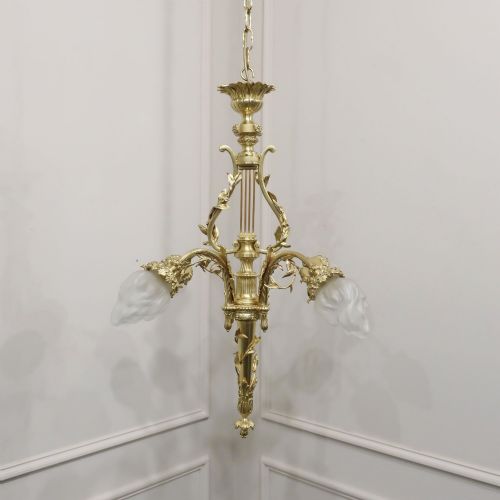
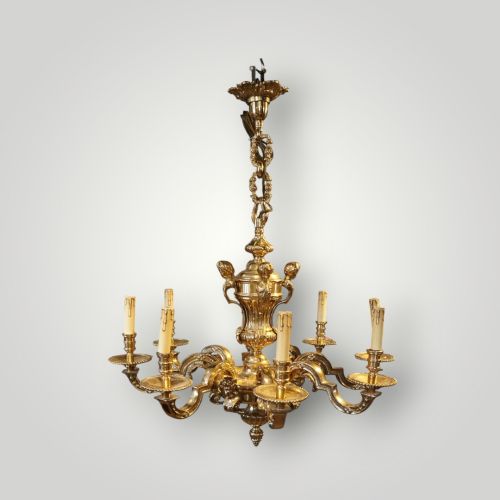
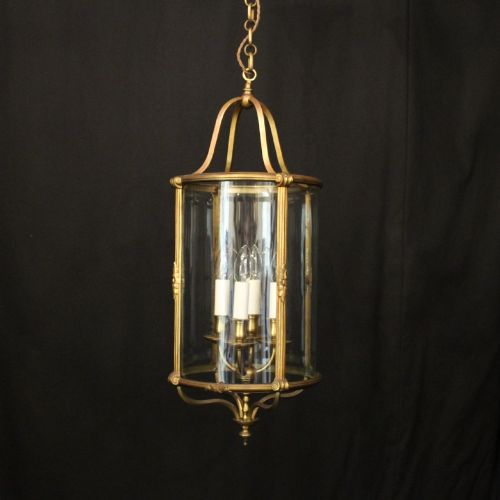
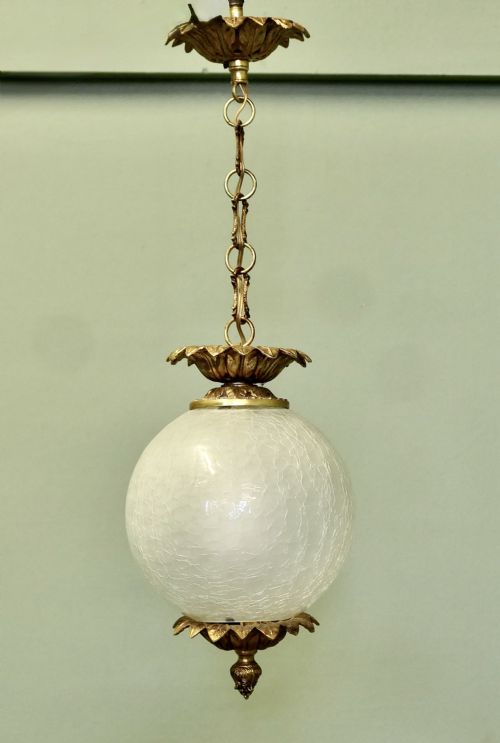
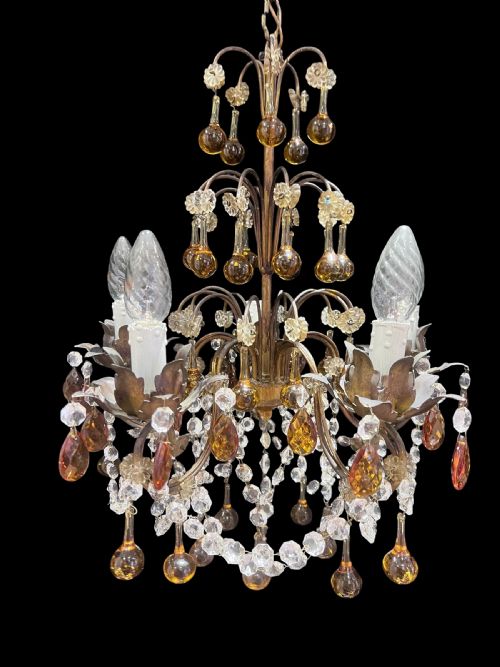
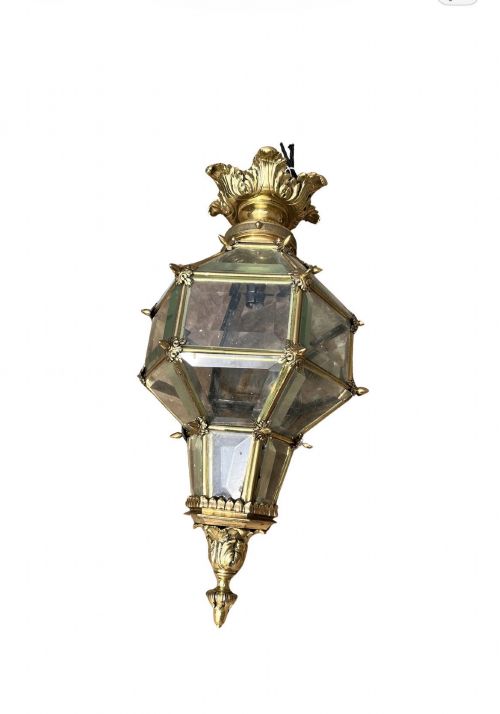
A gilt brass hanging lamp draws on French Neoclassical, Baroque, and Rococo styles, alongside Italian revival designs and twentieth century modern forms. These pieces include multi arm chandeliers, hall lanterns, and glass globe pendants suspended from ceilings in domestic spaces.
Materials and construction methods
Makers shaped these lamps using cast bronze, brass, and gilt metal, applying a gold finish over the base metal through fire gilding or plating. Frames incorporate structural arms, pierced bands, and cast mounts that support glass shades or open candle branches.
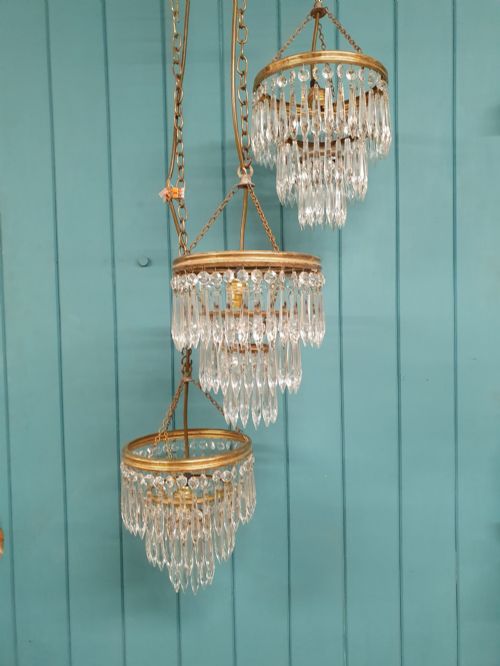
Crystals and cut glass elements hang from wire loops or pinned fixings attached directly to the metal frame. Globe pendants and convex hall lanterns enclose the light source within blown or moulded glass housings.
Spike chandeliers offer a prickly silhouette that proves even nineteenth century lighting designers appreciated a touch of botanical aggression.
Markers of distinction and build
Quality rests in the crispness of the metal casting and the depth of the gilding applied to the bronze or brass substrate. Finer examples display sharp chased details on the arms and mounts rather than soft, smoothed surfaces.
The integration of genuine cut crystal drops and heavy cast frames distinguishes superior pieces from lighter stamped metal alternatives. Heavier branch counts and complex multi tier constructions require robust internal framing to support the weight securely.
The Gilt Brass Hanging Lamp Glossary
- Gilt bronze
- A copper alloy coated with a layer of gold, frequently termed ormolu in French antique lighting. This material resists tarnishing while providing a bright golden sheen.
- Hall lantern
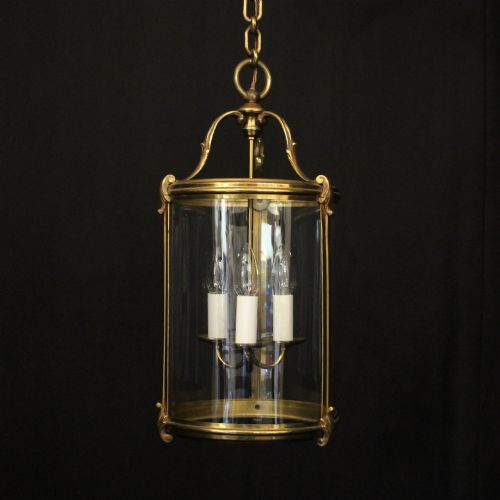
- An enclosed hanging light designed specifically for corridors, vestibules, and entrance spaces. These fixtures usually feature glass panels held within a metal framework.
- Chandelier
- A branched ceiling light designed to hold multiple illumination points across extended arms. They range from simple single tier designs to large multi light assemblies.
- Crystal drop
- A piece of cut or moulded glass suspended from a chandelier to refract light around the room. These elements vary from small faceted beads to large icicle pendants.
- Empire style
- A neoclassical design vocabulary inspired by ancient Roman and Greek motifs, often featuring strict symmetry and classical ornaments. Lamps in this style utilise clean lines and architectural mounts.
Gilt Brass Hanging Lamp: Frequently Asked Questions
How do I hang a heavy brass chandelier?
Heavy chandeliers require direct suspension from a structural ceiling joist using an appropriate steel hook and weight rated chain. Professional installation ensures the electrical wiring and ceiling fixings bear the full load safely.
Lowering the lamp to a suitable height depends on the ceiling clearance of the specific room and whether it hangs above furniture or open floor space.
How do I clean gilt brass and crystal?
Dust metal surfaces gently with a soft dry cloth and avoid abrasive polishes that wear away the thin gold surface layer. Crystal drops can be washed using mild soapy water while attached, provided the fixture is fully disconnected from the mains.
Ensure every glass component dries thoroughly before restoring power to the lamp to prevent electrical faults.
Are these lamps wired for modern use?
Many period fixtures retain older wiring or have undergone rewiring by previous owners to meet contemporary standards. Buyers should plan for a qualified electrician to inspect and adapt the internal cables for safe domestic installation.
Standard lamp holders accommodate modern bulbs while preserving the historic appearance of the outer metal and glass housing.
How do I date an antique hanging lamp?
Dating relies on stylistic clues, casting techniques, and the specific materials used in the construction of the frame and glass. Nineteenth century pieces often show heavier cast bronze elements, whereas nineteen thirties examples lean toward cleaner Art Deco lines or simple glass globes.
Comparing the decorative motifs against documented periods helps establish a reliable timeline for each fixture.