
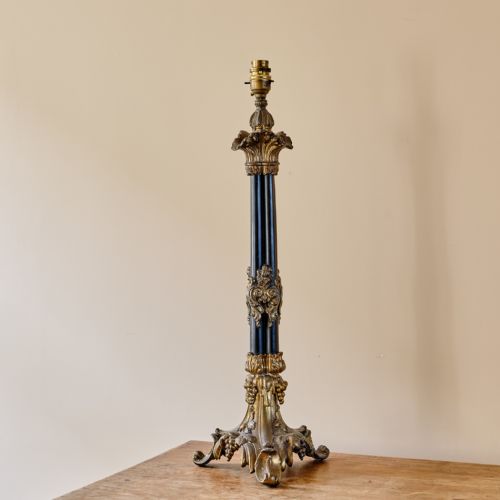
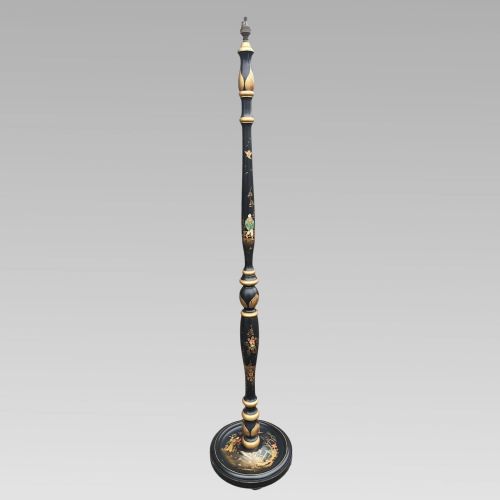


Gilt Black Standard Lamp
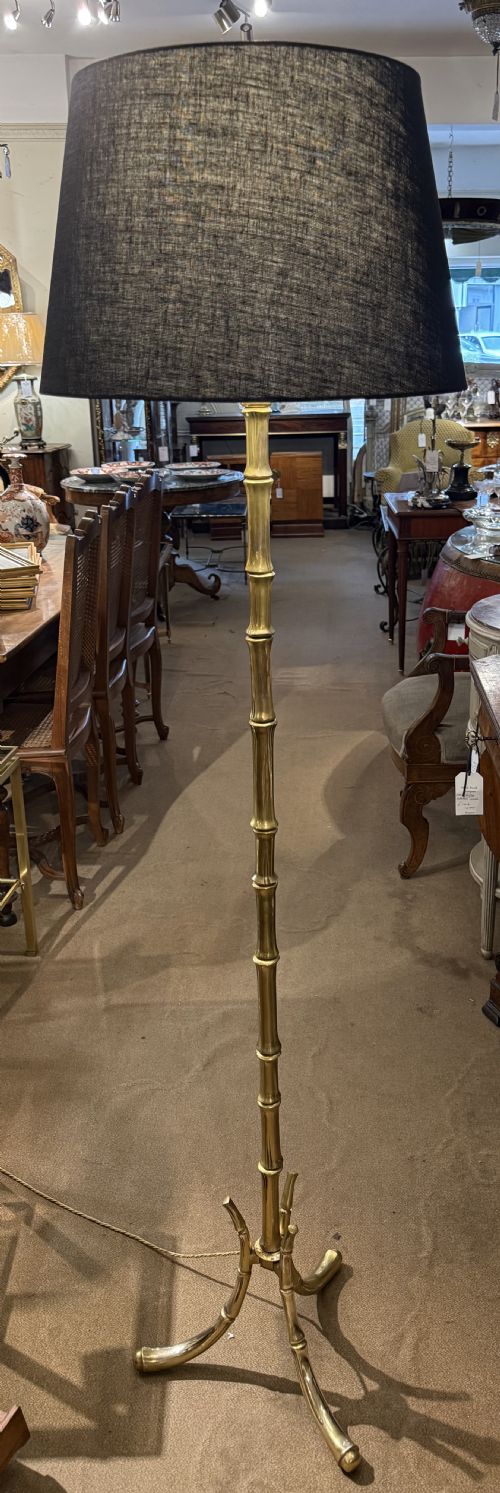
These gilt black standard lamps bring striking contrast and height to a room, offering both ambient illumination and distinct decorative presence.
Gilt Black Standard Lamp
When you search for a gilt black standard lamp, you are looking at tall floor-standing lighting fixtures that combine dark finishes with gold highlights. These pieces serve as functional sculpture in a room, designed to stand beside seating or in corners to project light upward or outward.
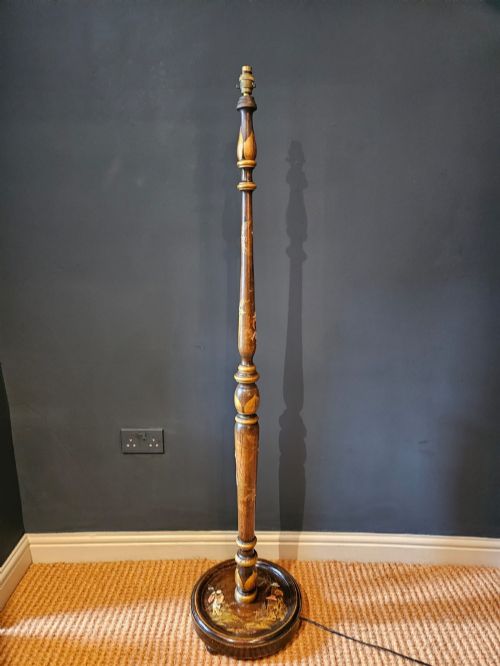
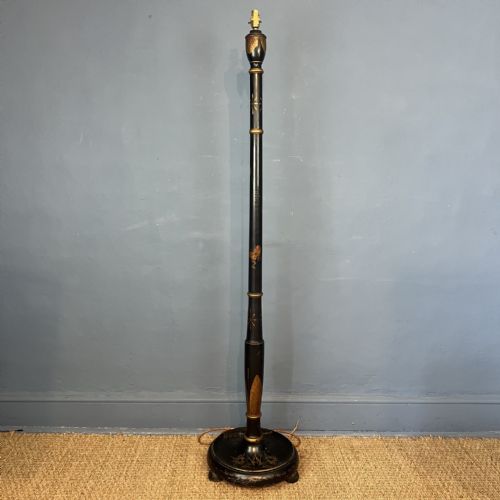
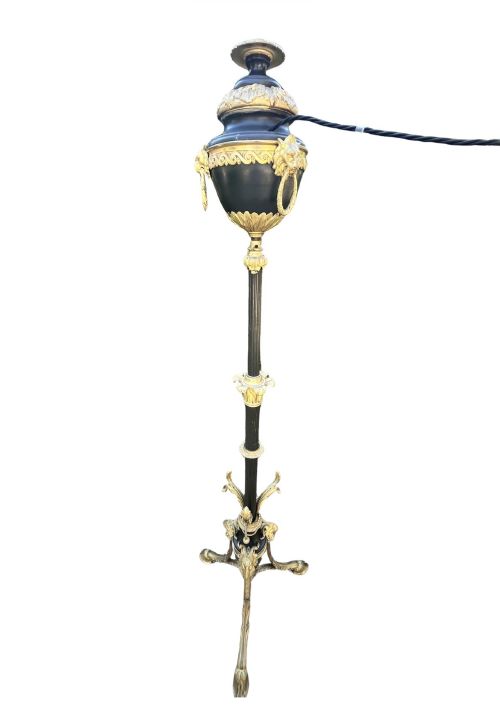
The versions you are most likely to meet on this page span several decades from the nineteenth century into the twentieth, often drawing on stylistic revivals and decorative movements. They appear in forms ranging from straightforward ebonised timber posts to elaborate Chinoiserie and neoclassical designs.
Makers across periods utilised contrasting finishes to create drama, applying gold leaf or parcel gilt highlights over black lacquer, ebonised wood, or gilt bronze. The resulting objects bridge the gap between practical illumination and interior ornament.
How they were made
Makers constructed these tall standards primarily from timber and metal, employing ebonised wood, lacquered wood, and solid brass or gilt bronze. Wood turners shaped the central columns on lathes, while metalworkers cast mounts and arms to support the electrical or oil fittings.
Surface decoration involved meticulous lacquering and gilding techniques, particularly in Chinoiserie examples where black lacquer grounds received delicate gold painted motifs. Parcel gilt portions were treated with thin layers of gold leaf applied over prepared grounds to catch the light.
Some of these lamps survived a century of shifting domestic fashions simply because they make very good places to drape stray scarves.
What varies in quality
The distinction between average and exceptional pieces lies in the depth of the surface finish and the crispness of the carving or casting. Superior examples feature hand-applied lacquer with multiple polished layers and finely detailed parcel gilding rather than flat, uniform paint.
Proportion and structural integrity also separate standard production from finer workshop output, as better pieces maintain balanced weight distribution in their bases and graceful tapering in their upright columns.
Maison Bagues
The Gilt Black Standard Lamp Glossary
- Ebonised wood
- Timber treated with stain, dye, or polish to simulate expensive ebony. This dark finish provides a stark, matte or semi-gloss background that makes gilt highlights stand out.
- Parcel gilt
- Method of applying gold leaf or paint to specific raised areas, carvings, or details of an object. This technique leaves portions of the underlying dark wood or metal exposed for contrast.
- Standard lamp
- British term for a floor lamp. It describes a tall vertical shaft on a weighted base designed to stand on the floor rather than a piece of furniture.
Gilt Black Standard Lamp: Frequently Asked Questions
Where should I place a standard lamp?
These tall lamps suit corners, dark alcoves, or beside large armchairs where they can provide effective reading or ambient light without crowding floor space.
Because of their decorative height, they work well to draw the eye upward and balance rooms with high ceilings or substantial furniture arrangements.
How do I date a black and gilt lamp?
Dating relies on examining the construction methods of the timber or metal base, the wiring channels, and the specific decorative style. Pieces from the Victorian era often show heavier proportions and classical revival motifs.
Later Edwardian and 1930s examples frequently incorporate Chinoiserie decoration or sleeker neoclassical lines that reflect the taste of those periods.
Are these lamps stable on carpets?
Most standard lamps use heavy internal weighting within their timber or metal bases to ensure stability when standing upright on various floor surfaces.
Heavier bases prevent tipping, making them secure for placement near seating areas where foot traffic or furniture movement occurs.
What is ebonised wood?
Ebonised wood is ordinary timber treated to achieve the deep black appearance of genuine ebony. This finish was widely utilised in nineteenth and early twentieth-century furniture and lighting.
The dark tone offers a dramatic contrast against gold leaf or parcel gilt detailing, enhancing the decorative impact of the lamp.