

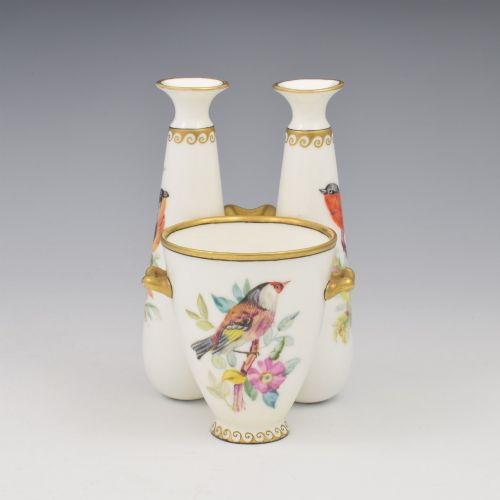

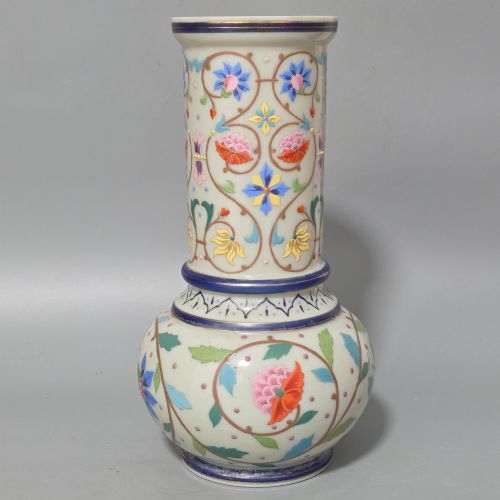


Gilt Aesthetic Movement Vase
These gilt aesthetic movement vase examples bring together rich nineteenth-century ornament and gilded surface work for any discerning collector.
Gilt Aesthetic Movement Vase
A gilt aesthetic movement vase encompasses nineteenth-century ceramic, glass, and porcelain vessels decorated with metallic leaf and period motifs. You will encounter forms ranging from standard vases to ewers, jugs, and table lamps originating from the Victorian era.
The selections on this page span several decades of British production, featuring works from prominent factories as well as opaque glass pieces. Most examples display the characteristic aesthetic taste for exotic influences, notably Persian and Japanese design elements.
Makers utilised distinct colour palettes and surface textures, applying gilding to highlight reticulated porcelain, hand-painted details, and raised patterns. These vessels served primarily as decorative garnitures in period interiors, reflecting the artistic ambitions of the late nineteenth century.
How they were made
Potters and glassmakers shaped these vessels using traditional methods in porcelain, stoneware, and opaque glass before applying complex surface decoration. Artisans hand-painted botanical, ornithological, and abstract patterns directly onto the ceramic bodies.
Guilders applied gold leaf and heavy gilding by hand to accentuate handles, rims, and raised motifs. Patent techniques, such as those used for textured stoneware, added unique raised patterning beneath the gilt highlights.
Gilt Aesthetic Movement Vase Retail Price Guide 2026
Typical asking prices for gilt aesthetic movement vase among the pieces listed under this phrase on Sellingantiques today, from the lower quarter to the upper quarter. They describe what is for sale here now, not the wider market.
The selection includes works from the late nineteenth century alongside twentieth-century Royal Crown Derby ewers.
What varies in quality
Quality rests upon the precision of the hand-painting and the finesse of the gilding applied across the ceramic or glass body. Pieces featuring specific designer attribution or complex reticulated work demonstrate superior craftsmanship compared to standard production items.
The complexity of the form itself dictates distinction, with double-handled ewers and multi-part vessels showing greater technical ambition. Intricate surface textures and multi-layered enamel work further elevate the standing of an individual piece.
Royal Worcester·Thomas Webb·Grainger Worcester·Minton·Doulton·Royal Crown Derby
The Gilt Aesthetic Movement Vase Glossary
- Gilding
- The application of gold leaf or gold dust to the surface of porcelain, glass, or pottery. This technique highlights raised ornaments and creates striking contrasts against coloured backgrounds.
- Reticulated
- Pierced or openwork ceramic decoration resembling a net. This intricate technique requires exceptional skill during the drying and firing stages to prevent warping.
- Ewer
- A large jug with a wide spout and handle, originally designed for water but frequently produced as a decorative ornamental piece in the nineteenth century.
- Opaque glass
- Glass that is not transparent, often coloured throughout and utilised for decorative vases during the Victorian period. It provides a dense, solid ground for enamel and gilt painting.
- Aesthetic Movement
- A nineteenth-century artistic movement that emphasised visual and decorative beauty over narrative or moral themes. It drew heavy inspiration from Japanese and Middle Eastern art.
Gilt Aesthetic Movement Vase: Frequently Asked Questions
What defines an aesthetic movement vase?
These pieces combine stylized natural motifs with non-Western design influences, particularly from Japan and the Middle East. They reject heavy Victorian industrial styling in favour of purely decorative artistic expression.
Craftsmen utilised refined porcelain, stoneware, and glass surfaces enriched with gold leaf and enamel. The resulting vessels function entirely as decorative statements rather than utilitarian tableware.
Where were these pieces made?
The vast majority originate from major English ceramic centres active during the nineteenth century. Factories in Worcester, Derby, and Staffordshire produced the bulk of these porcelain and earthenware works.
Specialist glasshouses also contributed significant decorative vessels using opaque glass and applied gilding techniques. Most production concentrated in established industrial and artistic pottery districts.
How do I care for antique gilding?
Antique gilding requires gentle handling to preserve the delicate gold leaf and enamel layers. Dusting should be performed softly with a dry, non-abrasive cloth.
Moisture and cleaning agents must be avoided entirely to prevent the metallic leaf from lifting off the ceramic or glass substrate. Displaying pieces away from direct sunlight protects the painted surfaces.