

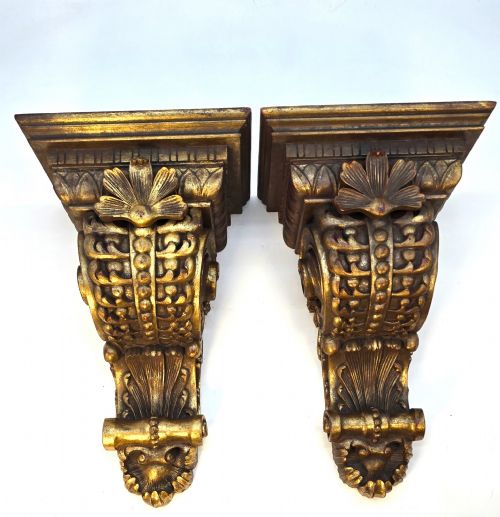


Gilded Wood Brackets
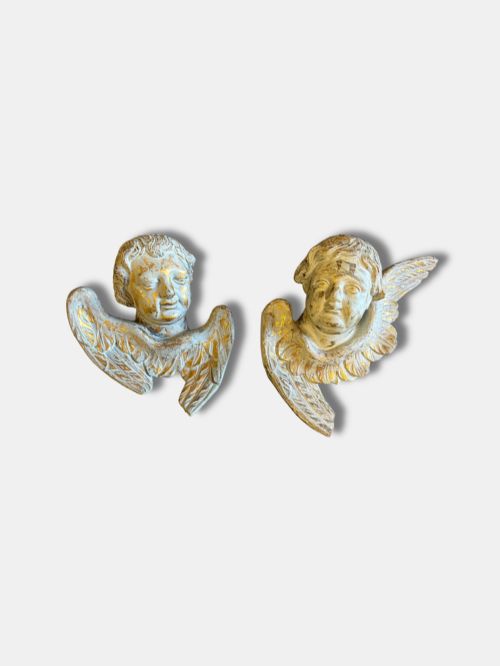
These gilded wood brackets bring architectural presence to a room, supporting lamps, clocks or ornaments with carved and burnished splendour.
Gilded Wood Brackets
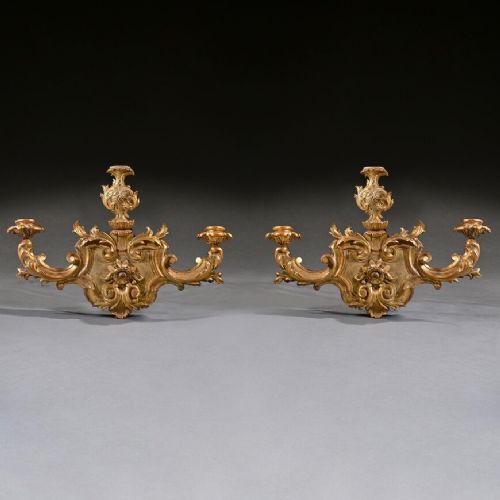
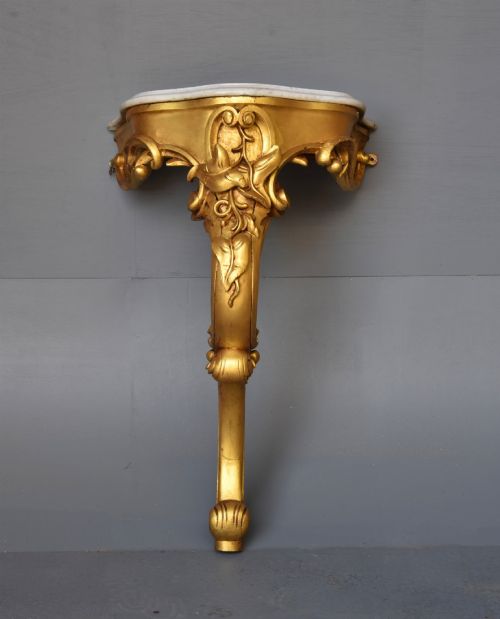
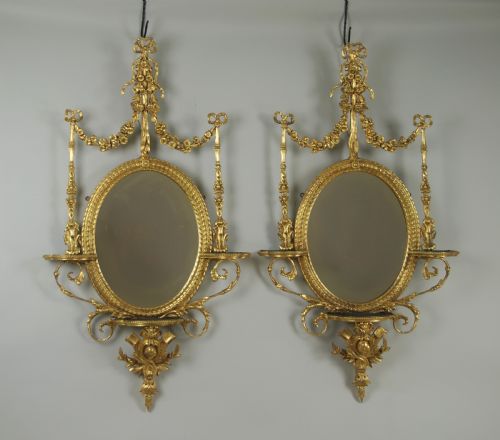
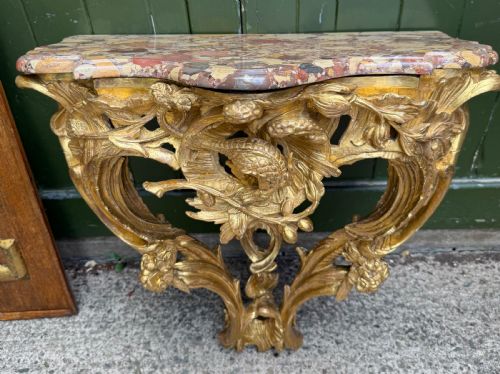
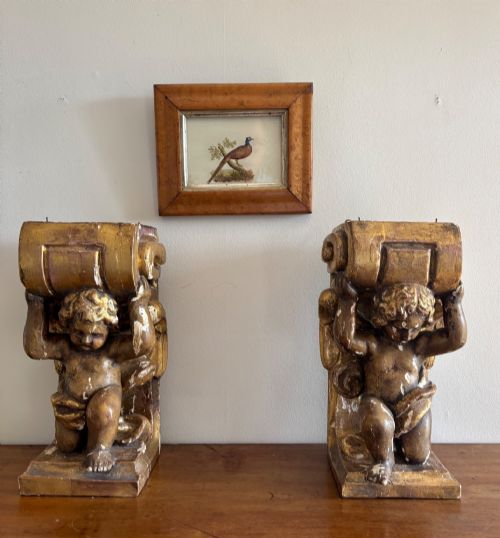
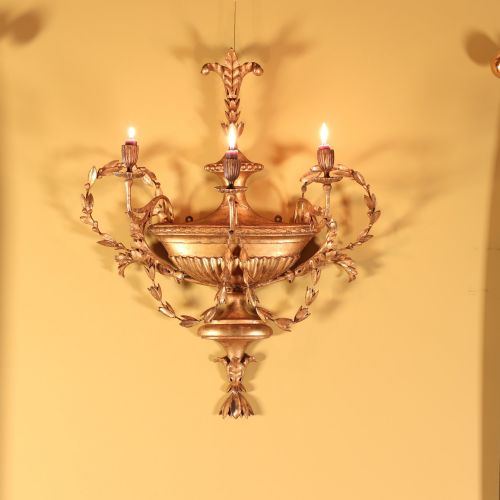
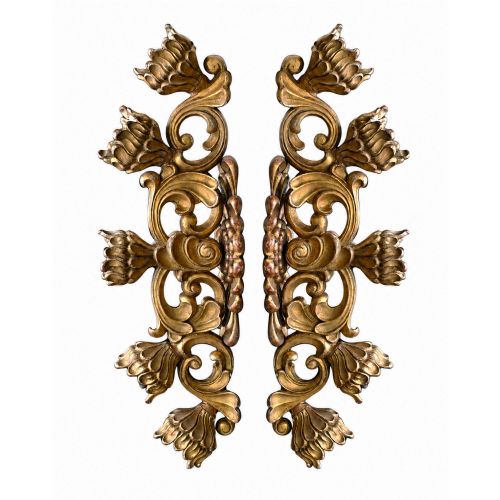
When you search for gilded wood brackets, you encounter structural supports and decorative wall ledges originating from periods spanning the eighteenth century through to the early twentieth century. The selection ranges from compact single shelf supports to larger console tables and elaborate wall lights.
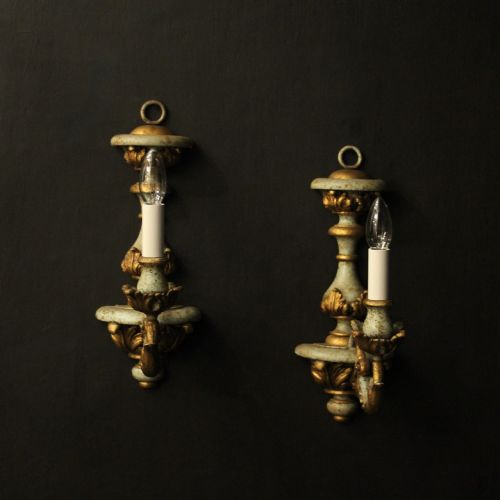
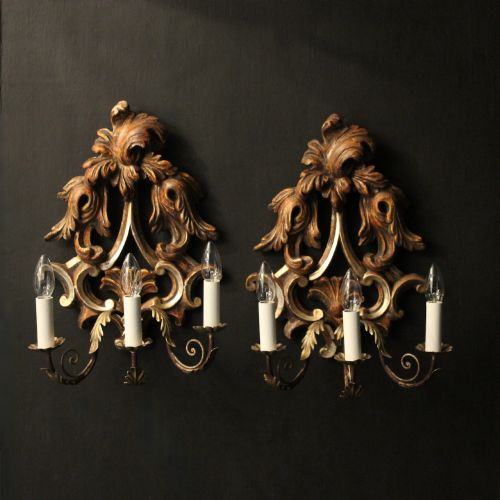
Italian and French workshops dominate the selection, often taking the form of Florentine wall lights or carved wooden brackets finished in gold leaf, silver gilt or polychrome paint. Victorian and Edwardian examples also appear, alongside console tables with integrated display surfaces.
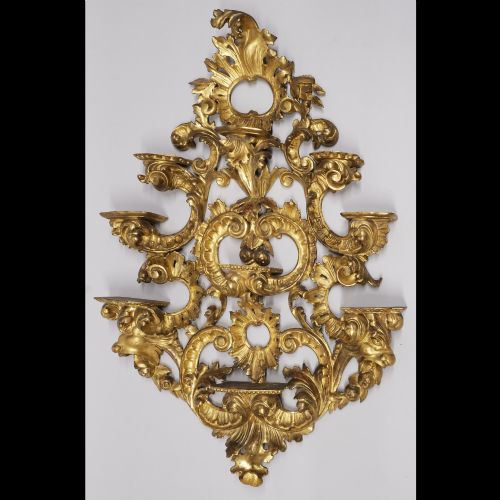
The version you are most likely to meet on this page is a carved wooden wall sconce or bracket originating from nineteenth century Italy or France. These pieces frequently incorporate gesso layers beneath their metallic leaf finishes.
Materials and Technique
Carvers shaped the foundational wooden structures by hand before applying successive coats of gesso to smooth the surface for gilding. Artisans then laid fine gold leaf or silver leaf over the prepared ground, often burnishing portions to achieve contrasting matte and reflective areas.
Selected pieces incorporate carved wooden elements alongside metal fittings, marble tops such as breche d'alep, or inset glass and mirror panels. Polychrome painted details frequently complement the gilding on Italian and continental European items.
Gilded Wood Brackets Retail Price Guide 2026
Typical asking prices for gilded wood brackets among the pieces listed under this phrase on Sellingantiques today, from the lower quarter to the upper quarter. They describe what is for sale here now, not the wider market.
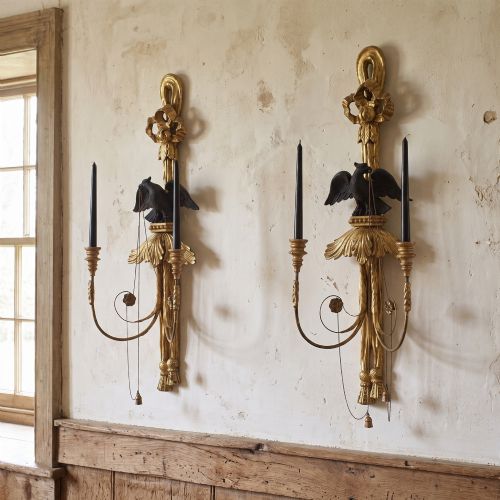
An eighteenth-century Venetian artisan once decided that a simple wall bracket simply needed an eagle perched on top to watch the room.
The Measure of Quality
Depth and crispness of the hand-carving separate standard utility work from superior artisan output, particularly visible in the rendering of acanthus leaves, scrollwork and figural motifs. Crisp undercut details demonstrate superior skill compared to softer, more rounded mouldings.
The integrity of the gesso and gold leaf layer dictates the visual impact of the piece. Smooth application without excessive modern repainting preserves the historic character of the surface.
Henri Dasson
The Gilded Wood Brackets Glossary
- Giltwood
- Timber coated with gold leaf or gold dust over a prepared ground. This technique creates a luminous metallic finish popular across neoclassical and baroque furniture.
- Gesso
- A plaster mixture applied to wood as a smooth base for gilding or painting. It allows carvers to achieve sharp relief details before metal leaf application.
- Console Table
- A table fixed to a wall and supported by ornamental brackets or legs. These items often feature marble tops and matching wall mirrors.
- Wall Sconce
- A decorative bracket fixed to a wall for holding candles or electric lights. Many examples incorporate carved wooden arms and gilded backplates.
- Polychrome
- Decorated in several colours. This finish appears frequently on Italian wooden wall lights alongside gilding.
Gilded Wood Brackets: Frequently Asked Questions
How were gilded brackets originally mounted?
Carpenters secured these supports directly into wall studs or structural brickwork using iron fixings concealed behind the carved wooden body. They served to hold heavy objects like mantel clocks or porcelain vases safely above floor level.
Over time, mounting methods evolved, but the fundamental requirement for sturdy wall anchorage remained constant due to the weight of the timber and marble components.
Can these brackets support heavy items?
Many solid wood and gesso brackets were engineered to bear the weight of candelabras, clocks or small sculptures. However, structural capacity depends heavily on the specific piece's size and internal joinery.
Checking the backplate and mounting points helps determine whether a bracket is suited for display utility or purely decorative wall adornment.
How do I distinguish eighteenth-century pieces from later revivals?
Earlier pieces exhibit hand-carved tool marks, distinct shrinkage in the timber, and traditional gesso formulations that mature beneath the gold leaf. Revival items from the nineteenth and twentieth centuries often display machine-assisted elements or different preparation layers.
Examining the reverse side and the condition of the gilt surface usually reveals the age and manufacturing techniques employed by the workshop.
Where should I place a wall bracket in a modern room?
These pieces function effectively in hallways, living rooms or dining spaces where they provide vertical focal points. Pairing a bracket with a wall mirror or placing a small lamp upon it enhances both illumination and spatial depth.
Placing them at eye level or slightly above allows the carved details and gilded surfaces to catch ambient light from windows and fixtures.