

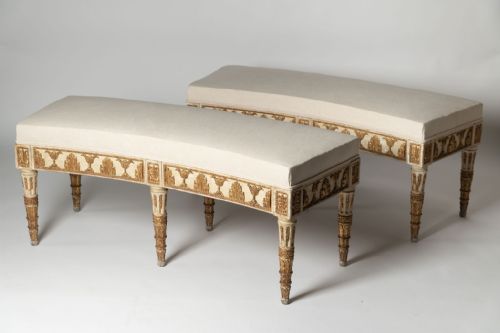


Gilded Window Bench
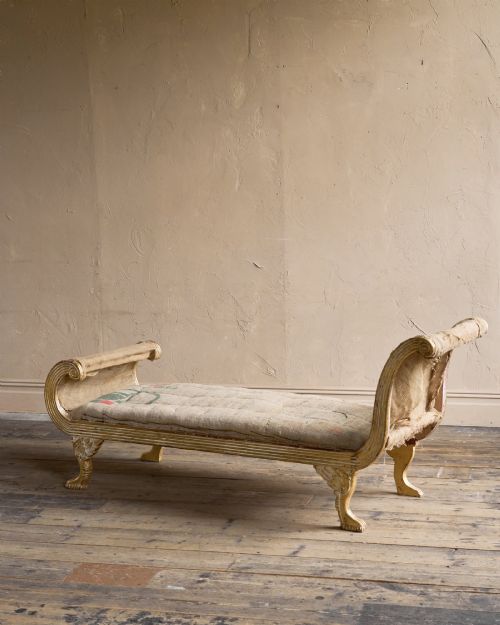
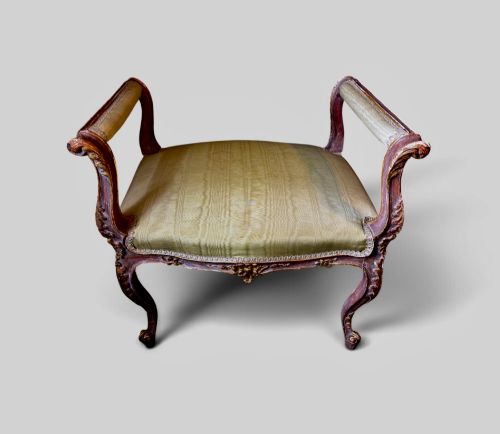
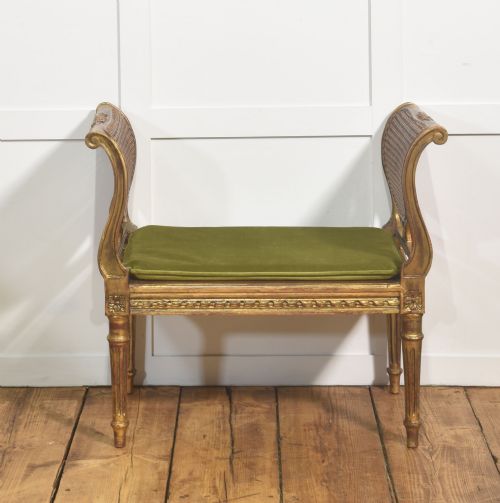
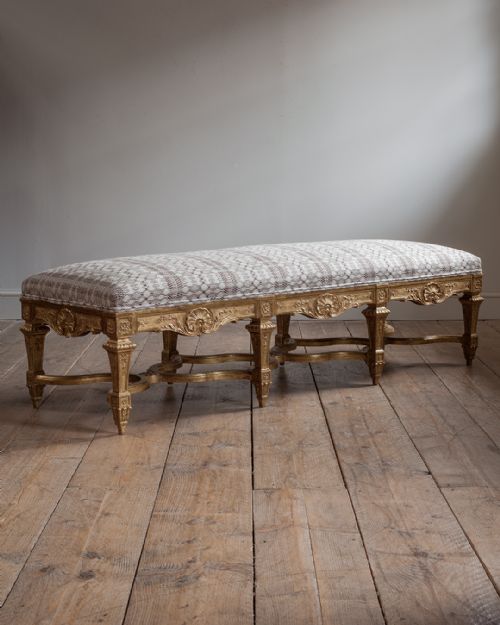
A gilded window bench brings classical French or Italian elegance to a light-filled alcove, offering a slender seat designed to fit beneath low sills.
Gilded Window Bench
A gilded window bench is a low, elongated seat traditionally placed beneath a window, combining decorative gilt finishes with functional forms such as window seats, stools, and settees. Buyers seeking a gilded window bench will encounter pieces spanning the nineteenth and early twentieth centuries, drawing heavily upon Louis XVI, Regency, and Neoclassical design vocabularies.
The objects take various structural shapes, ranging from small canework couches and curule stools to long upholstered benches and duet stools. Many examples exhibit French or Italian origins, frequently executed in carved wood, giltwood, or painted wood with applied gilding.
Stylistic revivals dominate the selection, with Louis XIV, Louis XVI, and Empire styles appearing alongside Victorian interpretations. These forms are engineered to sit low in a room, maintaining clear sightlines through tall windows while providing a refined perch.
Materials and construction
Construction relies upon traditional timber frames, predominantly formed from carved wood, giltwood, or painted wood that provides a sturdy architectural base. Artisans applied thin layers of gold leaf or gilt preparation over gesso and wood, creating the characteristic reflective surface seen across the selection.
Upholstery and secondary materials complete the construction, incorporating cane, velvet, fabric, textile, and brass details. Canework panels offer woven lightness on seats and backs, whilst plush textiles and velvets provide padded comfort for extended sitting.
Gilded Window Bench Retail Price Guide 2026
Typical asking prices for gilded window bench among the pieces listed under this phrase on Sellingantiques today, from the lower quarter to the upper quarter. They describe what is for sale here now, not the wider market.
Materials recorded across the selection combine giltwood, painted wood, and solid timber with diverse textile choices including velvet, cane, and brass hardware.
Judging quality in execution
Quality rests primarily in the crispness of the hand-carved wooden ornament and the depth of the gilding applied to the frame. Superior pieces display deeply carved acanthus leaves, fluted legs, and scrolling motifs that retain their sharp contours beneath the metallic leaf.
The integrity of the structural joinery and the selection of secondary materials further distinguish finer examples. Authentic period pieces demonstrate meticulous joinery in the hardwood frame, balanced proportions, and high-grade textiles or hand-woven cane that complement the gilded chassis.
The Gilded Window Bench Glossary
- Giltwood
- Wood that has been coated with gold leaf or powder over a prepared gesso ground. This finish provides a luminous, durable surface characteristic of high-status seating.
- Curule stool
- An ancient Roman magistrate seat form featuring X-shaped intersecting legs. In later revivals, this shape is adapted into gilded benches and stools with classical proportions.
- Canework
- A woven grid pattern typically made from rattan peel used for seats and backrests. It adds lightness and textural contrast to heavier wooden frames.
- Neoclassical
- A style drawing inspiration from the classical art and architecture of ancient Greece and Rome. It emphasises straight lines, symmetry, and restrained classical ornament.
- Duet stool
- An elongated bench designed to seat two musicians side by side at a keyboard. They often share proportions similar to long window seats and hallway benches.
Gilded Window Bench: Frequently Asked Questions
Where should I place a window bench?
These seats fit naturally beneath low window sills, in wide hallways, or at the foot of a bed. Their low profile ensures they do not obstruct natural light.
They also serve well in dressing rooms or narrow landing spaces where a full sofa would overwhelm the room.
How do I care for giltwood?
Giltwood requires gentle dusting with a soft, dry cloth to prevent abrasion of the delicate metallic surface. Avoid liquid cleaners and direct sunlight, which can cause the underlying gesso and gold leaf to crack or flake over time.
Humidity control in the room helps preserve both the wooden frame and any applied textiles or cane.
What is the difference between a window seat and a stool?
Window seats typically feature armrests or a partial backrest designed for comfortable relaxation while looking outward. Stools are backless and armless, offering a simpler profile that slides easily beneath tables or console furniture.
Both forms share the low height required for placement beneath windows.
How do I identify French revival styles?
French revival pieces incorporate characteristic motifs such as fluted tapering legs, carved rosettes, and classical ribbon twists associated with Louis XVI design. Empire style pieces lean toward bolder architectural lines, X-frame supports, and heavier classical detailing.
Examining the carving depth and wood preparation helps indicate the period of the revival.