



Gilded White Tea Bowls
These gilded white tea bowls are delicate porcelain vessels enriched with gold, created for the table during the eighteenth and nineteenth centuries.
Gilded White Tea Bowls
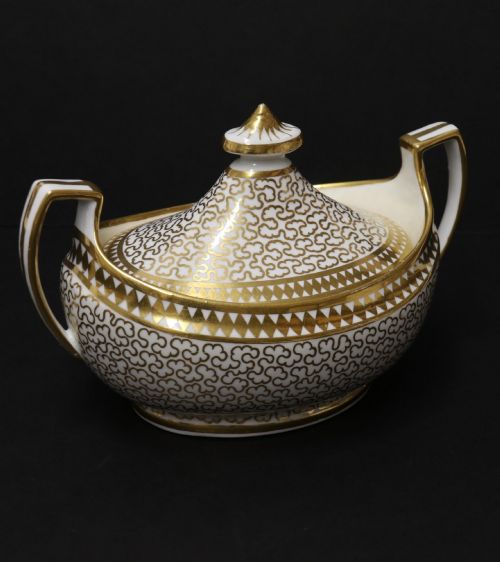
Gilded white tea bowls and associated porcelain vessels span from the eighteenth century through the twentieth century, encompassing pieces from English and French makers. When searching for gilded white tea bowls, buyers encounter forms ranging from simple eighteenth-century tea bowls and saucers to nineteenth-century sucriers, coffee sets, and complete tea services.
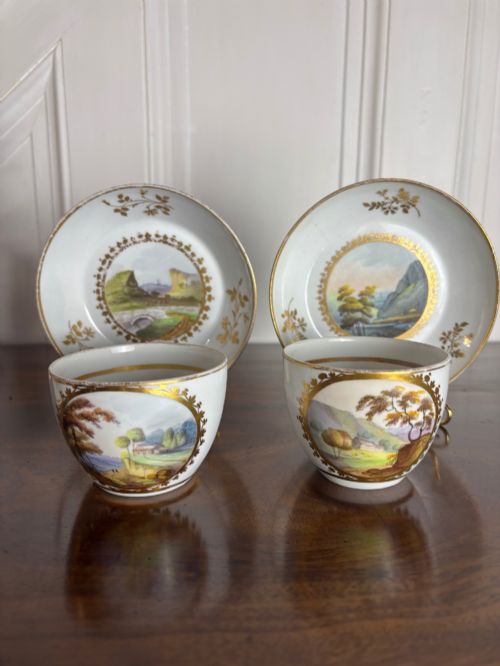
The selection includes wares from prominent periods such as the Georgian and Regency eras, alongside later nineteenth-century examples and twentieth-century production from Gladstone potteries. Tea bowls and saucers from the Flight period of Worcester sit alongside matching trios, pairs of cups and saucers featuring landscape decorations, and covered sugar boxes.
Makers represented in the inventory include Chamberlains Worcester, Minton, Spode, Derby, Ridgway, Coalport, and the French firm Ahrenfeldt & Asalvary of Limoges. These forms reflect changing domestic habits around tea consumption and table display across successive generations of ceramic manufacturing.
Quality Variations
The refinement of the porcelain body and the precision of the potting distinguish different examples, with early soft-paste compositions offering a distinct texture compared to later felspar porcelain and bone china. Hand-painted landscape details and the crispness of moulded elements demonstrate the skill of the factory artists.
The application and preservation of the gold leaf and gilding contribute significantly to the visual success of each piece. Intact and well-preserved gilding combined with finely executed pattern work marks the more accomplished productions.
Gilded White Tea Bowls Retail Price Guide 2026
Typical asking prices for gilded white tea bowls among the pieces listed under this phrase on Sellingantiques today, from the lower quarter to the upper quarter. They describe what is for sale here now, not the wider market.
Listings feature porcelain, bone china, and felspar porcelain across the eighteenth and nineteenth centuries.
Chamberlains Worcester·Minton·Spode·Derby·Ridgway·Ahrenfeldt and Asalvary·Worcester·Coalport·Gladstone potteries
The Gilded White Tea Bowls Glossary
- Sucrier
- A covered sugar bowl or sugar basin used in tea service sets. These vessels often match the tea bowls and saucers in pattern and material.
- Soft-Paste Porcelain
- An artificial porcelain composition fired at lower temperatures than hard-paste, common in eighteenth-century English manufacture. It displays a warm tone under glaze.
- Felspar Porcelain
- A type of porcelain introduced in the nineteenth century incorporating felspar into the body for increased durability and whiteness. Spode utilised this material extensively.
- Tea Bowl
- A small, handleless cup designed for drinking tea during the eighteenth century before handled teacups became standard. They are frequently found paired with matching saucers.
Gilded White Tea Bowls: Frequently Asked Questions
What is a gilded white tea bowl?
A gilded white tea bowl is a small, handleless porcelain drinking vessel decorated with gold leaf or gilt accents, produced primarily during the eighteenth and nineteenth centuries.
These pieces were designed for elite tea service tables and frequently survive paired with matching saucers or as part of larger tea sets.
How were these tea bowls used?
They were used for serving and drinking tea in domestic settings during the Georgian and Regency periods, when tea was an expensive commodity.
Guests would hold the handleless bowl in both hands to drink the hot beverage, often using the accompanying saucer to rest the vessel.
How do I care for antique porcelain?
Antique porcelain requires gentle hand washing in warm water with mild soap, avoiding harsh detergents and modern dishwashers.
Because the gold leaf and enamel decorations can wear over time, these pieces are best kept out of direct sunlight and handled with clean, dry hands.
How can I tell eighteenth and nineteenth-century pieces apart?
Eighteenth-century pieces often utilise soft-paste porcelain bodies with hand-pencilled or early enamel decorations, reflecting earlier firing techniques.
Nineteenth-century examples frequently employ bone china or felspar porcelain with bolder gilding styles and printed or factory-numbered patterns.