
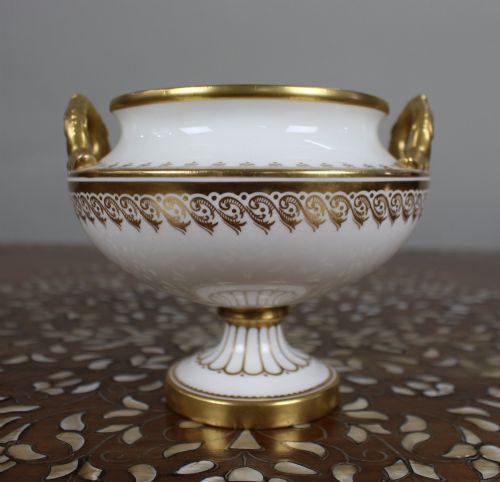
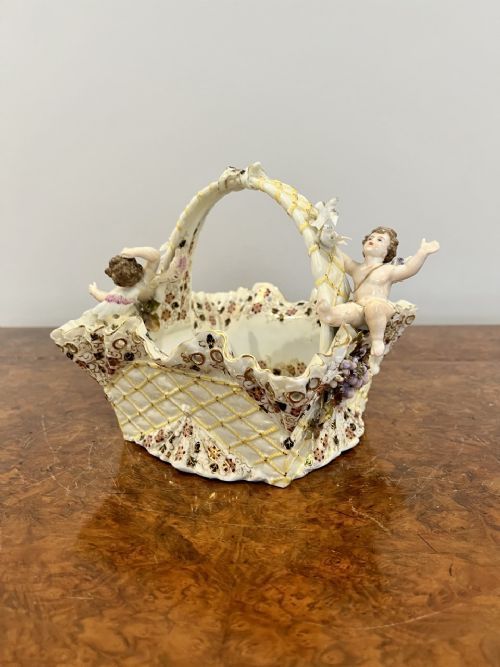
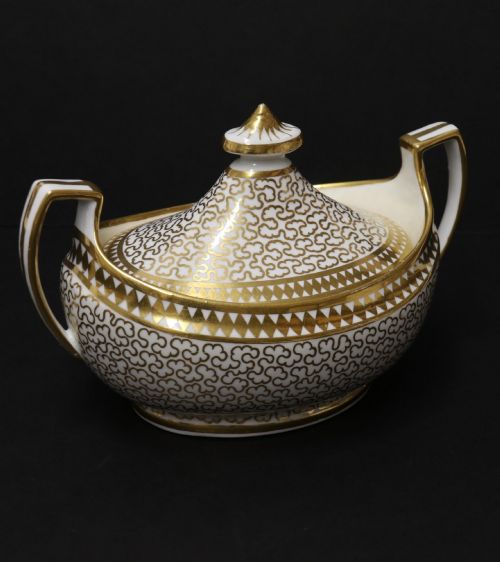
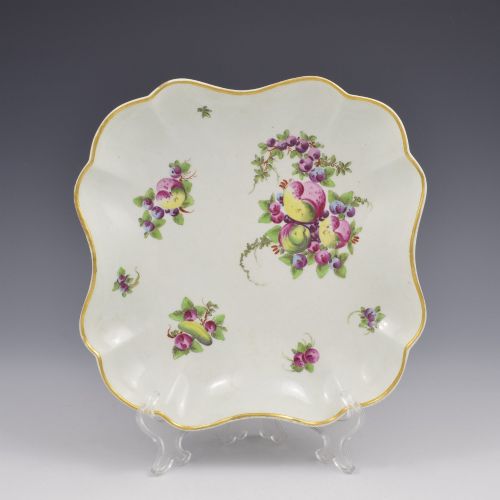

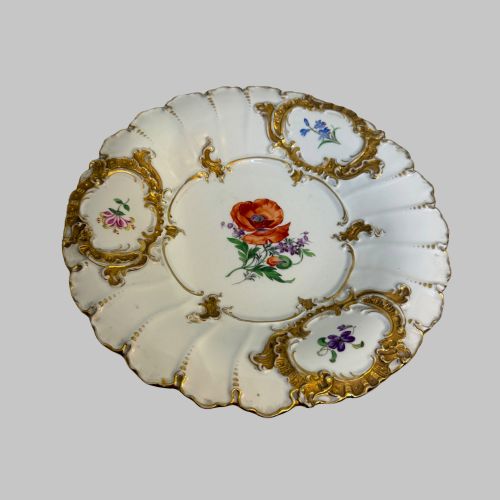
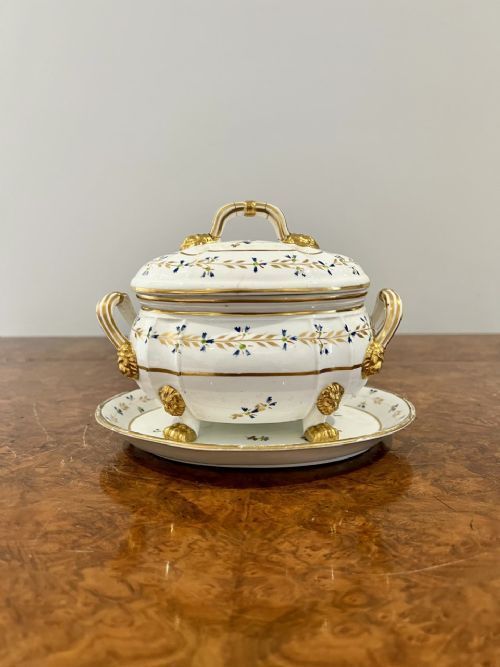


Gilded White Ceramic Bowl
These pieces unite gleaming metallic leaf with bright ceramic surfaces, offering a refined focal point for any room.
Gilded White Ceramic Bowl
A gilded white ceramic bowl embodies centuries of ceramic artistry, combining crisp white porcelain or earthenware with applied gold leaf or metallic gilt detailing. When searching for this specific phrase, buyers encounter various forms including decorative bowls, fruit baskets, and lidded sucriers.
The pieces on this page span several eras from the eighteenth century through the twentieth century, originating from English, continental European, and Japanese makers. Most frequently, you will find nineteenth-century English porcelain vessels alongside continental tablewares featuring hand-painted designs and gilt highlights.
How they were made
Potters shaped soft-paste or hard-paste porcelain, ironstone, and ceramic bodies on wheels or in moulds before firing them at high temperatures to achieve a durable white base. Artisans then applied enamel colours and gold leaf by hand, often returning the pieces to the kiln to fuse the metallic elements permanently to the glaze.
Gilding techniques varied from dusting powdered gold onto wet glaze to applying thin gold leaf sheets that were subsequently burnished to a high shine. Enamel decoration and intricate hand-painting frequently accompanied the gilding, requiring steady brushwork from skilled ceramic painters.
The listings span multiple centuries, incorporating eighteenth-century tea bowls alongside robust nineteenth-century porcelain baskets and twentieth-century decorative dishes.
What varies in quality
Quality rests primarily on the crispness of the porcelain moulding, the fineness of the hand-painted details, and the preservation of the original gilding. Superior examples display delicate, evenly applied gold leaf that has survived decades of handling without rubbing away from the raised rims and handles.
The execution of the painted motifs and the purity of the white ceramic body also distinguish high-end wares from standard production pieces. Master factories employed accomplished artists whose brushwork remains sharp, detailed, and expressive compared to mass-produced transfer-printed equivalents.
Chamberlains Worcester·Spode Porcelain·Meissen·Crown Derby·Rockingham Porcelain·Paul Muller Selb·Plaue Schierholz·Royal Worcester·Grainger And Co·Doulton Burslem·Ridgway Porcelain·Wedgwood·Ahrenfeldt And Asalvary·Flight Barr And Barr·Richard Ginori
The Gilded White Ceramic Bowl Glossary
- Sucrier
- A small lidded vessel designed specifically for holding loose sugar at the tea table. These items frequently feature matching covers and delicate gilt handles.
- Comport
- A raised decorative dish or bowl used for serving fruit or sweets on formal dining tables. They often stand on a central pedestal or short foot.
- Gilding
- The application of gold leaf or powdered gold onto the surface of ceramic or porcelain. This technique adds reflective metallic highlights to rims, handles, and painted scenes.
- Soft-paste porcelain
- An artificial porcelain composition made from white clay mixed with ground glass and other materials. It produces a warm, creamy white body popular in eighteenth-century English manufactories.
- Imari
- A style of Japanese export porcelain characterised by a palette of underglaze blue, iron red, and abundant gold. These pieces were widely imitated by European potteries during the eighteenth and nineteenth centuries.
Gilded White Ceramic Bowl: Frequently Asked Questions
What were gilded white ceramic bowls used for?
These vessels originally served functional roles on formal dining and tea tables, holding sugar, fruit, sweetmeats, or broths during family meals and gatherings.
Over time, many transitioned into pure display pieces, intended to catch the light on sideboards and centre tables rather than participate in daily dining.
How can I tell the period of a porcelain bowl?
Examine the base of the vessel for factory marks, handwritten pattern numbers, or impressed stamps that correlate with historical manufacturer date ranges.
Additionally, study the weight of the ceramic body and the style of the hand-painting, as eighteenth-century potting techniques differ noticeably from Victorian or Edwardian methods.
Are these bowls safe for serving food?
While historic glazes and gold leaf can sometimes contain trace metals like lead, many collectors prefer to use these antique items purely for dry presentation.
If you plan to serve food, ensure the interior glaze is completely uncracked and wash the piece gently before every use.