
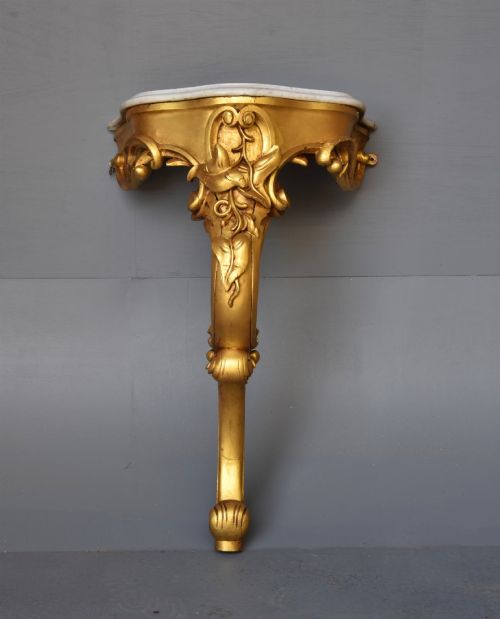


Gilded Wall Mounted Consoles
These gilded wall mounted consoles bring architectural presence to a room, fixing directly to the plaster to free the floor below.
Gilded Wall Mounted Consoles
Gilded wall mounted consoles are decorative furniture pieces designed to anchor securely against a vertical surface while carrying a small display top. When you search for gilded wall mounted consoles, you meet tables, brackets, and mirrors spanning the eighteenth, nineteenth, and early twentieth centuries.
The nineteenth century provides the majority of these examples, often taking the form of console tables with marble tops or wall brackets with integral shelves. French and Italian workshops dominate the selection, bringing Continental design to British interiors.
Makers and designers drew heavily on historic vocabularies, producing pieces in Rococo Revival, French Rococo, and Napoleon III styles. These forms range from simple painted surfaces to ornate gilded structures intended to catch the light.
How they were made
Makers carved timber bases from wood before applying layers of gesso to build up crisp decorative detail. Artisans then laid gold leaf over the prepared surfaces or applied liquid paint finishes to achieve the desired sheen.
Many examples incorporate marble tops that rest within the wooden framework, while others utilise ormolu mounts to accent the composition. Mirror glass often appears as a backing element, reflecting light through the Rococo scrolls and carved foliage.
Materials recorded across the selection include giltwood, gesso, marble, wood, gold leaf, ormolu, paint, and mirror glass.
What varies in quality
The depth and sharpness of the carved gesso and woodwork distinguish finer pieces from simpler decorative items. Crisp definition in the scrollwork and foliage indicates skilled hand work during the manufacturing process.
The quality of the gilding and the selection of materials, such as heavy marble slabs or detailed ormolu mounts, separate standard production from exceptional examples. Superior items maintain integrity in the joinery that supports the weight against the wall.
Henri Dasson
The Gilded Wall Mounted Consoles Glossary
- Giltwood
- Wood that has been coated with thin sheets of gold leaf. This finish protects the timber while providing a bright reflective surface.
- Gesso
- A plaster mixture applied to wood surfaces as a base for gilding or painting. It allows craftsmen to carve intricate relief details before applying gold leaf.
- Ormolu
- Gilded bronze used for decorative mounts and accents on furniture. The technique creates a rich metallic contrast against wood or painted surfaces.
- Console Table
- A table designed to be fixed against a wall, traditionally supported by brackets or legs at the front. These pieces serve as display surfaces in hallways and principal rooms.
Gilded Wall Mounted Consoles: Frequently Asked Questions
How do I secure a wall mounted console?
These consoles require robust fixings into solid masonry or direct wall studs to bear the weight of the frame and any marble top. Professional installation ensures the bracket or table remains stable under load.
Lighter brackets may utilise heavy-duty screws through pre-drilled timber points, while larger tables often include integrated hanging plates on the rear structure.
Can these consoles support heavy items?
Most wall mounted consoles are designed for display objects such as clocks, porcelain, or small mirrors rather than heavy loads. The wall construction itself determines the actual weight capacity.
Checking the original mounting points and the condition of the wooden backplate helps determine safe usage limits for each specific piece.
How do I clean gilded surfaces?
Dust gilded wood gently with a soft, dry brush to avoid disturbing the delicate gold leaf layer. Moisture and chemical cleaners can strip the finish from the gesso underneath.
Marble tops require mild soapy water rinsed quickly, while ormolu mounts respond best to dry microfibre dusting without abrasive compounds.
How do I date a console table?
Examining the underlying timber, fixings, and construction methods reveals the period of manufacture. Eighteenth-century pieces show hand-cut joinery and traditional gesso application techniques.
Twentieth-century examples often display machine tooling and alternative backing boards, while style markers like Rococo Revival place items in the nineteenth century.