



Gilded Wall Corbels
Gilded wall corbels bring architectural weight and rich metallic lustre to a room, offering sturdy support for your cherished objects.
Gilded Wall Corbels
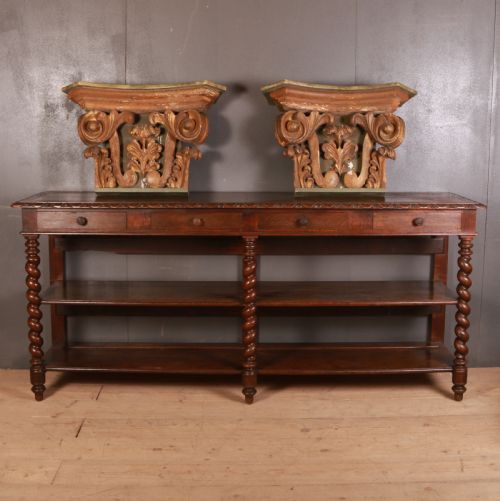
When you search for gilded wall corbels, you are looking at ornamental architectural brackets designed to project from a wall and support sculptures, clocks, or vases. The examples on this page span the eighteenth, nineteenth, and early twentieth centuries, taking the form of carved wooden wall brackets, architectural capitals, and ceramic shelf supports.
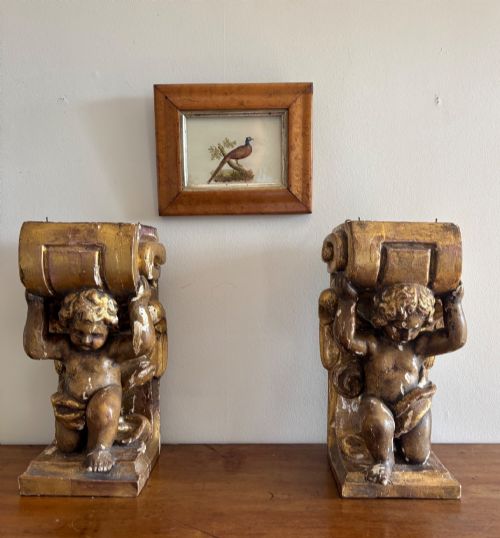
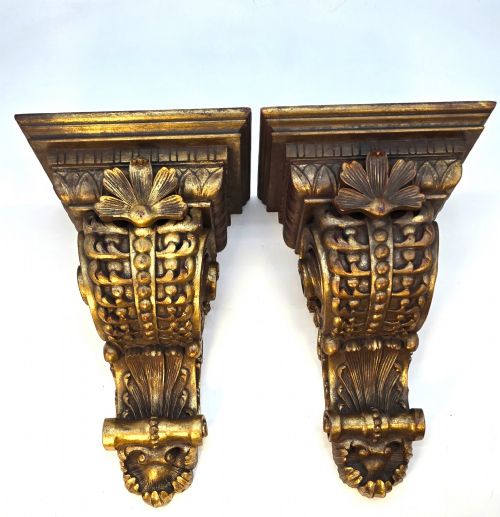
You are most likely to meet nineteenth-century pairs fashioned from carved wood and finished with gold leaf or gesso. These pieces often draw on Italian Baroque, Rococo Revival, and Victorian styles, translating grand architectural elements into decorative wall furniture.
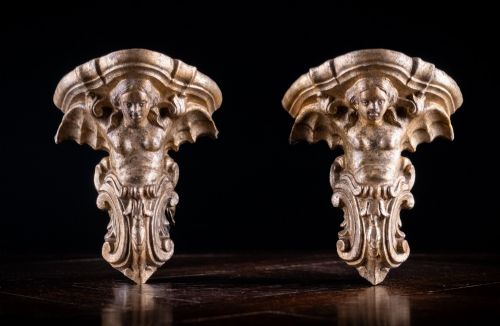
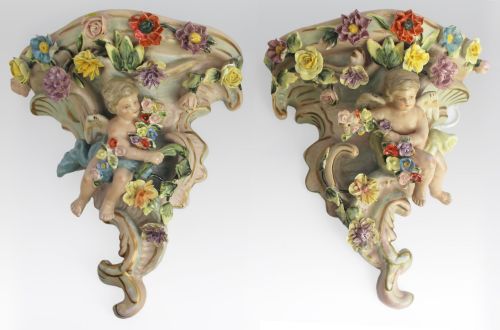
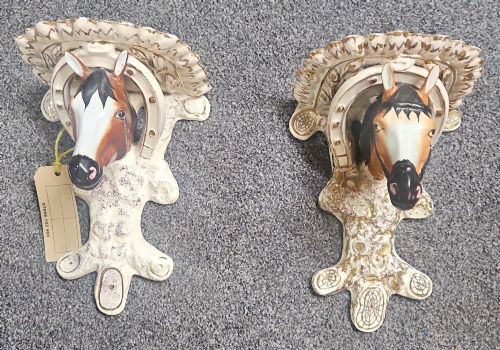
Alongside timber examples, the selection includes porcelain and terracotta variants, including Meissen style cherub brackets and Staffordshire pottery horse heads. Ormolu and ebonised pieces also appear, demonstrating the diverse ways makers applied gilding to ceramic, metal, and wood.
How they were made
Carvers shaped the foundational forms primarily from timber, utilising softwood or hardwood depending on the regional tradition and desired detail. Artisans then applied layers of gesso to the carved wood surface, providing a smooth, uniform base for subsequent gilding.
Workers applied thin sheets of gold leaf or gilt onto the prepared gesso ground, burnishing the metal to achieve a deep, reflective lustre. For ceramic and metal variations, makers combined porcelain, terracotta, or ormolu mounts to create mixed-media wall supports.
Some winged sirens and Staffordshire horses occasionally watch over your hallway from inside these decorative wall brackets.
What varies in quality
The depth and crispness of the carving distinguish finer examples from simpler production, particularly in the rendering of acanthus leaves, scrollwork, and figurative elements. Superior pieces exhibit hand-chiselled precision that catches the light differently across each curve and undercut.
The integrity of the original gesso and gold leaf surface dictates the visual impact of the piece. Skilful application and well-preserved gilding retain a warm, authentic radiance, whereas heavy restoration or later repainting alters the historic character.
Henri Dasson
The Gilded Wall Corbels Glossary
- Gesso
- A plaster mix applied to carved wood as a smooth preparation layer before gilding. This mixture allows artisans to achieve sharp relief details.
- Giltwood
- Timber that has been decorated with gold leaf or gold paint. It forms the primary structural material for classical wall brackets.
- Ormolu
- Finely chased and gilt bronze used for decorative mounts and hardware. It appears alongside ceramic and ebonised elements in later brackets.
- Capital
- The topmost member of a column, repurposed here as a wall bracket. These architectural salvage pieces anchor decorative displays.
- Rococo Revival
- A nineteenth-century design movement favouring asymmetrical scrollwork and natural motifs. This style heavily influences many corbels on the page.
Gilded Wall Corbels: Frequently Asked Questions
What did people put on wall corbels?
Historically, homeowners placed small bronze sculptures, porcelain figures, mantel clocks, and decorative vases upon these projecting wall brackets. The sturdy construction allowed heavy items to be displayed securely at eye level.
Today, you can utilise them in much the same way, mounting them in hallways or living rooms to highlight ceramic vessels, framed miniatures, or trailing plants.
Are these corbels strong enough to hold heavy items?
Most antique wooden and architectural corbels possess solid timber cores designed to bear substantial weight. However, their load capacity depends entirely on how securely they are anchored to your wall studs rather than the age of the piece alone.
When hanging items of significant weight, ensure the fixings match both the weight of the bracket and the object you intend to place upon the shelf.
How do I distinguish eighteenth-century pieces from Victorian ones?
Eighteenth-century Italian brackets frequently display deep, hand-carved wood with a looser, more organic Baroque or Rococo movement. The tool marks tend to be broader, and the underlying gesso wears down organically over centuries of exposure.
Victorian and later revival pieces often feature crisper, denser detailing influenced by industrial-era precision and specific continental revivals, sometimes incorporating ceramic or ormolu elements.