



Gilded Wall Candle Holders
These gilded wall candle holders bring warm candlelight and reflective brilliance to a room, sourced from periods ranging through the eighteenth and nineteenth centuries.
Gilded Wall Candle Holders
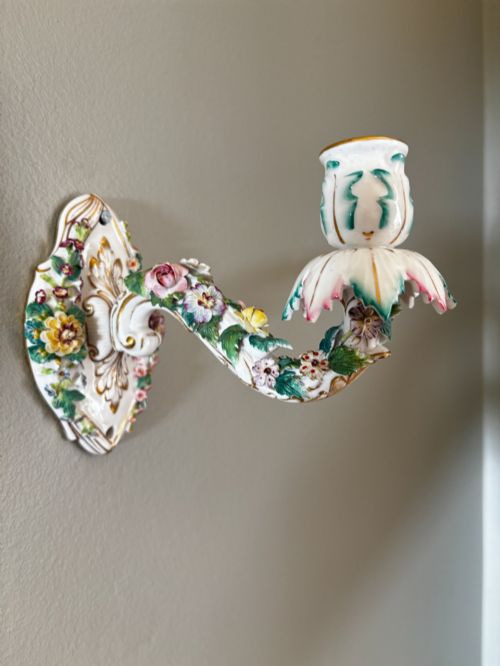
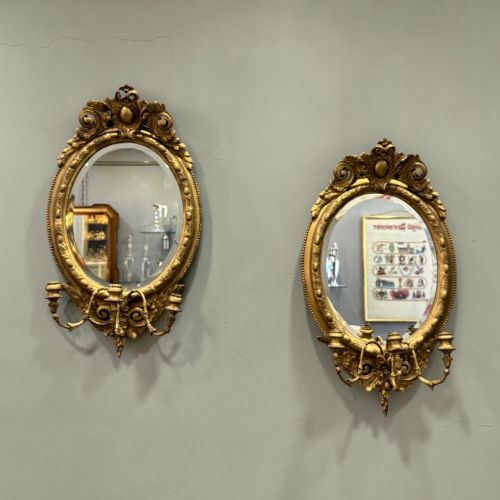
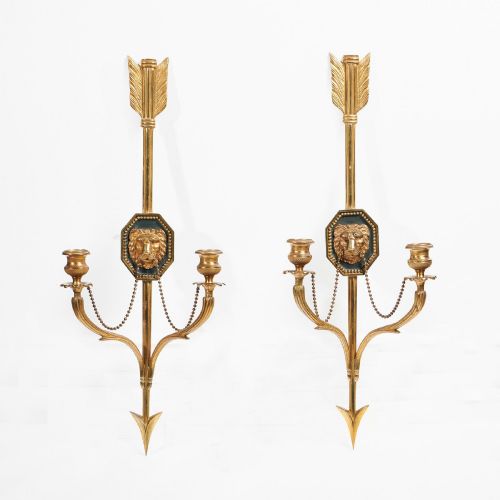
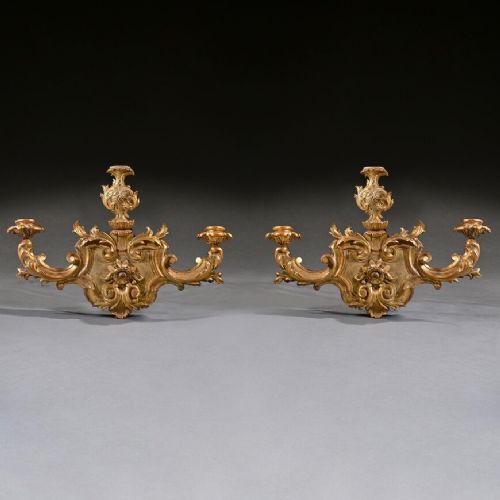
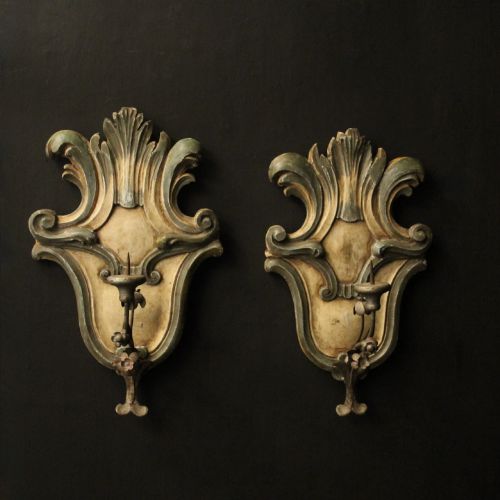
You will encounter pieces reflecting various regional traditions and decorative modes, such as Venetian Rococo, French Neoclassical, and Italian Florentine styles. Many items utilise carved wood and gesso frames covered in gold leaf or gilt finish, while others employ gilt bronze and brass. These fixtures serve both a practical lighting function and a striking decorative purpose on panelled or plastered walls.
Materials and Construction
The construction of these pieces relies heavily on carved wood and gesso, which provide a stable base for the application of gold leaf and giltwood finishes. Artisans shaped intricate frames incorporating motifs inspired by Rococo and Neoclassical vocabularies, ensuring sculptural depth. Metalwork examples utilise cast bronze and brass, often finished with fire gilding to achieve a lasting metallic lustre.
Mirrored elements in girandole pieces require silvering techniques behind glass plates, set securely within gilded wooden rebates. Candlestick nozzles and drip pans are integrated into the metal arms or wooden backplates to catch wax safely. Each material combination dictates the weight and mounting requirements of the sconce on the wall.
Gilded Wall Candle Holders Retail Price Guide 2026
Typical asking prices for gilded wall candle holders among the pieces listed under this phrase on Sellingantiques today, from the lower quarter to the upper quarter. They describe what is for sale here now, not the wider market.
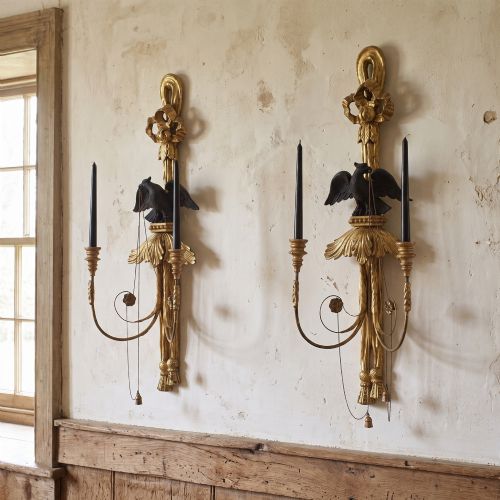
Eagle motifs peer out from nineteenth-century frames, keeping a watchful, golden eye over the flickering candlelight below them.
Assessing Quality and Execution
Quality in these items is determined by the crispness of the carving and the purity of the gilding technique applied to the wood or metal surface. Fine examples display sharply defined acanthus leaves, scrollwork, and figurative details that retain their original depth beneath layers of gold leaf. Inferior or later retouched surfaces often obscure the underlying detail and lack the subtle patination of age.
The structural integrity of the backplates and the secure attachment of the candle arms separate superior manufacturing from basic assembly. Well-made pieces distribute the weight evenly to prevent sagging against the wall surface over time. Original mirror plates and intact bronze components further elevate the integrity of the piece.
Meissen
The Gilded Wall Candle Holders Glossary
- Giltwood
- Wood that has been coated with gold leaf or powder. It forms the primary substrate for many eighteenth and nineteenth-century decorative wall lights.
- Girandole
- A branched wall-light or candleholder featuring a mirrored backplate. The mirror reflects the flame to increase the ambient illumination in a room.
- Pricket
- A sharp spike on a candleholder designed to impale the base of a candle to secure it. This format appears frequently in Florentine and ecclesiastical designs.
- Gesso
- A plaster-like mixture applied to wood surfaces as a smooth base for gilding. It allows craftsmen to carve fine details before applying gold leaf.
- Sconce
- A wall-mounted lighting fixture designed to hold candles or electric bulbs. Historical examples use reflective backplates to project light forward into the space.
Gilded Wall Candle Holders: Frequently Asked Questions
How were gilded wall candle holders used historically?
These fixtures were mounted in pairs or groups on drawing room and hallway walls to illuminate dark interiors before electricity. The reflective quality of the gilt surfaces and mirror plates helped multiply the flickering light from beeswax or tallow candles.
Positioned strategically around a room, they created a warm, atmospheric glow that complemented the central chandelier. Their decorative presence remained prominent even during daylight hours.
Can these antique candle holders hold modern candles?
Many historical sconces feature standard prickets or drip pans sized for historical candle diameters, which often require careful selection or slight trimming of modern candles. It is important to measure the nozzle or socket before attempting to place a candle in the holder.
For safety and preservation, many owners choose to use appropriately sized taper candles or rely on the pieces purely for decorative display without burning wax.
How do I distinguish an eighteenth-century sconce from a later revival piece?
Dating relies on examining the construction methods of the wooden backplate, the type of gesso preparation, and the wear patterns on the gold leaf. Eighteenth-century pieces often show hand-cut joinery, older pine or hardwood timbers, and the distinct craquelure of age beneath the gilding.
Revival pieces from the nineteenth and twentieth centuries may utilise machine-tooled elements, heavier modern brass, or uniform patination that lacks the subtle variations found in older items.
How should I clean a antique giltwood wall light?
Dusting should be performed gently using a soft, dry brush or feather duster to avoid disturbing delicate gesso and gold leaf layers. Moisture and chemical cleaning agents must be avoided, as they can strip the historical gilt surface.
Professional restoration is recommended if structural repairs or consolidation of loose gesso become necessary over time.