


Gilded Side Chair
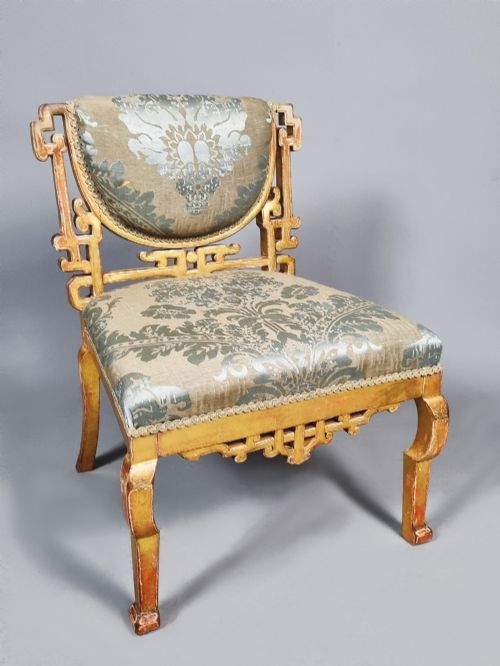
A gilded side chair brings formal presence to a room, offering decorative carved wood and metallic leaf finish.
Gilded Side Chair
A gilded side chair is a light seating form designed primarily for decorative display and occasional use in reception rooms, parlours and bedrooms. When searching for a gilded side chair, buyers encounter pieces spanning the eighteenth to early twentieth centuries, with nineteenth-century examples appearing most frequently.
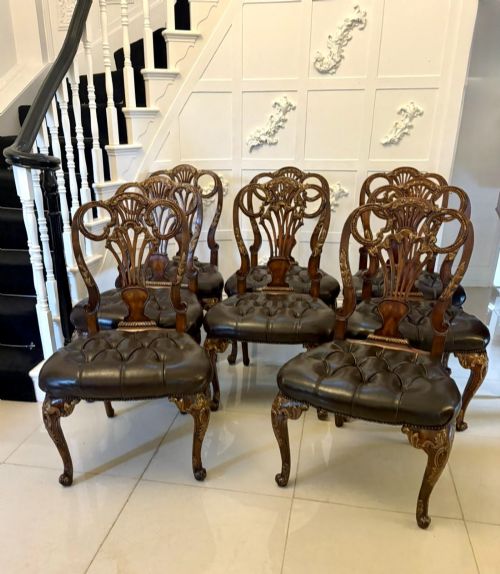
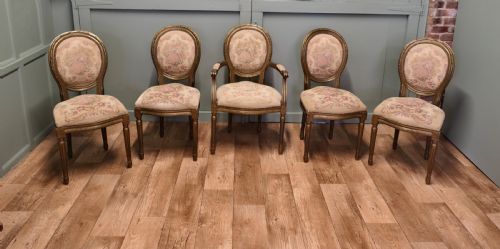
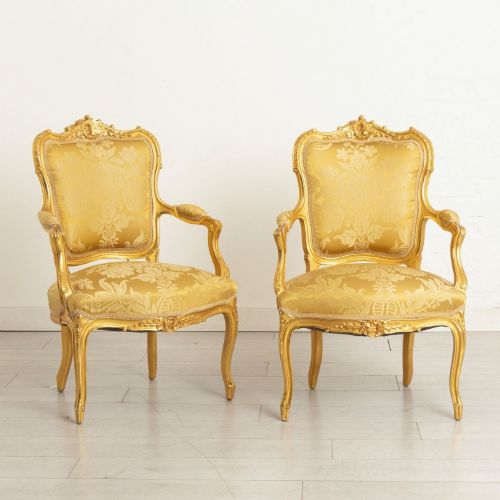
These chairs draw upon French Louis XVI, Regency, and Rococo design vocabularies, often taking the form of salon chairs, dining chairs or hall chairs. The selection ranges from single pieces to pairs and larger matched dining sets originating from English, French and Continental workshops.
Materials and Construction
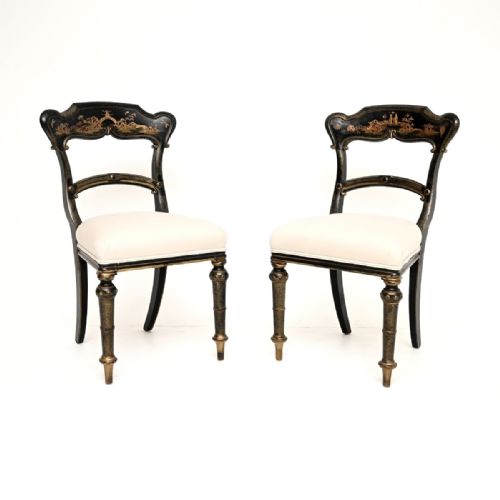
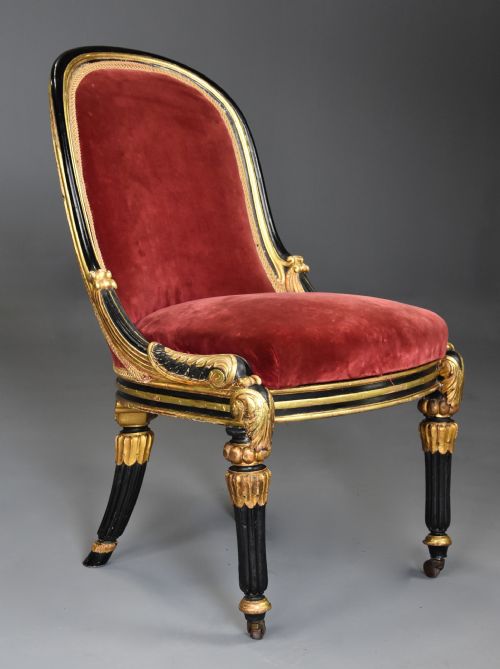
Makers built these frames using traditional timbers such as walnut, beech and other hardwoods, sometimes applying ebonisation or lacquer to the primary structure. Decorative surfaces received an application of gold leaf or gilt paint over a prepared ground, giving the woodwork its characteristic metallic sheen.
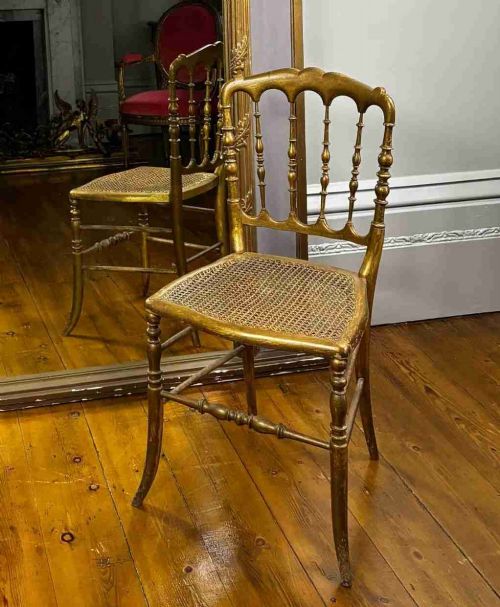
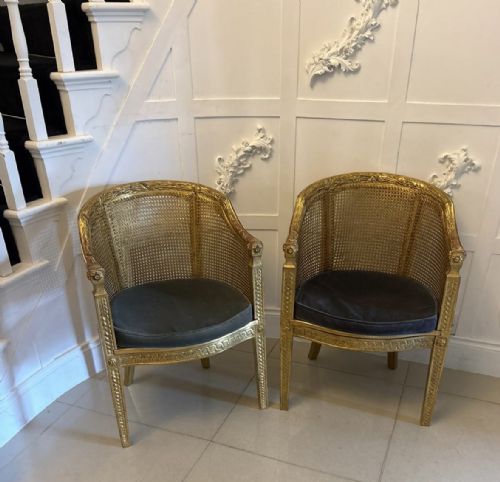
Upholstered elements rely on traditional stuffing and webbing covered in contemporary or replacement textiles, including silk fabric, silk damask and velvet, while other examples utilise woven cane or exposed carved wooden panels.
One grand suite provides forty-two matching chairs, ensuring an entire royal assembly can sit in uniform gilded splendour.
Quality Variations
The standard of a piece rests heavily on the depth and crispness of the hand-carved ornamentation across the crest rails, frame borders and cabriole legs. Superior examples exhibit finely detailed floral, foliate or classical motifs rather than flat or mechanically cast decoration.
Preservation of the original gilding and structural integrity further separates pieces, as early water-gilding displays a warmer luminosity and finer ageing compared to later paint applications, while solid joinery ensures the delicate frames remain rigid.
Waugh And Son·Bruce J Talbert·Lamb Of Manchester·Jennens And Bettridge
The Gilded Side Chair Glossary
- Giltwood
- Wood that has been coated with thin sheets of gold leaf or powder over a gesso ground. This technique creates a rich, reflective surface characteristic of formal antique seating.
- Caned
- A seating surface woven from split rattan or cane strips. It provides a lightweight, patterned panel insert common in eighteenth and nineteenth-century chair seats and backs.
- Ebonised
- Wood treated with a chemical stain or dark finish to imitate ebony. This dark treatment frequently contrasts with gold leaf highlights on Regency and Victorian frames.
- Bergere
- An enclosed upholstered armchair with wooden sides and a padded seat. These French seat forms often feature exposed giltwood frames and loose cushion units.
Gilded Side Chair: Frequently Asked Questions
Where should I place a gilded side chair?
These decorative chairs work well in formal drawing rooms, hallways or bedrooms where seating is used occasionally rather than for heavy daily lounging. Their reflective metallic finishes suit corners that require visual brightening.
They also pair effectively with writing desks or serve as decorative accents against plain walls, allowing the carved wooden frames to stand out as sculptural objects.
How do I care for antique giltwood?
Giltwood surfaces require gentle dusting with a soft, dry ostrich feather duster or microfibre cloth to prevent the accumulation of abrasive particles. Avoid using liquid polishes, chemical sprays or damp cloths, which can lift or dissolve the delicate gold leaf.
Keep the chairs away from direct sunlight and strong heat sources, as fluctuating temperatures can cause the underlying gesso and wood to contract and crack.
How can I tell the period of a chair?
Dating relies on observing the stylistic vocabulary, such as the straight fluted legs of Louis XVI designs versus the curved cabriole lines of Rococo models. Construction marks, tool traces and timber types visible beneath the frame also help determine age.
Secondary woods and assembly methods, including hand-cut screws or pegged joints, offer further clues to whether a piece originates from the eighteenth, nineteenth or twentieth century.
Can I use these chairs for dining?
While some listings include large matched sets intended for dining tables, many individual side chairs are structurally light and meant primarily for occasional or decorative use. Care must be taken with antique joinery if they are selected for daily family meals.
Checking the stability of the frame and the load-bearing capacity of the legs ensures the chairs remain safe and functional for seated guests.