



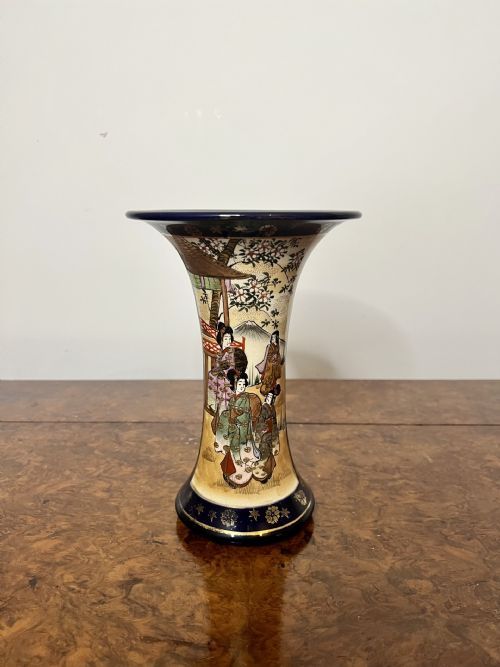


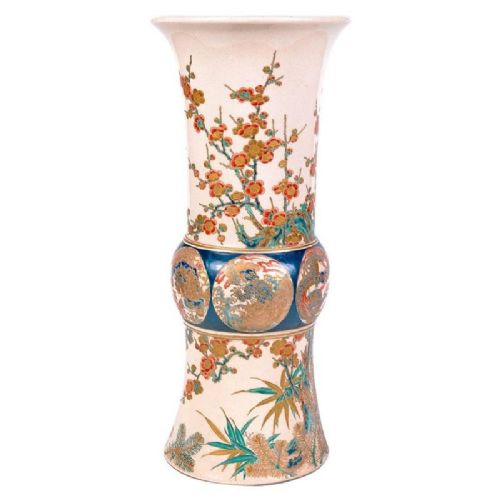

Gilded Satsuma Vessel
These gilded satsuma vessel pieces bring intricate Japanese earthenware and heavy gold leaf into a room, offering rich figural panels and classic forms.
Gilded Satsuma Vessel
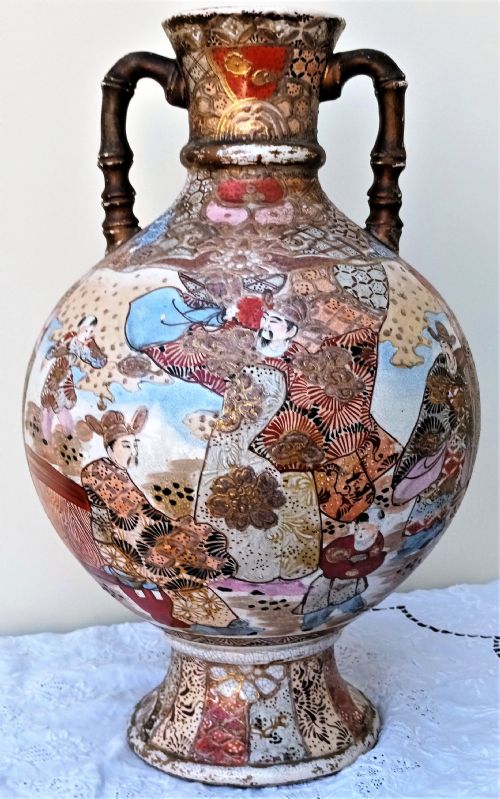
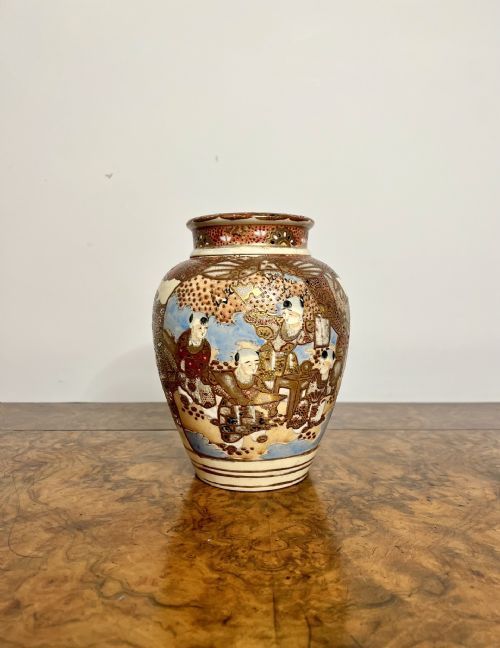
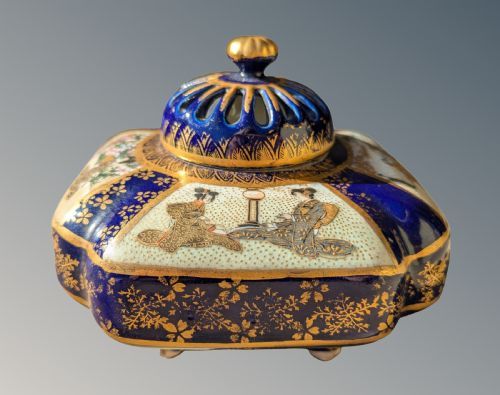
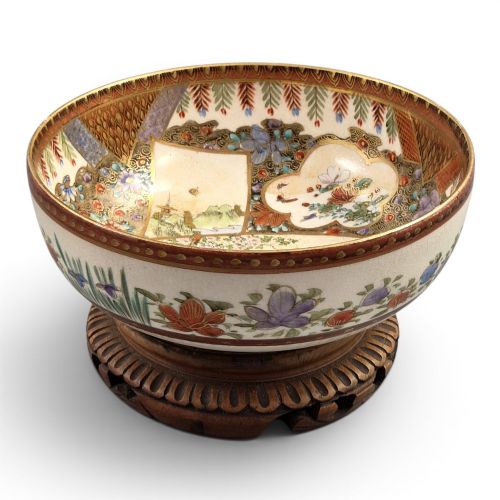
A gilded satsuma vessel is an earthenware piece originating from Japan, spanning periods from the late nineteenth century into the twentieth century. These items appear in various domestic and decorative forms, including tea caddies, incense burners, bowls, and large vases.
The objects frequently date from the Meiji period, with some examples extending into the Taisho and early Showa eras. Buyers encounter items ranging from miniature tea jars to monumental Kyoto studio bowls decorated with figures, landscapes, and battle scenes.
Materials and construction
Potters formed these pieces from ceramic earthenware, often applying detailed hand-painted designs alongside enamel work. Artisans then integrated heavy gold leaf and gold gilt to accentuate specific motifs and borders across the surface.
Certain examples incorporate moriage technique, building up raised clay dots and lines beneath the gilding to create tactile surface relief. Workshops utilised wood and bronze elements on select items such as lidded incense burners.
Gilded Satsuma Vessel Retail Price Guide 2026
Typical asking prices for gilded satsuma vessel among the pieces listed under this phrase on Sellingantiques today, from the lower quarter to the upper quarter. They describe what is for sale here now, not the wider market.
Listings span the Meiji, Taisho, and early Showa periods, utilising earthenware, enamel, gold leaf, and bronze.
What separates the grades
Quality rests upon the precision of the hand-painted figural work and the density of the gilding. Pieces featuring complex multi-figure battle scenes or dense floral patterns demand greater technical skill than simpler designs.
Named studio output and artist signatures, such as those from Kinkozan or Hotoda, indicate higher workshop standards. The crispness of the raised moriage relief and the preservation of the gold leaf differentiate standard productions from superior examples.
Kizan·Kinkozan·Kozan·Hotoda·Chosei·Tokyo Taizan·Shozan
The Gilded Satsuma Vessel Glossary
- Satsuma
- A type of Japanese earthenware traditionally characterised by an ivory-coloured, crackle-glazed surface. It serves as the primary canvas for detailed polychrome and gilt decoration.
- Koro
- An incense burner fitted with a pierced cover. These vessels typically stand on three legs and feature two handles.
- Moriage
- A ceramic technique where slip is applied in raised dots or lines to form textured patterns. This method adds a distinct tactile dimension beneath the painted and gilded finish.
- Mon
- A Japanese heraldic badge or crest. Examples often display the Shimazu family crest alongside narrative scenes.
- Natsume
- A small tea caddy traditionally used in Japanese tea ceremonies. These vessels take a rounded shape and include a fitted lid.
Gilded Satsuma Vessel: Frequently Asked Questions
What is a satsuma vessel?
A satsuma vessel is a piece of Japanese earthenware featuring a crackled glaze decorated with hand-painted enamel and gold leaf.
These objects include vases, jars, and bowls produced largely during the Meiji period for both export and domestic markets.
How do I identify a Meiji period piece?
Meiji period items date between eighteen sixty-eight and nineteen twelve, aligning with the reign of Emperor Meiji. Makers often inscribed pieces with specific studio marks or artist signatures from this era.
Stylistic indicators include dense painted narratives depicting figures such as samurai, arhats, and traditional landscapes.
What are incense burners used for?
Incense burners, or koros, served to hold burning incense during traditional gatherings and ceremonies. Their pierced covers allowed scented smoke to diffuse evenly into a room.
Today, collectors display these lidded vessels as decorative sculptural objects rather than for burning incense.
Where were these ceramics made?
Production centred around various Japanese regions, with Kyoto emerging as a primary hub for high-end export wares. Prominent studios and master makers operated within these centres to supply international demand.
Specific workshops often incorporated family crests, such as the Shimazu mon, onto the base or body of the vessel.