

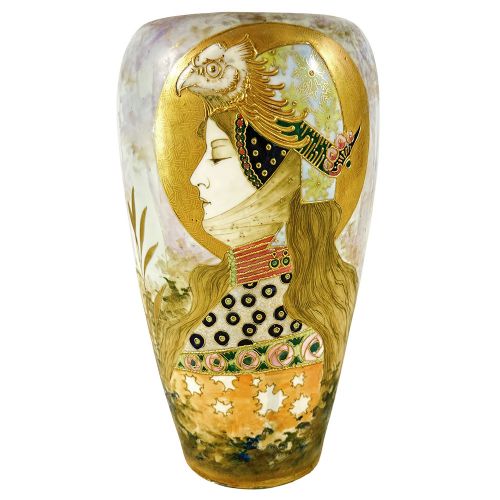
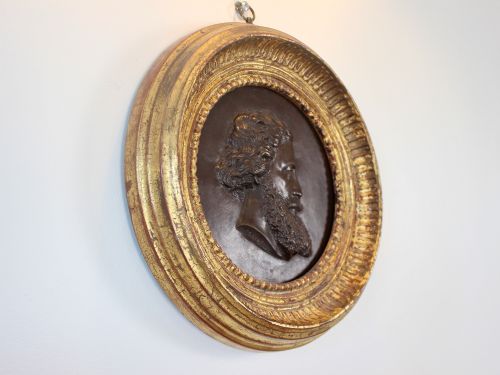


Gilded Profile Portrait
A gilded profile portrait captures a likeness in sharp outline, offering collectors an intimate glimpse into historical lives through delicate gold leaf and dark paper silhouettes.
Gilded Profile Portrait
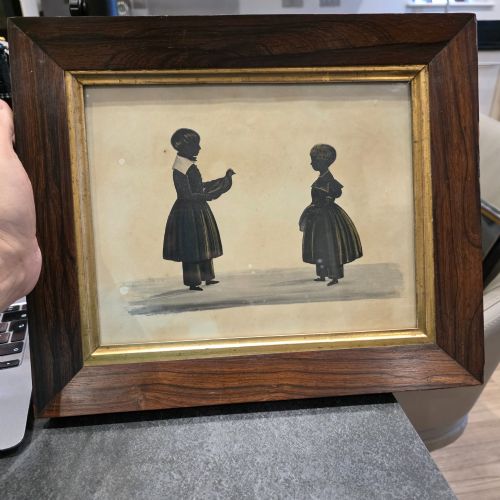
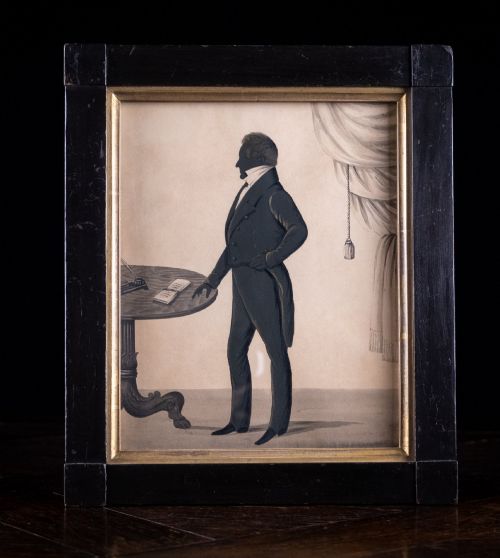
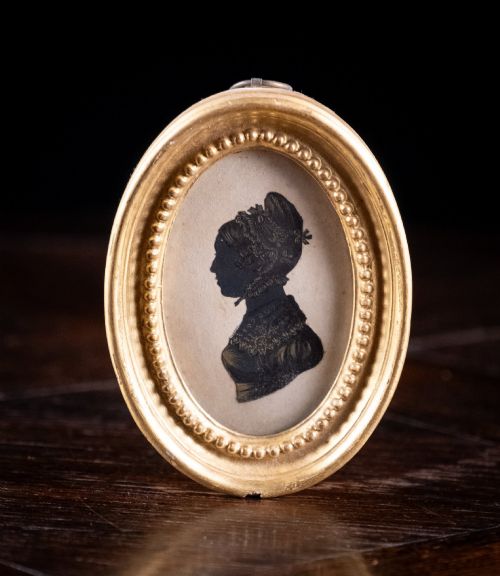
The most common examples encountered on this page are silhouette portraits created during the early 19th century and the Regency period. They frequently appear housed in original wood or gilt frames, preserving the likeness of historical sitters.
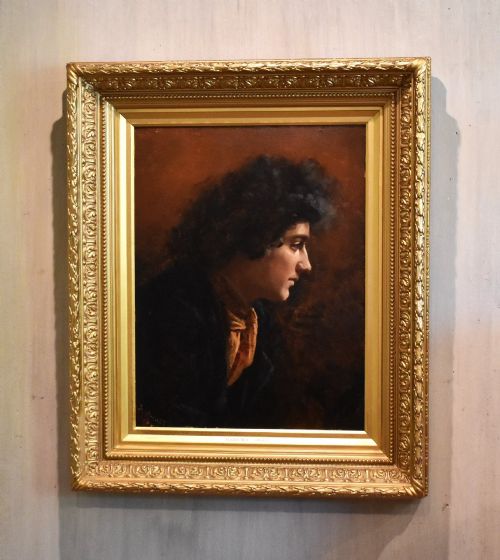
Beyond paper profiles, the category extends to painted miniatures, oil paintings, and bronze wall plaques from the 18th century onward. Each variant employs strict profile conventions to record personal identity before the widespread adoption of photography.
Materials and construction
Makers utilised dark paper and card for the primary silhouette, cutting the likeness by hand before applying fine gold leaf to delineate hair, costume, and jewellery. Ink and pastel occasionally supplemented the cut-out work to add intricate facial details.
Frames played an essential role in construction, often fashioned from ebonised wood, rosewood, or giltwood to contrast with the pale gold and dark profiles. Glass protected the fragile paper works, while brass and bronze were utilised for heavier plaques and frames.
Several gentlemen and ladies are permanently trapped in profile, forever staring across the room at a bird.
Assessing quality and execution
The precision of the cutting distinguishes superior profile portraits, where delicate scissors capture lace collars, eyelashes, and hair ribbons with absolute clarity. Inferior examples rely heavily on broad painted brushstrokes rather than sharp, refined paper manipulation.
The quality of the gilding further separates the works, with finer items displaying crisp, burnished gold leaf that catches the light against deep black silhouettes. Original framing also elevates a piece, particularly when contemporary rosewood or deep gilt surrounds remain intact.
George Atkinson·Nicholas Kannhauser·J. Deacon·John Miers·Ozias Humphry·Nathaniel Bermingham
The Gilded Profile Portrait Glossary
- Silhouette
- A solid black or dark profile portrait, usually cut from paper or painted on a light background. It gained immense popularity during the Georgian and Regency periods.
- Giltwood
- Wood carved and covered with a thin layer of gold leaf or gold paint. Picture frames of this material enhance the visual impact of profile portraits.
- Ebonised wood
- Timber treated to resemble ebony, providing a dark, polished finish. This material frequently frames early 19th-century silhouettes to create a strong tonal contrast.
- Regency
- A period in British history spanning the early 19th century, known for refined neoclassical aesthetics. Portraits from this era often exhibit particularly elegant linear precision.
Gilded Profile Portrait: Frequently Asked Questions
How were profile portraits displayed?
These portraits were traditionally hung in intimate domestic spaces such as parlours, often grouped in clusters on drawing-room walls alongside other family likenesses.
Their compact size also allowed them to be kept in protective cases or displayed on small mantelpieces for close personal contemplation.
How do I date a silhouette?
Dating relies heavily on the clothing styles, hairstyles, and headdresses depicted, which closely mirror the fashion trends of periods like the Regency or early Victorian eras.
Framing materials and handwritten inscriptions on the reverse, such as dates or sitter names, provide further chronological evidence.
Why use gold leaf on silhouettes?
Gold leaf added depth, luminosity, and luxury to flat black paper profiles by highlighting costume details, jewellery, and hair accessories.
This technique elevated a simple paper cutting into a sophisticated miniature work of art suited to wealthy patrons.