


Gilded Porcelain Demitasse Set
A gilded porcelain demitasse set is a small after-dinner coffee service designed for elegance, offering intricate hand-painted detail and gleaming metallic ornamentation.
Gilded Porcelain Demitasse Set
When you search for a gilded porcelain demitasse set, you encounter miniature cups and saucers alongside small coffee sets intended for post-meal service. These pieces span the Georgian, Regency, and nineteenth-century periods, as well as the early twentieth century.
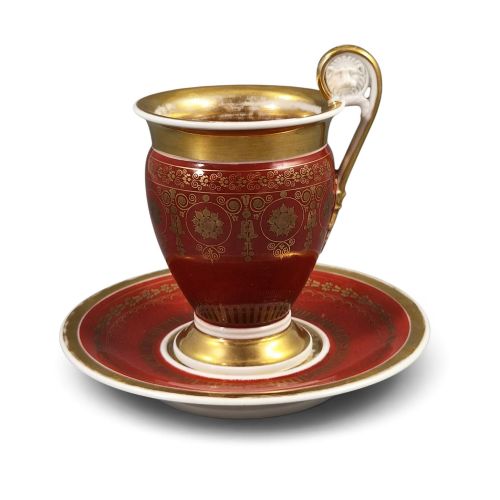
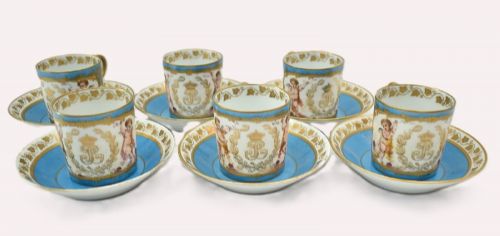
The items listed on this page include French Old Paris, Sevres, Meissen, and Worcester productions. Forms range from single cabinet cups with lion mask handles to cased sets of six.
Makers such as Royal Worcester, Limoges, KPM Berlin, and Hutschenreuther appear frequently across the collection. Styles draw on Rococo Revival, French Empire, Louis Philippe, and nineteenth-century neoclassical traditions.
What varies in quality
The fineness of the porcelain body and the precision of the hand-painted details determine the tier of the piece. Crisp execution in floral or figural panels elevates certain examples above simpler productions.
The richness and preservation of the gold leaf or gilding distinguish finer works. Heavy, burnished gold accents applied over detailed moulded forms demonstrate superior craftsmanship.
The listings on this site encompass porcelain forms from the eighteenth, nineteenth, and early twentieth centuries, featuring gold leaf, enamel, and hard-paste bodies.
Royal Worcester·Ahrenfeldt and Asalvary·Meissen·Minton·KPM Berlin·Hutschenreuther·Hirsch Dresden·Spode Copeland
The Gilded Porcelain Demitasse Set Glossary
- Demitasse
- A small cup used for serving strong black coffee after a meal. The name translates literally from French as half-cup.
- Hard-paste porcelain
- A durable ceramic material composed of kaolin and petuntse fired at extreme temperatures. It resists scratching and takes glaze exceptionally well.
- Gilding
- The application of gold leaf or gold paint to a surface. In these pieces, it highlights rims, handles, and intricate patterns.
- Coffee can
- A straight-sided cylindrical coffee cup popular in the Georgian and Regency eras. It often accompanied a matching saucer.
- Cabinet cup
- A decorative cup intended for display in a cabinet rather than regular use. These pieces often feature elaborate painted scenes and special handles.
Gilded Porcelain Demitasse Set: Frequently Asked Questions
What is a demitasse set used for?
These sets are designed specifically for serving strong after-dinner coffee or espresso in miniature portions. The small cups hold just enough rich coffee to follow a heavy meal.
Historically, they also served as decorative status objects displayed in glass cabinets. Today, many collectors use them for special occasions or retain them as display pieces.
How do I know the age of my set?
Dating relies heavily on factory backstamps, stylistic markers, and historical periods such as the Georgian era or the early twentieth century. Hand-painted signatures and specific pattern names can also pinpoint the decade of manufacture.
Comparing the shape of the handle and the painting style to documented factory archives helps narrow down the production date further.
Are these cups safe to use?
While many pieces remain physically robust, antique porcelain requires careful handling due to age and delicate hand-painted decoration. Hand washing in lukewarm water with mild soap is essential to protect the fragile enamel and gold leaf.
Harsh detergents and automatic dishwashers will quickly damage the historical gilding and delicate ceramic bodies.
What is the difference between a teacup and a demitasse?
A demitasse cup is noticeably smaller and narrower than a standard teacup, tailored for concentrated coffee rather than tea. They are frequently paired with deep saucers designed to keep the small vessel secure.
Coffee cans present a distinctive straight-sided cylindrical profile, whereas traditional teacups typically curve outward toward the rim.