



English Porcelain Coffee Cans
English porcelain coffee cans are cylindrical drinking vessels designed for morning caffeine, prized for their delicate bodies and painted decoration.
English Porcelain Coffee Cans
When you search for english porcelain coffee cans, you encounter tall, handleless cylindrical cups designed specifically for morning coffee rather than tea. These vessels date from the eighteenth century through to the twentieth century, reflecting shifting domestic habits and social rituals.
The versions most commonly met on this page span the Georgian and Regency periods, alongside later twentieth-century productions. Makers such as Worcester, New Hall, Minton, and Spode dominate the selections, appearing both as single items and paired with matching saucers.
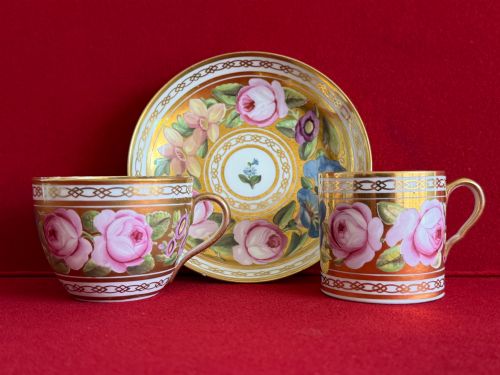
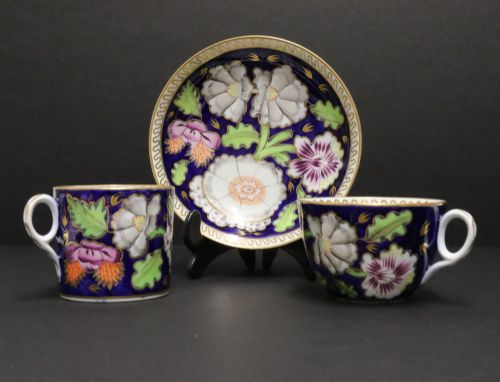
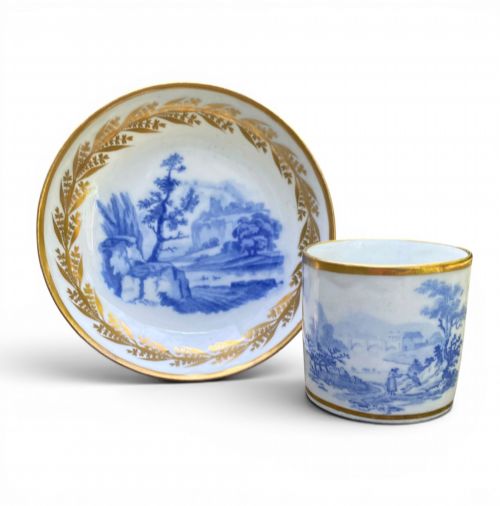
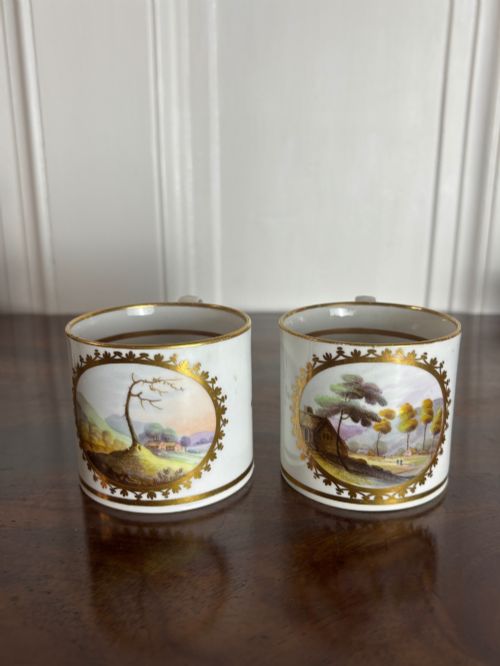
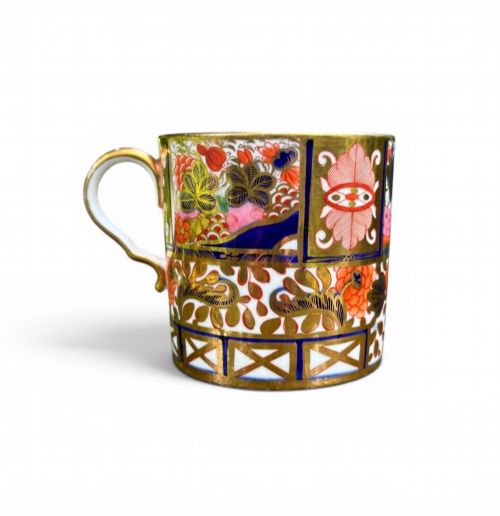
Forms range from straight-sided cylindrical cans to slightly tapering shapes, often accompanied by matching saucers or forming part of larger cabinet trios and teaware sets. Decoration varies from hand-painted landscape scenes and Chinese figures to rich Imari palettes and gilded accents.
How they were made
Potters shaped these vessels using soft-paste porcelain, hard-paste porcelain, or bone china, firing the clay bodies at high temperatures to achieve vitrification. Early pieces rely on soft-paste porcelain formulas that yield a warm, slightly creamy translucency under the glaze.
Decoration involves hand-painting, enamel work, and the application of gold leaf or gilding to enhance the rims and handles. Artisans applied cobalt blue underglazes, polychrome enamel scenes, and intricate transfer prints before a final glaze firing fixed the colours permanently.
Pattern names recorded by makers include the charmingly specific Crazy Cow, Bengal Tiger, and Dragon in Compartments.
What varies in quality
The standard of painting distinguishes standard output from exceptional factory pieces, particularly where hand-painted landscapes, botanical studies, or figurative Chinese patterns are concerned. Skilled artists executed miniature details with precision, whereas lesser examples rely on repetitive stencilling or simpler transfer printing.
The crispness of the porcelain body and the success of the glaze firing also set pieces apart, with finer potting showing even translucency and minimal kiln distortion. Preservation of the original gilding and enamel brightness contributes significantly to the desirability of surviving examples.
Flight & Barr Worcester·New Hall·Minton·Spode·Royal Worcester
The English Porcelain Coffee Cans Glossary
- Coffee can
- A straight-sided, handleless cylindrical cup made for drinking coffee during the eighteenth and nineteenth centuries. These vessels often accompanied matching saucers.
- Soft-paste porcelain
- An artificial ceramic paste fired at lower temperatures than hard-paste porcelain, producing a characteristic creamy body. It was widely used by early English factories.
- Imari
- A decorative style inspired by Japanese export wares, featuring rich cobalt blue, iron red, and abundant gilding. English factories adopted this palette extensively around eighteen hundred.
- Wet blue
- A rich underglaze blue applied to porcelain before firing, often used as a ground colour for reserve panels containing birds or flowers. Worcester pieces frequently utilise this technique.
- Demitasse
- A small cup used for serving strong black coffee or espresso. These pieces frequently appear in twentieth-century boxed sets.
English Porcelain Coffee Cans: Frequently Asked Questions
Did these coffee cans always have saucers?
Many surviving examples were produced alongside matching saucers, though separation over centuries is common. Single cans frequently appear independently in collections today.
Saucers matched the aesthetic of the cup through shared patterns, borders, and gilding schemes, creating a cohesive set for the table.
How do I distinguish eighteenth-century pieces from later revivals?
Examining the paste, weight, and underglaze characteristics helps separate early soft-paste production from nineteenth-century hard-paste or bone china alternatives. Factory marks, where present, offer further chronological guidance.
Stylistic shifts in painting technique and floral motifs also provide clues to the decade of manufacture.
How were coffee cans used historically?
These cylindrical vessels served strong coffee following meals in affluent households, holding smaller quantities than modern mugs. Their handleless form required careful handling when containing hot liquids.
They frequently formed part of larger teaware services used during formal social gatherings and afternoon visits.
Can I use antique coffee cans for daily drinks?
Most collectors treat these historic ceramics as display pieces or cabinet items rather than practical kitchenware. The delicate nature of soft-paste porcelain and fragile gilding makes them vulnerable to thermal shock and modern detergents.
Gentle hand washing is necessary for any pieces selected for occasional table use.