



Gilded Papier Mache
Gilded papier mache pieces combine structural paper pulp with gleaming metal leaf, offering durable utility and dramatic reflective surfaces for domestic display.
Gilded Papier Mache
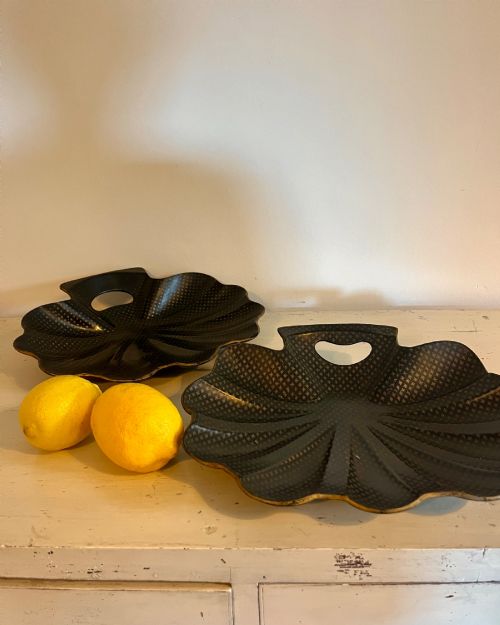
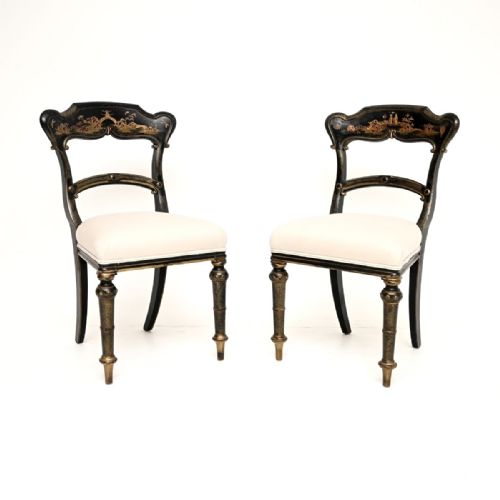
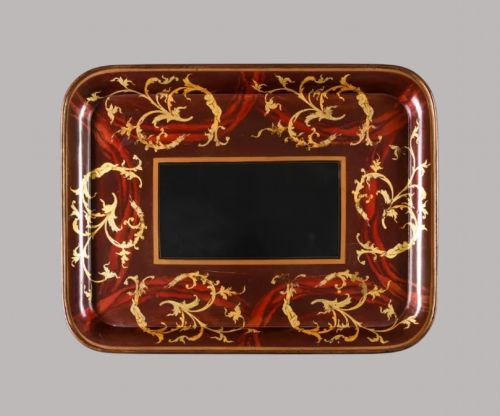
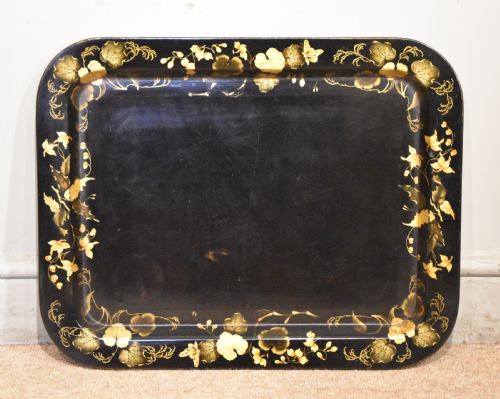
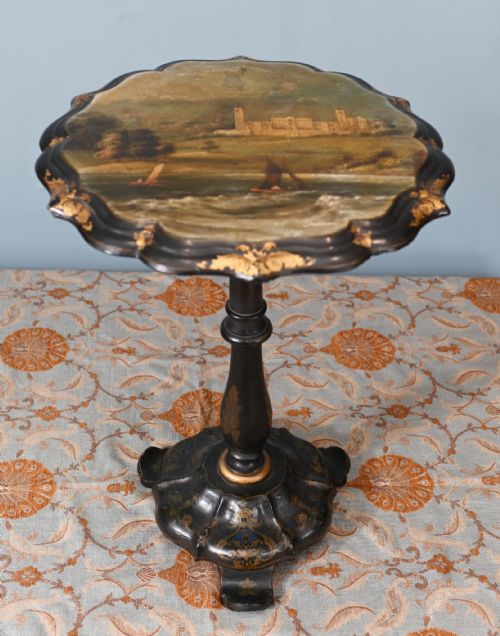
When people search for gilded papier mache, they encounter domestic objects fashioned from pulped paper, layered board, or reinforced paste, embellished with metallic leaf and paint. The forms span serving trays, occasional tables, tea caddies, writing boxes, and wine coasters produced across the Georgian, Regency, and Victorian periods.
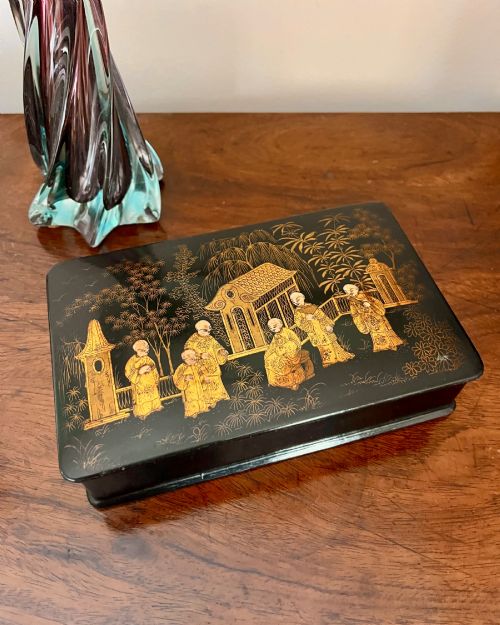
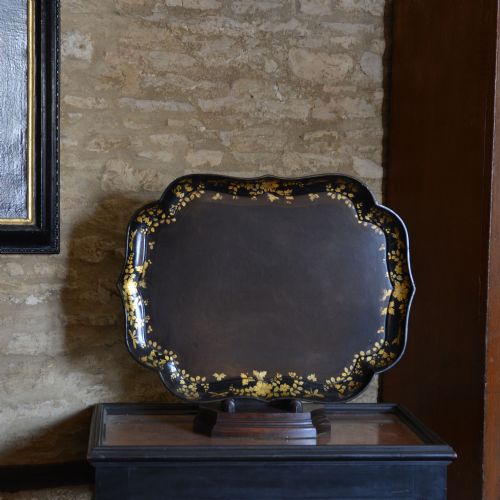
The version most frequently met on this page is the large serving tray, often mounted onto a later stand to form an occasional table, or detailed with Chinoiserie landscapes and floral motifs. These items date predominantly from the nineteenth century, reflecting periods when papier mache offered a lightweight yet resilient alternative to solid timber.
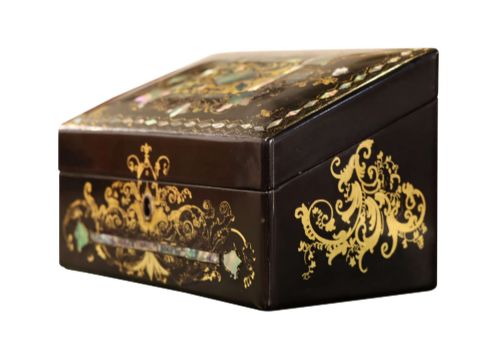
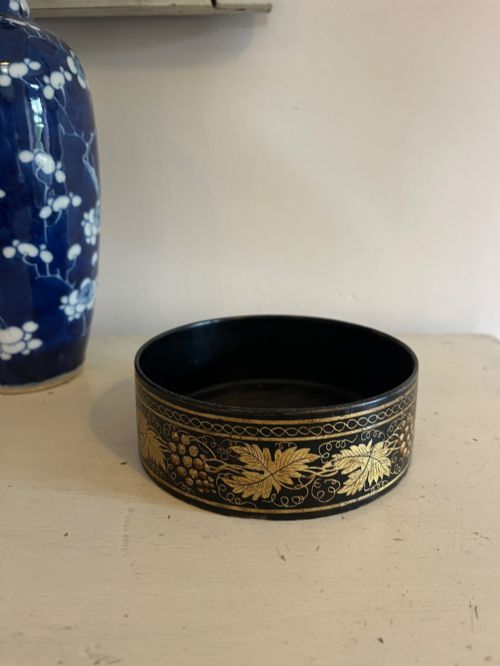
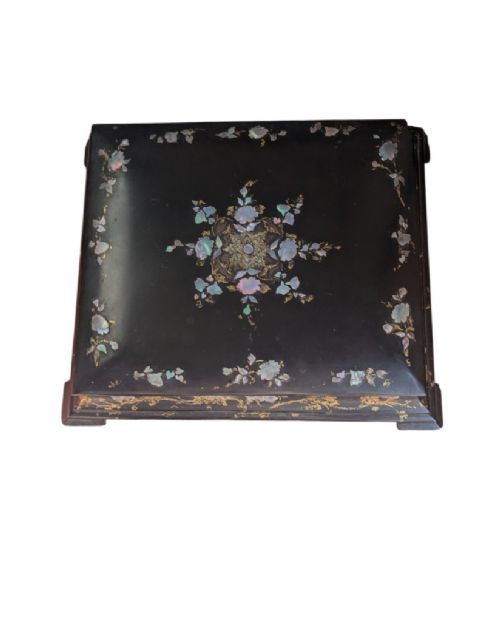
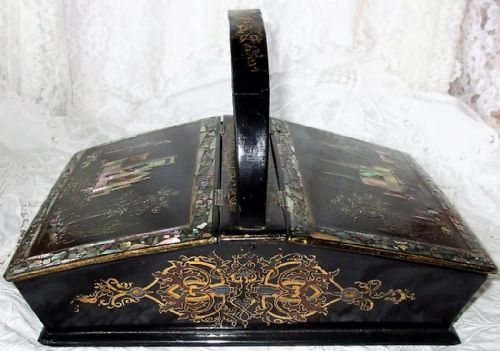
Beyond trays and tables, the listings include small boxes, needlework caskets, and coasters, demonstrating the material's adaptability for both functional utility and decorative tabletop display.
Materials and Construction
The foundation relies upon paper pulp mixed with glue and resin, or sheets of paper pasted together under heavy pressure and baked until rigid. This matrix yields a remarkably tough board that resists warping far better than traditional wood.
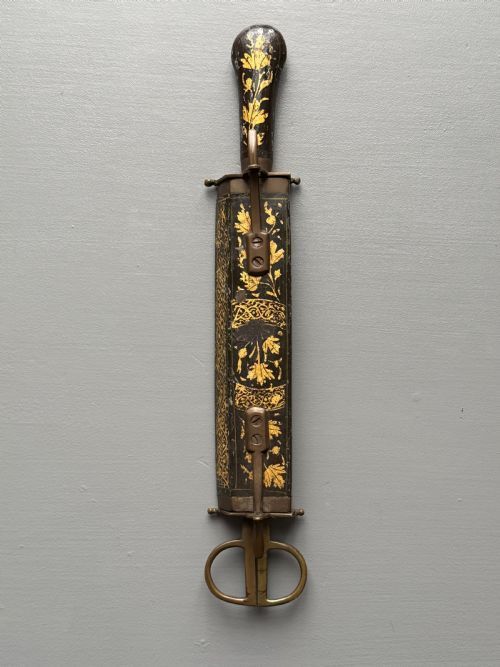
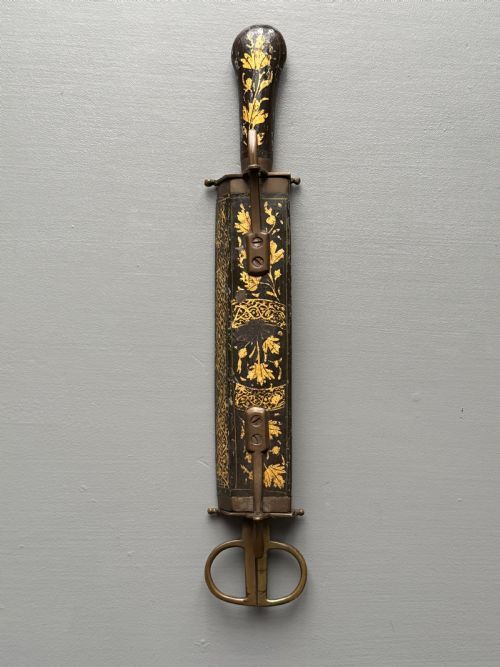
Makers applied layers of dark lacquer or paint over the moulded substrate before adding gold leaf and mother-of-pearl inlay. The metallic embellishments were often hand-painted or burnished to catch ambient light within domestic interiors.
Gilded Papier Mache Retail Price Guide 2026
Typical asking prices for gilded papier mache among the pieces listed under this phrase on Sellingantiques today, from the lower quarter to the upper quarter. They describe what is for sale here now, not the wider market.
The listings show objects spanning the 18th century, Regency period, and Victorian era, utilising lacquer, papier-mache, gold leaf, and mother-of-pearl.
Assessing Quality and Execution
Quality rests upon the crispness of the moulded form, the depth of the dark lacquer ground, and the preservation of the original hand-applied gilding. Pieces retaining their unrubbed metallic highlights and intricate painted details command greater attention.
Structural integrity separates ordinary items from superior examples, particularly regarding the stability of the paper pulp base and the attachment of any accompanying wooden or metal stands.
Jennens & Bettridge·Henry Clay·J. Deacon
The Gilded Papier Mache Glossary
- Papier-mache
- A composite material made from paper pulp or reinforced sheets of paper mixed with adhesive, moulded and dried to form rigid objects. It provides a lightweight foundation for lacquer and gilding.
- Gold leaf
- Metal beaten into extremely thin sheets and applied to surfaces using size or adhesive. It creates the brilliant reflective highlights characteristic of gilded wares.
- Chinoiserie
- European artistic style reflecting Chinese motifs and landscapes, frequently rendered in gold and lacquer upon dark grounds. This aesthetic appears extensively on nineteenth-century trays and tables.
- Toleware
- Metalware coated in tin or lacquer, often grouped alongside papier mache pieces due to overlapping decorative techniques and finishes. It shares similar dark grounds and gilt embellishments.
Gilded Papier Mache: Frequently Asked Questions
What is gilded papier mache?
Gilded papier mache consists of compressed paper pulp or layered paper boards finished with dark lacquer and metallic leaf. These items combine structural resilience with decorative metallic ornamentation.
Craftsmen shaped the material into useful domestic forms, including trays, small boxes, coasters, and occasional tables during the Georgian and Victorian eras.
How do I clean gilded papier mache?
Dust surfaces gently using a soft, dry cloth without applying moisture, solvents, or modern cleaning agents. Excessive water or chemical cleaners can lift delicate gold leaf and damage the underlying lacquer.
Keep pieces away from direct sunlight and excessive heat sources to prevent the lacquer from cracking or warping the paper composite structure.
Were these trays used for serving?
Original trays served both practical functions for beverages and decorative display purposes within formal nineteenth-century drawing rooms. Their durable composition allowed them to carry tea services and glassware safely.
Many surviving examples now rest on custom stands to function as low occasional tables in contemporary sitting rooms.
How do I identify a Regency piece?
Regency items often display classical motifs, restrained borders, and precise gilt work executed on deep black lacquer grounds. The forms typically exhibit balanced proportions characteristic of early nineteenth-century design.
Examination of the reverse sides and mounting edges frequently reveals the distinctive texture of compressed paper layers and early hand-applied finishes.