


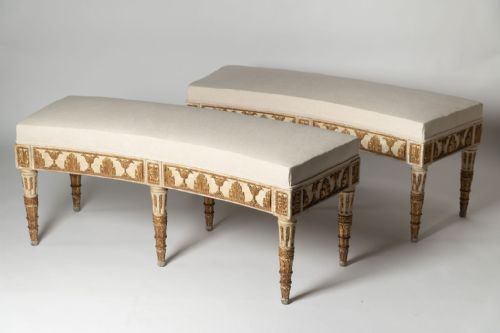
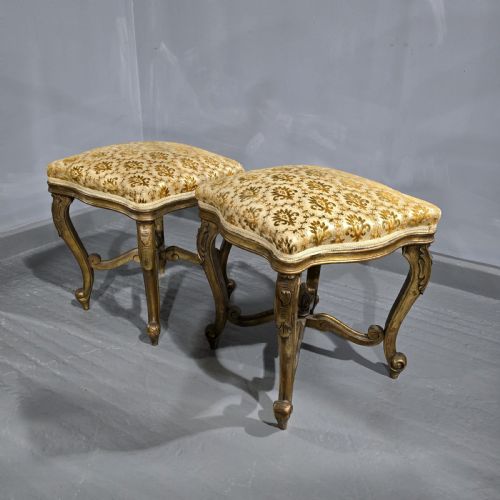
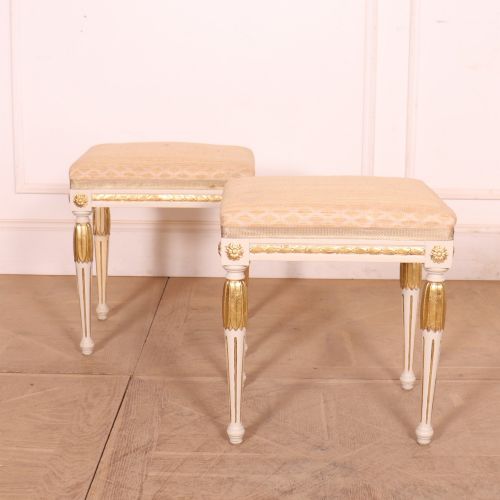


Gilded Ottoman Stools
Gilded ottoman stools bring tactile luxury and historical weight to a room, offering versatile seating finished in gold leaf.
Gilded Ottoman Stools
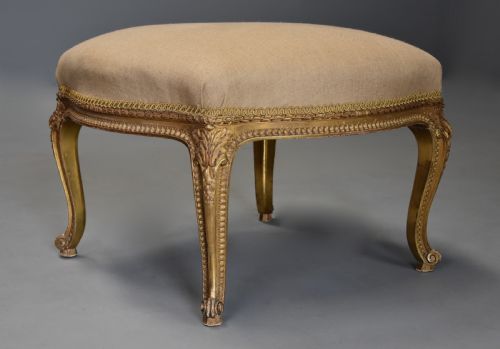
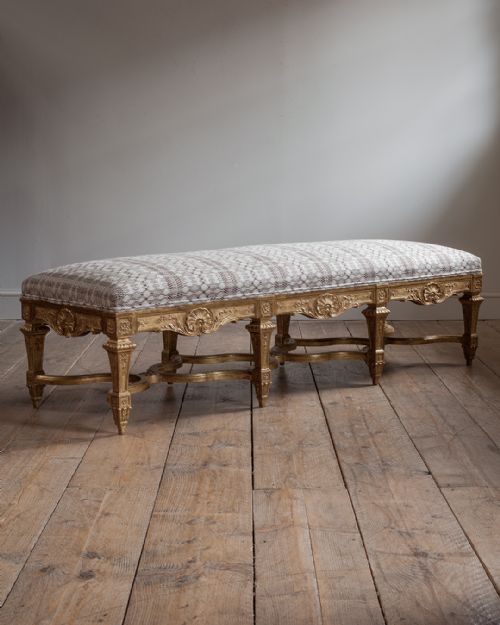
Gilded ottoman stools encompass low seating, footstools, and benches dating primarily from the nineteenth century, including Regency, Edwardian, and Victorian eras. These seating forms range from compact footstools to large window seats and long stools designed for grand interiors.
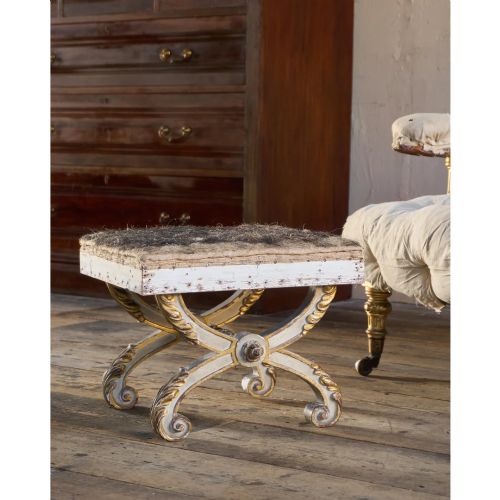
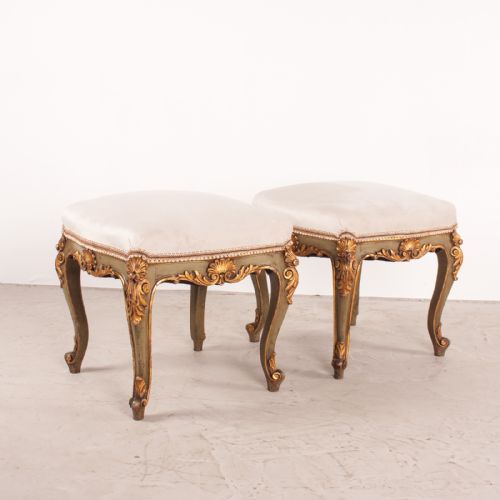
Makers and workshops across Britain, France, Italy, and Sweden produced these pieces in distinct continental revivals such as Rococo, Louis XIV, Louis XVI, and Neoclassical styles. Curule forms with X-frames and carved giltwood frames appear alongside painted and lacquered variations.
Buyers encounter pairs and single pieces upholstered in textiles, velvet, and fabric, often featuring scroll tops or elaborate carved detailing. The selection spans formal salon seating to practical gout stools and low stools.
Materials and construction
Craftsmen shaped timber and wood into structural frames, applying gesso as a smooth foundation layer before laying gold leaf to create the characteristic gilded surface. Certain pieces utilise walnut, mahogany, or applied paint and lacquer rather than solid giltwood.
Upholstery techniques involved durable textiles, velvet, and fabric stretched over internal padding to form comfortable footrests and seat pads. Carvers worked wood by hand to execute intricate scrollwork, baroque motifs, and curule X-frame geometries.
Gilded Ottoman Stools Retail Price Guide 2026
Typical asking prices for gilded ottoman stools among the pieces listed under this phrase on Sellingantiques today, from the lower quarter to the upper quarter. They describe what is for sale here now, not the wider market.
A specialised late nineteenth century rocking gout stool offers therapeutic comfort for resting sore feet.
Quality variations
Depth and precision of hand carving separate ordinary frames from superior pieces, where crisp acanthus leaves, scrollwork, and moulded details display true sculptural skill. Maker stamps or attribution to established workshops elevate historical significance.
The application and preservation of gold leaf and gesso dictate the visual richness of the surface, with intact gilding showing superior original materials. Structural integrity in joints, particularly on X-frame curule stools and heavy footstools, marks higher standards of cabinetmaking.
Miles & Edwards·Mathew Gregson·Loidrault Freres Paris·A.M.E. Fournier
The Gilded Ottoman Stools Glossary
- Giltwood
- Timber coated with gold leaf applied over a prepared gesso ground. This finish provides a luminous metallic surface characteristic of formal antique seating.
- Gesso
- A plaster mixture applied to wood frames to create a smooth base for gilding or painting. It allows carvers to achieve sharp decorative details.
- Curule
- An ancient X-frame chair or stool design revived during the Regency and Neoclassical periods. The intersecting legs form a folding X shape.
- Gilt
- Covered thinly with gold leaf or gold paint. This term describes the metallic surface treatment found on frames and mounts.
- Scroll top
- A decorative terminal shaped like a rolled scroll, often found on the ends of nineteenth century footstools and benches.
Gilded Ottoman Stools: Frequently Asked Questions
How do I date a gilded stool?
Dating relies on stylistic clues, timber choice, and construction methods that align with periods like Regency, Victorian, or Edwardian manufacture. Examining the gesso preparation and tool marks on the wood reveals historical age.
Maker stamps or paper labels provide definitive dates when present. Comparative study of upholstery webbing and frame joints further clarifies the era.
Where should I place a gilt stool?
These pieces function effectively as end-of-bed benches, window seats, or movable footrests in drawing rooms and dressing areas. Their compact scale allows placement beneath console tables or beside fireplaces.
Pair arrangements suit formal layouts opposite a sofa or flanking a fireplace. Single low stools add metallic warmth to corners or transitional hallways.
Are these stools comfortable for daily seating?
Footstools and low ottomans provide solid support for resting feet or brief seating rather than prolonged lounging. Their primary historical function was supplementary seating and foot support in formal reception rooms.
Modern comfort depends on the firmness of the underlying upholstery and textile padding. Many surviving pieces retain supportive sprung or stuffed pads suitable for light daily use.
How do I care for antique gilding?
Gentle dusting with a soft, dry cloth protects delicate gold leaf from abrasion and moisture damage. Avoid chemical polishes and liquid cleaners that can strip the metallic surface.
Positioning pieces away from direct sunlight and temperature extremes prevents the underlying gesso and wood from cracking. Careful handling preserves the original finish.