



Gilded Marble Statue
A gilded marble statue brings together carved stone and rich metalwork, offering classical presence and sculptural detail for a room.
Gilded Marble Statue
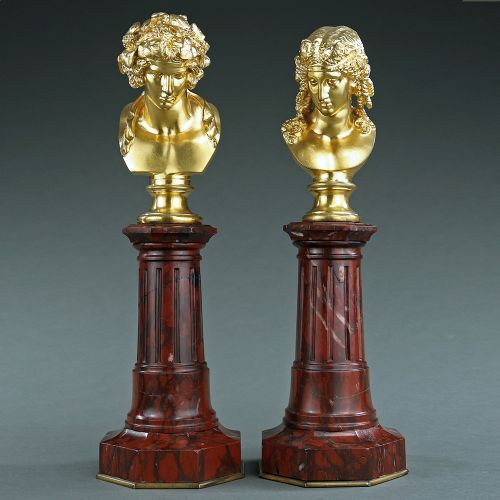
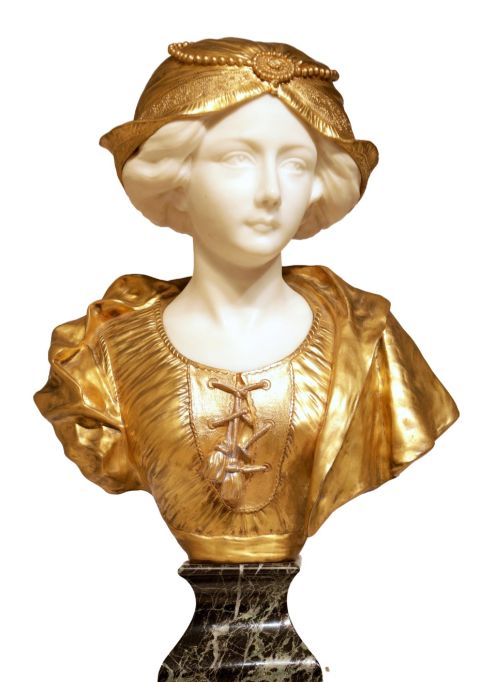
When you search for a gilded marble statue, you are looking at figural sculptures, busts, and decorative objects that combine carved stone with metal mounts or gilding. The pieces span the nineteenth century into the twentieth century, taking forms such as mythological figures, historical subjects, and dancers.
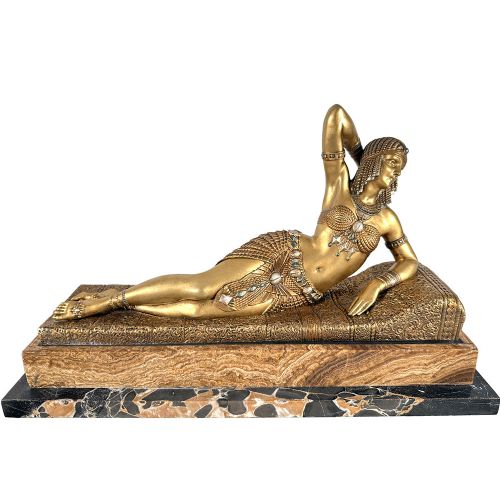
You are most likely to meet nineteenth-century works and later pieces produced during the Art Nouveau and Art Deco periods. These include French and Italian sculptures set upon marble or onyx bases, often incorporating ormolu or parcel-gilt bronze elements.
The selection ranges from grand classical revivals to intimate cabinet pieces, showcasing how makers united heavy stone with refined metallic highlights. Each object reflects the prevailing taste of its decade, from Egyptian Revival motifs to sleek modernist lines.
How they were made
The makers of these works carved white and coloured stones such as marble, onyx, and alabaster into detailed figures and pedestals. This stonework was paired with cast metals, primarily bronze, which received gilding, ormolu finishes, or patination.
Craftsmen joined the heavy stone bases and plinths to metal figures using secure mechanical fittings, often mounting bronze or gilt bronze subjects directly onto carved marble columns or Portoro bases.
At least one nineteenth-century subject holds an inkwell, proving that even classical dignity occasionally had to answer correspondence.
What varies in quality
The fineness of the carving in the marble or alabaster dictates the visual success of the piece, particularly in facial expressions and drapery folds. Crisp chisel work distinguishes superior sculptures from simpler production pieces.
The quality of the metalwork and gilding also defines the tier of the object, where carefully chased ormolu and deep parcel-gilt bronze elevate the overall harmony between stone and metal components.
Affortunato Gory·Demetre Chiparus·Ernst Barrias·Bruno Zach·Jean Jacques Pradier·Charlotte Monginot·A. Marionnet
The Gilded Marble Statue Glossary
- Ormolu
- Gilded bronze, produced by applying a mercury-gilding process to cast bronze objects in the eighteenth and nineteenth centuries. This technique yields a deep, warm metallic lustre.
- Portoro
- A distinctive black Italian marble featuring bold golden veins. It provides a dramatic and heavy base for bronze and carved figures.
- Onyx
- A banded variety of chalcedony used frequently for nineteenth-century pedestals and column shafts. Its translucent layers catch the light in interior settings.
- Parcel-gilt
- A decorative finish where only specific portions of an object are gilded, leaving other areas in natural bronze or patinated metal to create contrast.
- Alabaster
- A fine-grained, softer stone prized for its translucency and smooth finish. It appears in nineteenth-century figural carvings and sculptural groups.
Gilded Marble Statue: Frequently Asked Questions
Where should I place a heavy marble sculpture?
These pieces require sturdy furniture or dedicated stone pedestals to support their substantial weight safely.
Position them away from high-traffic household areas to protect protruding metallic elements and delicate carved stone extremities.
How do I clean gilded bronze and marble?
Dust the marble and bronze surfaces gently with a soft, dry cloth to prevent the accumulation of grit in crevices.
Avoid chemical polishes and water, which can damage historic patinas, exposed gilding, and porous stone.
What is the difference between ormolu and gilt bronze?
Ormolu specifically denotes the historical French mercury-gilding technique applied to bronze mountings during the eighteenth and nineteenth centuries.
General gilt bronze encompasses various methods of applying gold leaf or liquid gold to metal surfaces across different periods.
How can I identify an Art Deco marble figure?
Art Deco pieces typically feature streamlined figures, theatrical subjects such as dancers, and contrasting materials like patinated bronze against dark marble.
Look for geometric bases and stylized bodily forms characteristic of the nineteen-twenties and nineteen-thirties.