

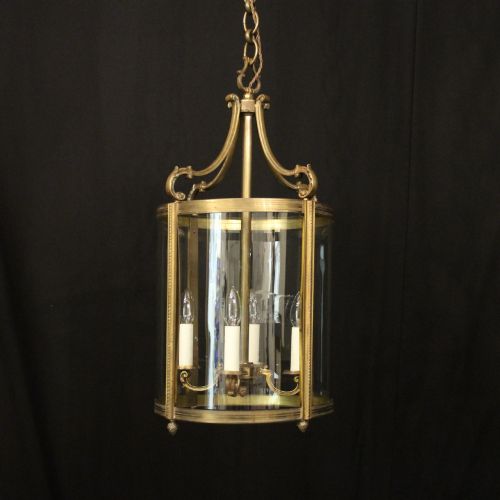
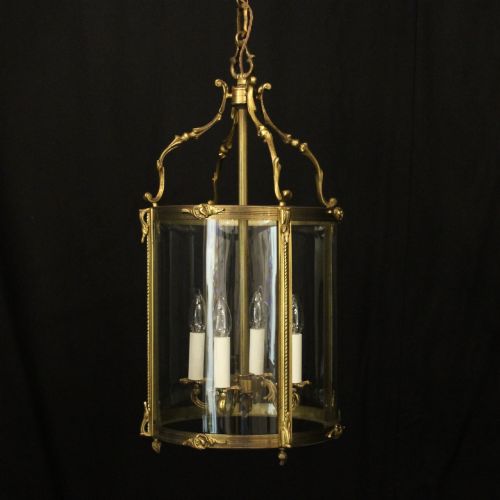
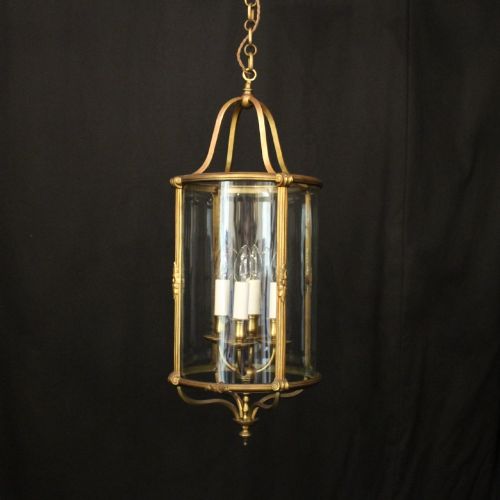
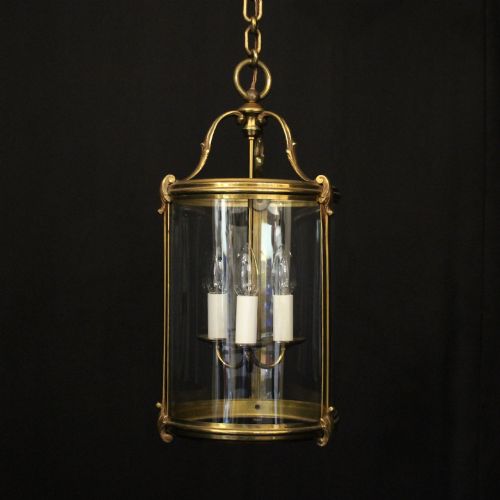


Gilded Hanging Lantern
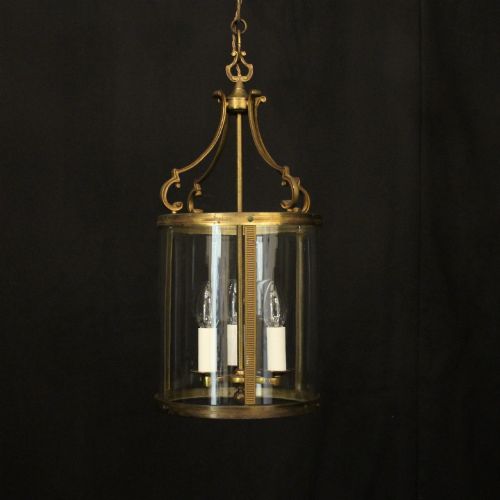
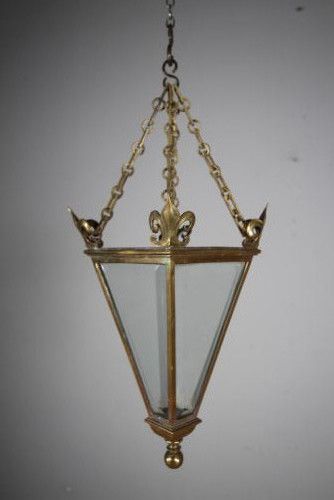
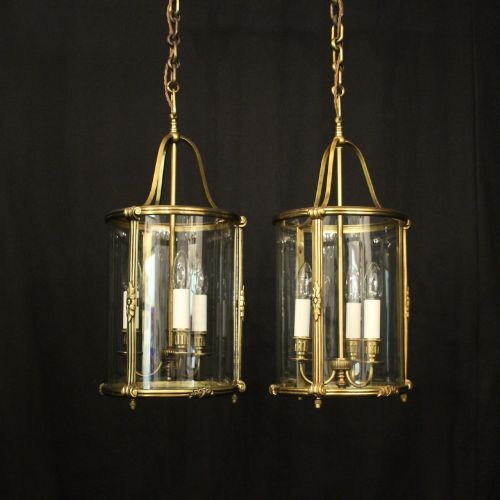
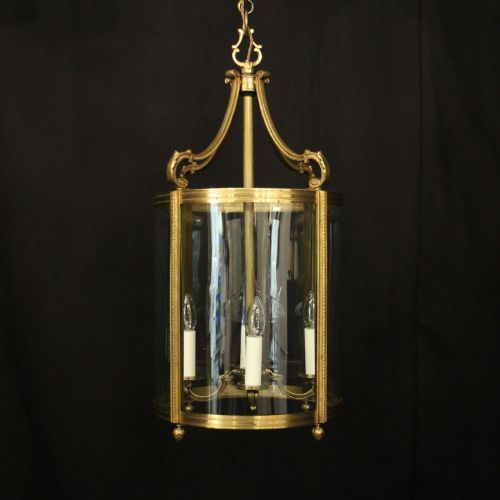
These gilded hanging lanterns bring warmth and overhead presence to hallways and entrances, forged in bronze, brass, and giltwood.
Gilded Hanging Lantern
A gilded hanging lantern provides illumination from ceilings through glass panels held within metallic or wooden frames. These fixtures serve primarily as entrance and hallway lighting, suspended to cast light downwards.
The selections encountered here span periods from the nineteenth century into the 1930s. French designs predominate, alongside English and Italian examples.
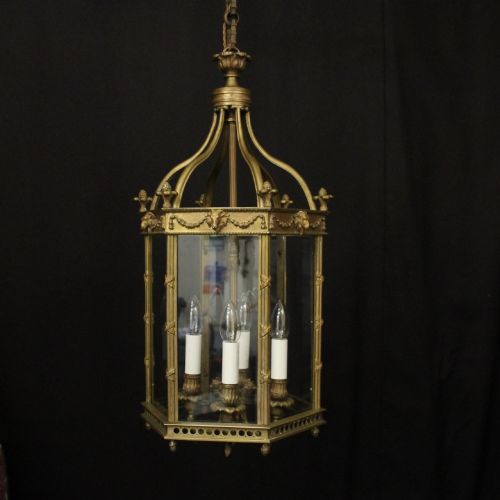
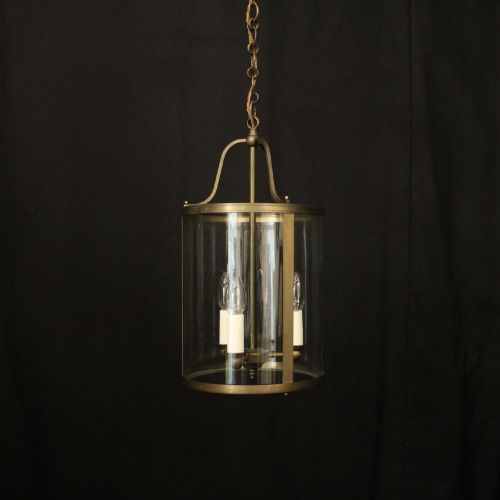
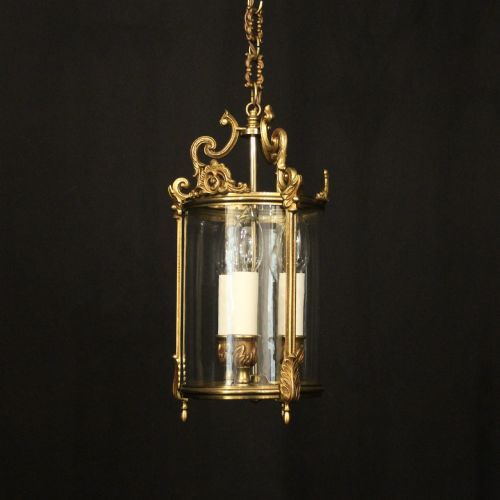
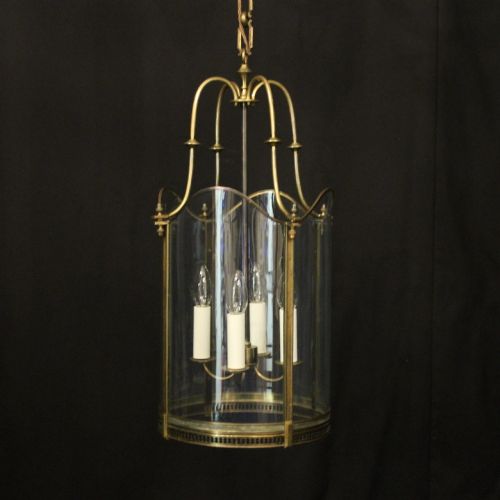
Forms include convex panels, hexagonal shapes, and multi-light configurations holding one to four bulbs or candles. Stylistic influences draw upon Rococo, Gothic Revival, and Neoclassical traditions.
How they were made
Metal frames utilise cast bronze, brass, or ormolu, finished with gold leaf or silver gilding applied to the surface. Wood-based examples employ carved giltwood or polychrome and toleware elements.
Glass panels are fitted directly into the metallic framework, appearing in clear, bevelled, dimpled, or coloured crystal variants. Joinery relies on traditional mechanical fastenings and soldering appropriate to each period.
Gilded Hanging Lantern Retail Price Guide 2026
Typical asking prices for gilded hanging lantern among the pieces listed under this phrase on Sellingantiques today, from the lower quarter to the upper quarter. They describe what is for sale here now, not the wider market.
Some lanterns feature dimpled red glass, casting a ruby glow that transforms an ordinary hallway into an unexpected theatre.
What varies in quality
The standard of a piece rests upon the crispness of the cast metal ornamentation and the depth of the gilding. Heavier gauge bronze and finely carved wood distinguish superior examples from simpler brass or toleware productions.
Glass selection impacts the overall finish, particularly where bevelled edges or heavy crystal panels are employed. The fidelity of period revival details, such as Rococo or Gothic tracery, further marks the distinction between standard and exceptional pieces.
The Gilded Hanging Lantern Glossary
- Ormolu
- A technique of applying finely ground high-carat gold to a bronze object using a mercury amalgamation method. This finish imparts a rich metallic lustre.
- Toleware
- Painted and lacquered sheet metal items produced to imitate various decorative finishes. It provides lightweight durability for hanging fixtures.
- Giltwood
- Timber carved and subsequently coated with a thin layer of gold leaf or gesso and gold paint. It allows for intricate decorative relief work.
- Convex
- Curved outward in the manner of a segment of a sphere. This glass profile disperses light across a wider angle in hall lanterns.
- Bevelled
- Cut at an angle along the edge of a glass pane to refract light. This process adds a decorative border to the panel.
Gilded Hanging Lantern: Frequently Asked Questions
Where should a hanging lantern be placed?
These fixtures fit naturally in high-ceilinged entrance halls, corridors, and stairwells where overhead illumination is required. Their drop allows them to command vertical space effectively.
Position them centrally to distribute light evenly across the surrounding walls and floor surfaces.
How do I identify French styles?
French examples often display Neoclassical, Rococo, or Louis XVI motifs such as acanthus leaves, cartouches, and symmetry. Makers frequently utilised gilded bronze for these ornate frames.
Look for convex glass panels and multi-light interior fittings typical of Parisian workshops from the nineteenth and early twentieth centuries.
What is the difference between bronze and brass?
Bronze is an alloy primarily of copper and tin, offering a heavier weight and a darker, richer undertone beneath the gilding. Brass consists of copper and zinc, yielding a brighter golden base metal.
Both materials accept gold leaf and gilding well, though bronze structures generally denote a higher standard of manufacture.
How are these lanterns wired today?
Most antique lanterns are adapted for modern electrical supplies by inserting internal lamp holders inside the frame. Rewiring is usually executed through the central suspension rod or chain.
Consult a qualified electrician to ensure the internal wiring complies with current safety standards while preserving the original metalwork.