


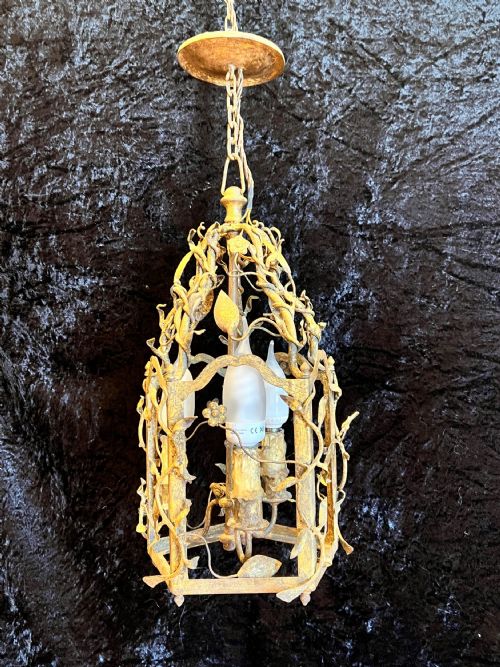


Gilded Foliage Chandelier
A gilded foliage chandelier brings botanical form and metallic warmth to a room, catching the eye with leaf and floral motifs.
Gilded Foliage Chandelier
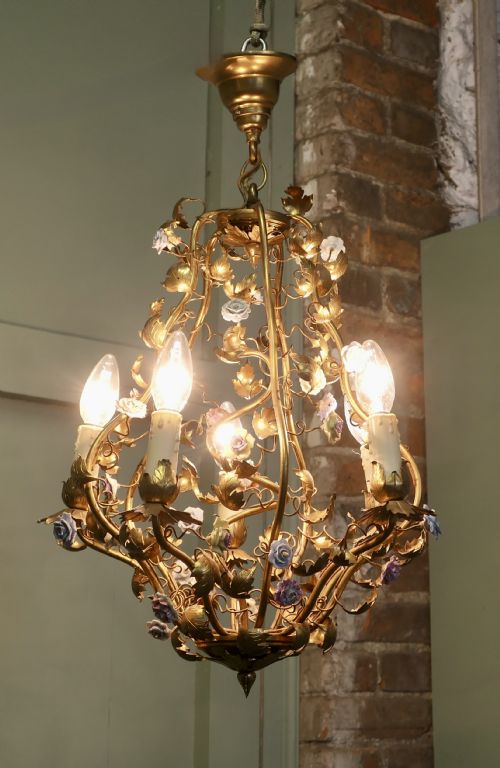
When you search for a gilded foliage chandelier, you encounter lighting fixtures shaped around natural motifs like leaves, branches and flowers. These pieces unite botanical design with metallic finishes, drawing upon styles rooted in French and Italian workshops.
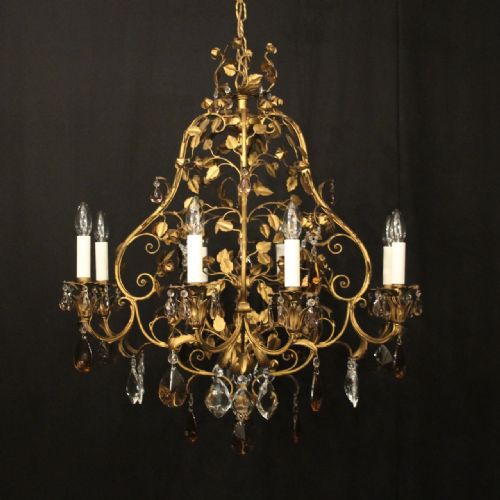
The versions most commonly met on this page originate from the early decades of the twentieth century, specifically between nineteen-ten and nineteen-thirty. They take the form of multi-bulb chandeliers, cage designs, lanterns and branch structures.
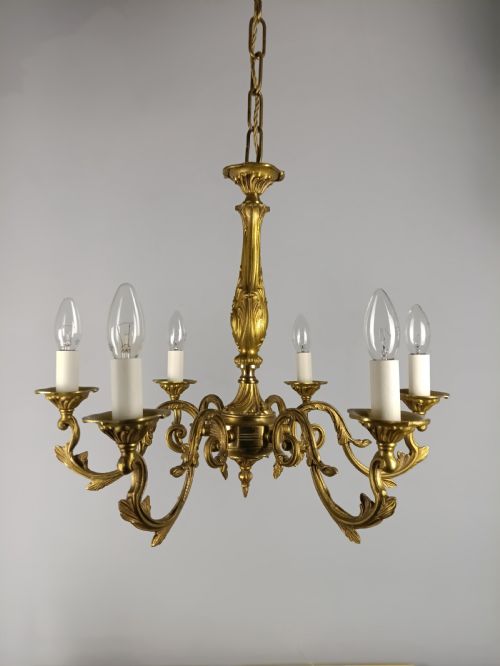
Originating largely from French and Florentine traditions, these items reflect regional decorative preferences such as French country, rococo, Hollywood regency and Italian Florentine aesthetics. They serve both as functional illumination and as sculptural centrepieces within a space.
How They Were Made
Maker construction relies on metals such as wrought iron, gilded bronze, gilt metal, toleware and gilded brass to form the structural branches, cages and frames. Artisans shape these metals to imitate natural foliage and branching stems.
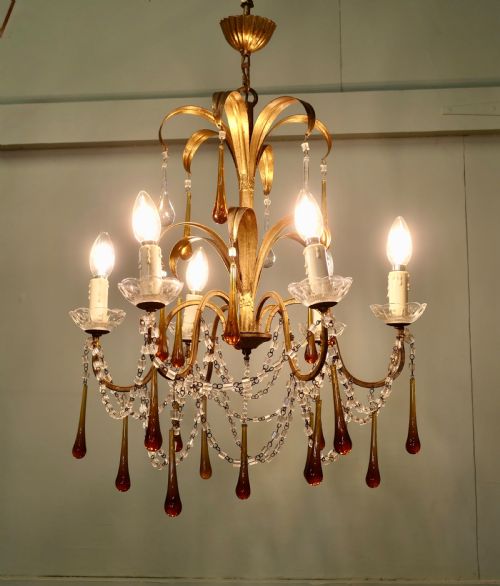
Many examples incorporate ceramic elements and glass components, including amber crystal teardrops that hang from the metal framework to refract light. Surface gilding provides the characteristic metallic sheen across the leaves and flowers.
Listings span three consecutive decades from nineteen-ten to nineteen-thirty, uniting French and Italian Florentine design traditions.
What Varies in Quality
Quality differences appear in the delicacy of the botanical modelling and the complexity of the metalwork, distinguishing simple frames from densely detailed branch and flower assemblies. The integration of hand-painted ceramic elements and cut crystal pendants also alters the visual depth of the fixture.
The richness of the gilding and the weight of the underlying bronze, brass or wrought iron define the upper tier of production. Finer examples display meticulous attention to the organic curves of foliage rather than rigid or repetitive stamping.
The Gilded Foliage Chandelier Glossary
- Toleware
- Painted or lacquered metalware, often shaped into floral or leaf forms. This material appears frequently in French lighting designs.
- Giltwood
- Wood that has been treated with gold leaf or gilt composition. It provides a luminous finish on carved decorative elements.
- Cage chandelier
- A lighting fixture featuring an open metal framework enclosing the central stem and bulb holders. Crystal drops often drape across this structure.
- Florentine
- A decorative style originating from Florence, characterised by ornate carved or gilded foliage and floral motifs. Pieces from this tradition often feature numerous light branches.
- Hollywood Regency
- A design style combining exuberant ornamentation with theatrical luxury. It draws upon classical motifs and opulent metallic finishes.
Gilded Foliage Chandelier: Frequently Asked Questions
What rooms suit a gilded foliage chandelier?
These fixtures fit spaces that benefit from botanical ornament and warm metallic reflection. Dining rooms and living areas often accommodate their scale and sculptural presence.
Lower ceilings may require smaller lantern or pendant variants, while larger multi-bulb structures suit more expansive rooms.
How do French and Florentine styles differ?
French designs often lean towards rococo curves, country charm or Hollywood regency glamour, frequently incorporating toleware flowers and crystal drops. Florentine pieces emphasise carved giltwood and abundant floral arrangements.
Both traditions employ foliage motifs, but the regional execution shapes the overall silhouette and choice of materials.
What materials make up these chandeliers?
Construction materials include wrought iron, gilded brass, gilt metal, bronze and toleware. Artisans combine these metals with ceramic flowers and glass crystal elements.
The presence of gilt surfaces unifies the mixed media components into a cohesive botanical design.
How do I date an antique chandelier?
Dating relies on examining the construction methods, wiring, metal types and decorative style characteristics. Pieces on this page predominantly date from the nineteen-tens through to the nineteen-thirties.
Original components like toleware flowers and amber crystal drops offer further clues to the period of manufacture.