

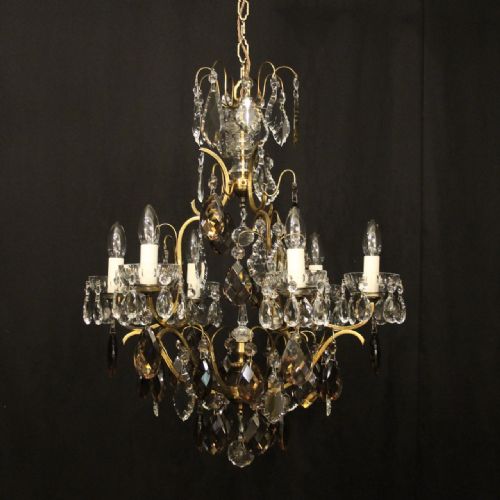


Antique Cage Light Fixture
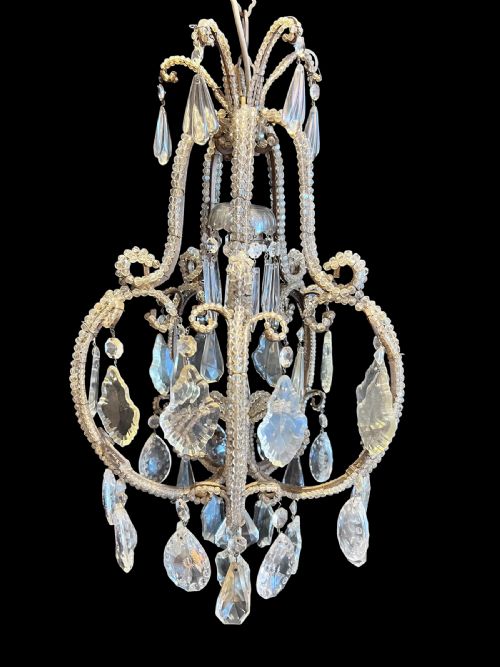
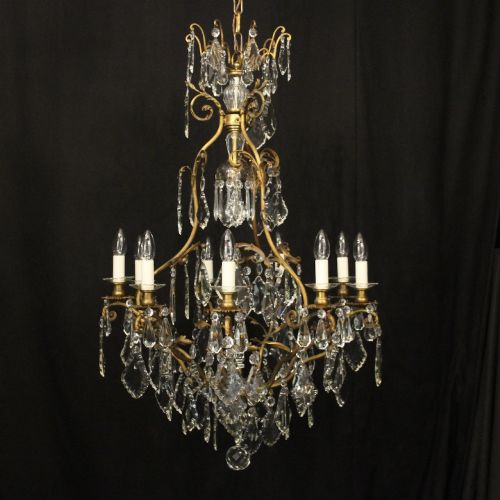
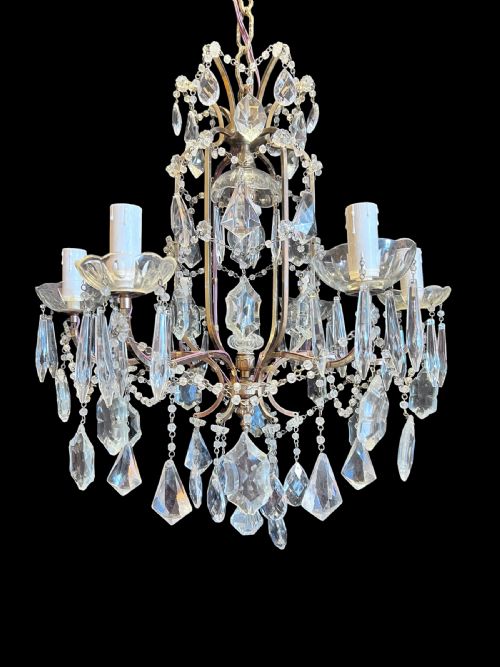
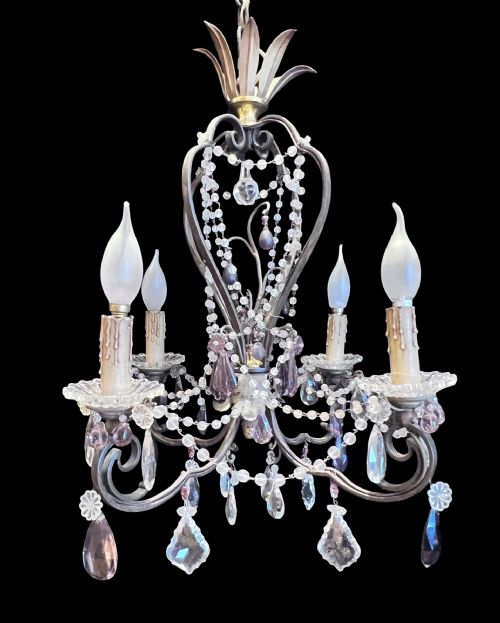
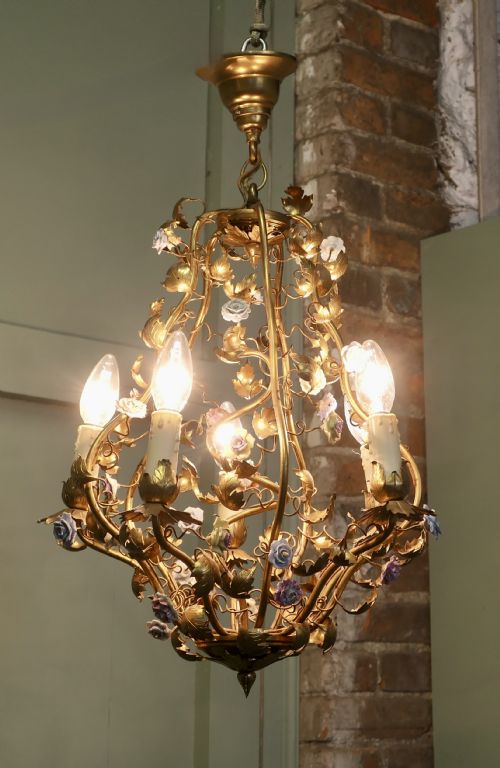
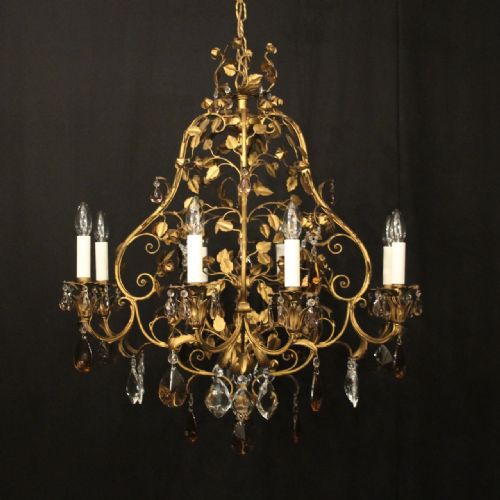
An antique cage light fixture brings heavy brass framework and cascading crystal to a hallway or drawing room.
Antique Cage Light Fixture
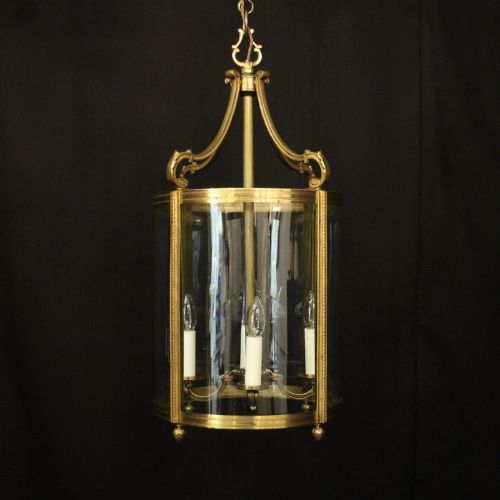
An antique cage light fixture takes the form of an enclosed or semi-enclosed metal framework housing internal lamp holders and glass drops, designed to hang from ceilings in hallways, reception rooms, and stairwells. The selection here leans heavily towards French and Italian designs, spanning the Victorian era through the 1930s.
Most examples you encounter present as brass, gilded bronze, or toleware frames shaped like birdcages or open lanterns, dripping with cut glass and crystal prisms. They developed from candle-lit hall lanterns and oil lamps into elaborate multi-light electrical fittings.
The styles range from French Rococo and Chateau forms to Florentine gilt frames, incorporating decorative elements such as ceramic flowers, coloured fruits, and amethyst crystal accents alongside standard clear drops.
How they were made
Makers constructed the structural frames of these fixtures from cast and worked metals including brass, bronze, copper, and iron, often applying a gilt finish to enhance the reflective quality under candlelight or early electric bulbs. The metal bands were riveted or soldered together to form the skeletal cage that supports the weight of the internal cluster and the surrounding glass.
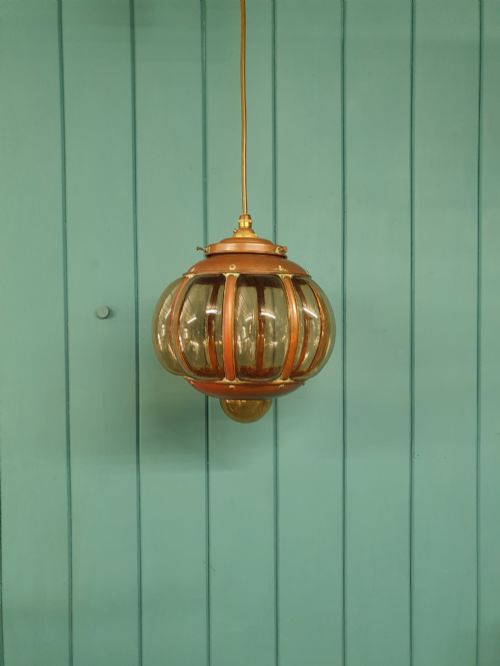
Cut glass and crystal drops, pendants, and prisms were wired by hand into position through drilled holes in the metal frame, creating dense curtains of light-refracting elements. Specialised variants incorporated hand-stitched leather, vellum, enamel, or smoked glass panels into the metal armature.
Listings span the Victorian and Edwardian eras through the 1920s and 1930s, utilising brass, gilt bronze, copper, and crystal.
What varies in quality
The distinction between standard examples and exceptional pieces rests upon the weight and casting quality of the bronze or brass frame, alongside the depth of the gilding. Heavier metalwork with chased detailing and hand-finished mounts separates high-end workshop production from simpler commercial pieces.
The glass elements dictate much of the visual impact, distinguishing hand-cut crystal drops with sharp faceting and rich colour inclusions from simpler pressed glass pendants. Completeness of the drop configuration and the integration of specialised materials like coloured fruits or ceramic flowers mark the upper tier of the range.
La Maison Bagues
The Antique Cage Light Fixture Glossary
- Cage chandelier
- A light fixture featuring a metal skeletal framework enclosing the central light source and densely hung with crystal prisms. This form originated in earlier candle-lit hanging lanterns.
- Gilded bronze
- Metal alloy cast with intricate surface detail and coated in a thin layer of gold leaf or gilt wash. This material provides the structural rigidity and rich finish seen on high-end French fixtures.
- Toleware
- Painted or lacquered sheet metal used to form decorative elements such as floral motifs or structural panels. It introduces colour and folk-art charm to domestic lighting.
- Prism
- A cut glass or crystal pendant designed to refract light across a room. They hang in quantity from the metal bands of cage and basket fixtures.
- Hall lantern
- An enclosed ceiling light fixture originally designed to illuminate narrow entrance spaces and stairwells. Early versions utilised candles before converting to oil and electricity.
Antique Cage Light Fixture: Frequently Asked Questions
What is an antique cage light fixture?
An antique cage light fixture is a suspended ceiling light featuring a metal framework that houses electrical or candle fittings, heavily adorned with glass drops.
They derive their name from the skeletal metal cage shape that encloses the internal lighting cluster.
How do I date an antique cage light fixture?
Dating relies on examining the metal composition, wiring methods, drop-cutting styles, and overall stylistic markers such as Rococo revival motifs or Arts and Crafts details.
Victorian and Edwardian examples often show heavier brass casting and hand-wiring, whereas 1930s pieces display cleaner geometric lines or simpler toleware construction.
Were these fixtures always electric?
These fixtures began as candle-lit hall lanterns and oil lamps before makers converted them or manufactured later versions for electricity.
Many surviving pieces from the nineteenth century retain evidence of their original candle or oil burning configurations.
Where should I hang a cage light fixture?
These fixtures suit high-ceilinged entrance halls, stairwells, and principal reception rooms where their drop length and reflective crystals can command the space.
Their enclosed profile makes them particularly effective in vertical circulation areas where light needs to cast downward and outward.
How do I clean an antique cage light fixture?
Cleaning requires careful manual attention to the individual crystal drops and delicate metal framework using gentle, non-abrasive solutions.
Many collectors remove the crystals in sections to wash them separately while leaving the structural frame suspended.