

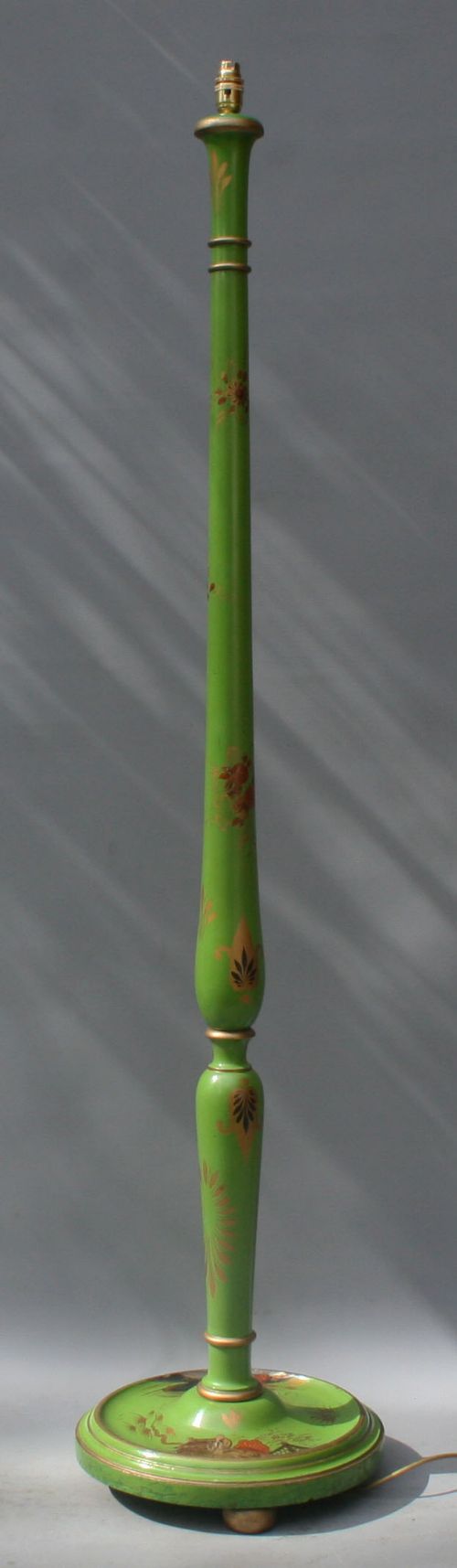


Gilded Floor Light
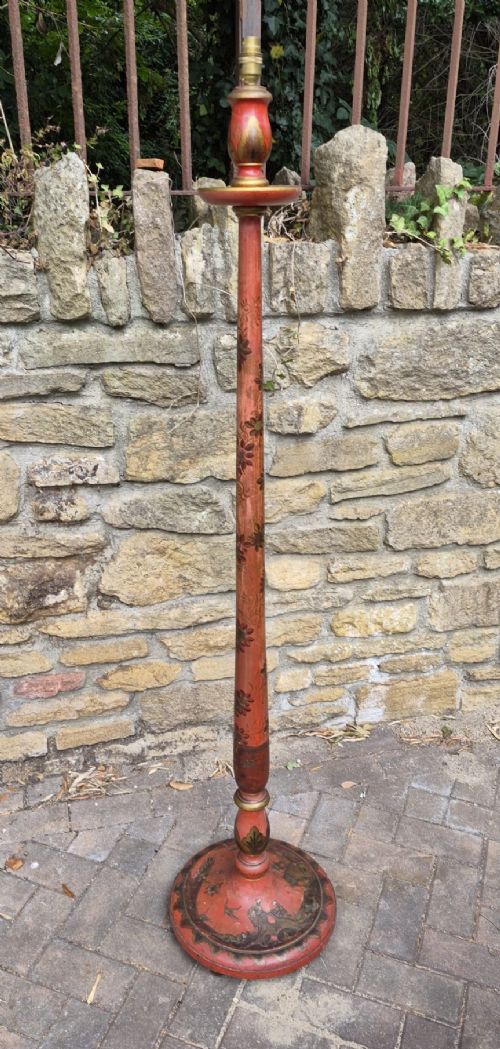
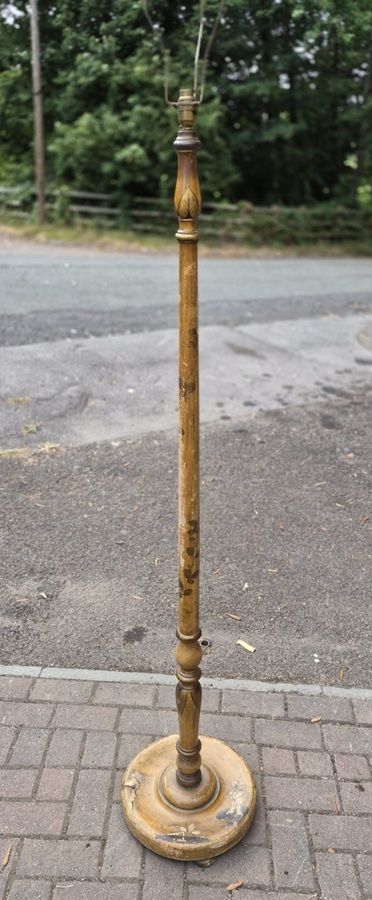
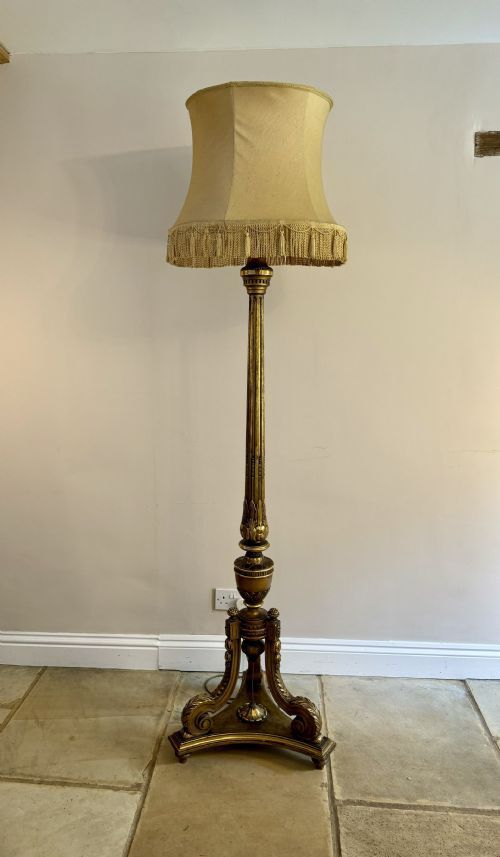
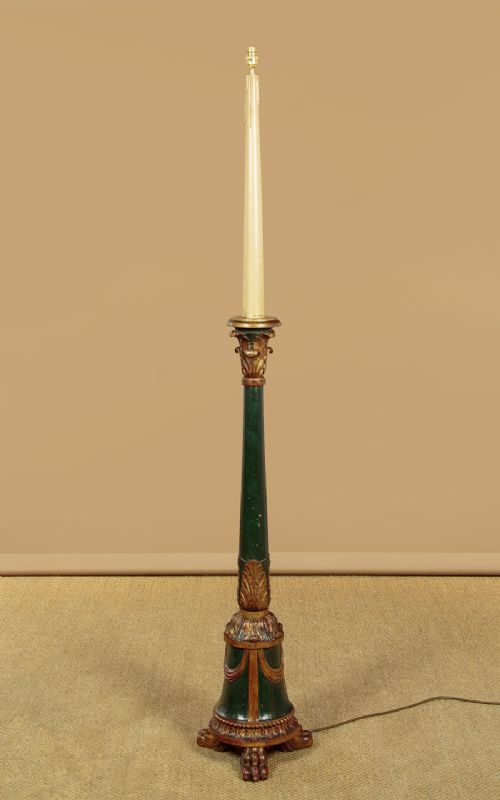
These gilded floor light pieces bring height and warm illumination to a room, cast in carved wood, giltwood and brass across several periods.
Gilded Floor Light
A gilded floor light sits tall in a room, taking the form of standard lamps, floor candlesticks and torchere stands designed to lift illumination above table level. The selection here spans the nineteenth and twentieth centuries, showing how makers adapted lighting for grand interiors.
You will frequently encounter standard lamps and tall candle holders finished in giltwood, brass and painted lacquer. Chinoiserie decoration and revival styles such as Italian Baroque and French Chateau appear across the dates recorded in the listings.
Materials and construction methods
Carvers shaped solid wood and applied gesso before laying gold leaf to create the gilded surfaces seen on Italian and French pieces. Lacquer and paint finish many of the Chinoiserie examples, building up decorated layers on timber bases.
Metalwork enters the mix through brass, bronze and ormolu fittings, often cast and chased for torchere standards and candle holders. These materials combine to give each floor light its weight and structural stability.
Gilded Floor Light Retail Price Guide 2026
Typical asking prices for gilded floor light among the pieces listed under this phrase on Sellingantiques today, from the lower quarter to the upper quarter. They describe what is for sale here now, not the wider market.
Listings feature items from the eighteenth, nineteenth and twentieth centuries, utilising materials including giltwood, fabric, brass, lacquer and painted wood.
Judging the standard of workmanship
Depth of carving and the crispness of applied gesso under the gold leaf distinguish finer examples from simpler production. Hand-chased bronze details and carefully layered lacquer work also mark out the more ambitious pieces.
Proportion and balance determine how well a tall standard lamp holds its height without tipping. The quality of the original gilding and the preservation of painted or lacquered surfaces carry substantial weight.
Coutan
The Gilded Floor Light Glossary
- Giltwood
- Timber carved and coated with gold leaf or metal leaf. This surface treatment reflects light and creates the rich finish characteristic of many antique floor lamps.
- Chinoiserie
- European interpretation of Chinese and East Asian artistic traditions. It is frequently seen on lacquered and painted standard lamps from the Edwardian era and the early twentieth century.
- Torchere
- A tall stand designed to support a light or candle. Nineteenth-century examples often employ bronze or carved wood with substantial vertical presence.
- Gesso
- A plaster mixture applied to wood surfaces as a preparation for gilding. Skilled carvers used it to build up crisp relief details before laying leaf.
- Pricket stick
- A candlestick featuring a central spike upon which a candle is stuck. These are commonly found on older altar-type floor candlesticks.
Gilded Floor Light: Frequently Asked Questions
How do I wire an antique floor lamp?
Most older standard lamps require modern electrical rewiring to meet safety standards. A qualified electrician can thread modern flex through the central column without altering the exterior wood or metal.
Keep the original switch placement in mind if you want to preserve the visible historical fittings while ensuring the internal wiring is safe for daily use.
Where should I place a gilded floor light?
These tall fixtures suit corners or seating areas where extra height adds balance to a room. Their reflective surfaces catch daylight as well as evening illumination.
Ensure the base rests on a level floor so the height of the standard lamp remains stable, especially with heavy wooden or bronze columns.
How do I clean gilded wood?
Dust gently with a dry, soft feather duster or a clean microfibre cloth. Avoid all commercial cleaning sprays and water, which can damage fragile gold leaf and gesso.
Take care around carved sections where the leaf may be thin or worn from past handling.
What is the difference between a torchere and a standard lamp?
A torchere originally carried a candle or torch and tends to have a slender, decorative shaft dating from the nineteenth century or earlier. Standard lamps were built or later adapted to hold electric bulbs.
Both serve similar decorative and lighting roles in traditional interiors, though torcheres often display heavier classical bronze or carved wood structures.