

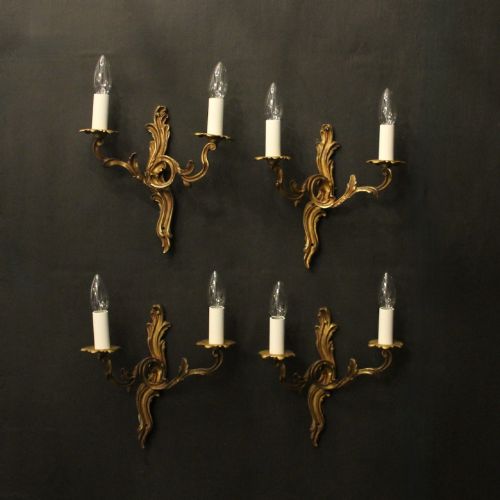

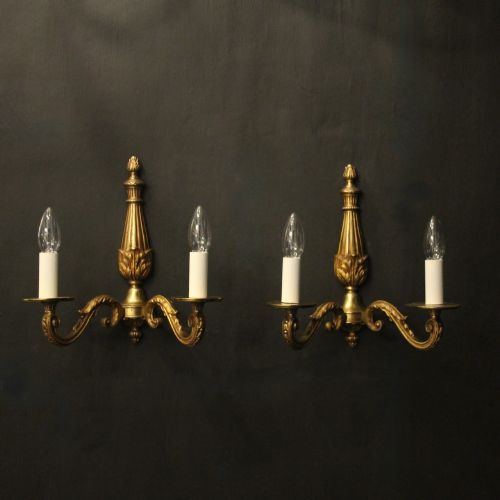
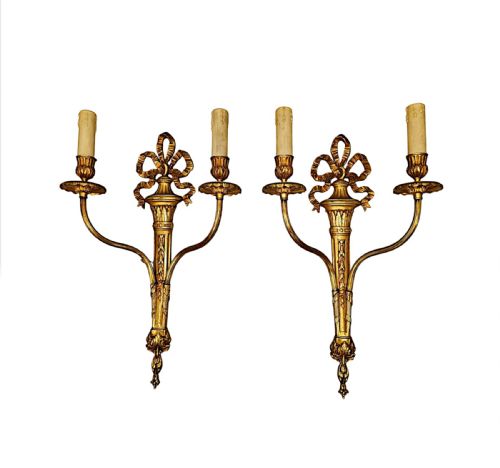
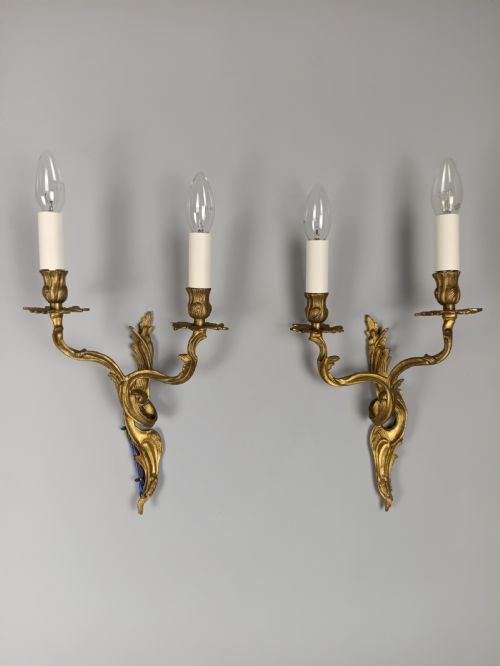
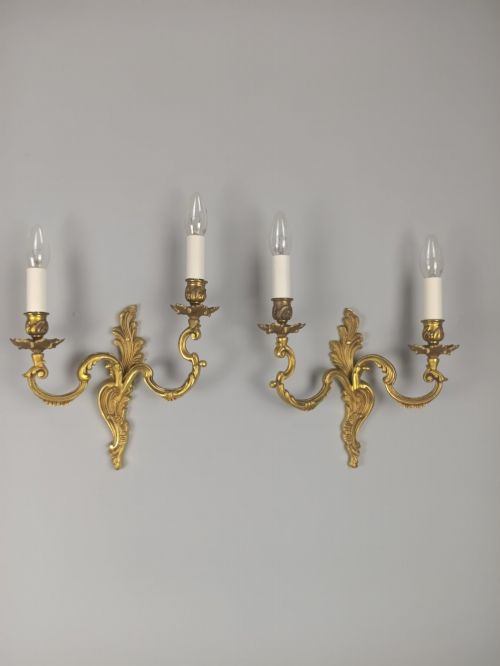
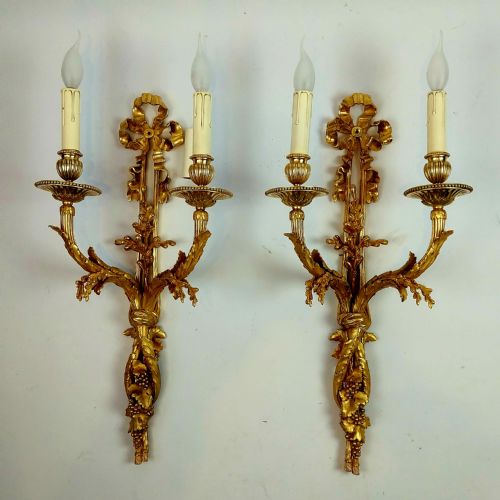
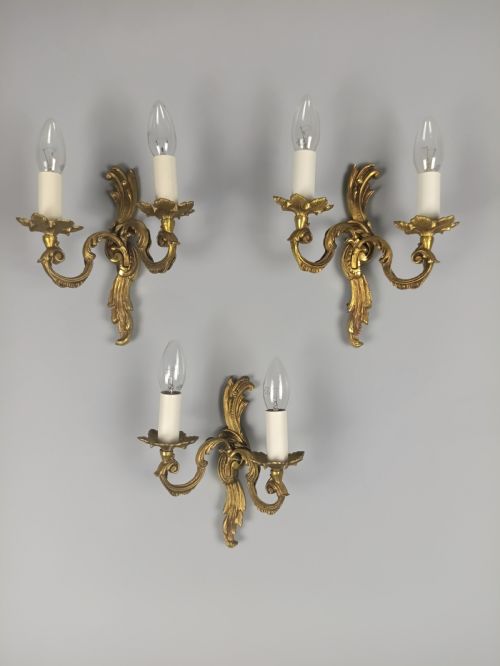
Gilded Double Sconces
These gilded double sconces bring wall lighting into focus, casting warm reflections across a room.
Gilded Double Sconces
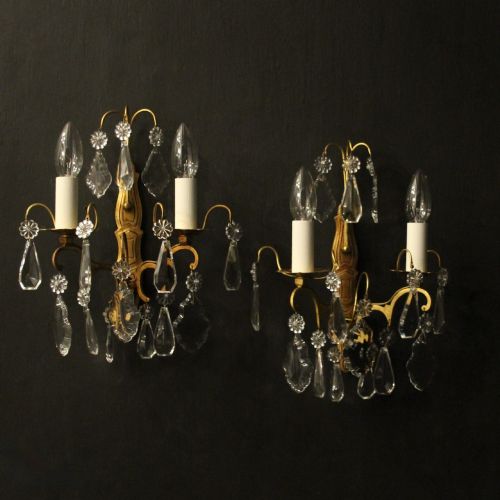
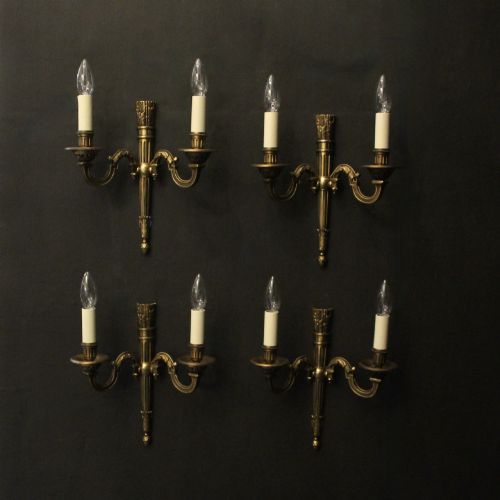
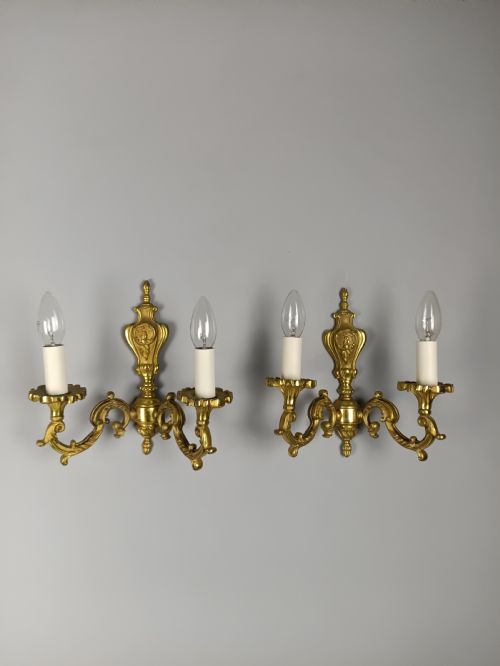
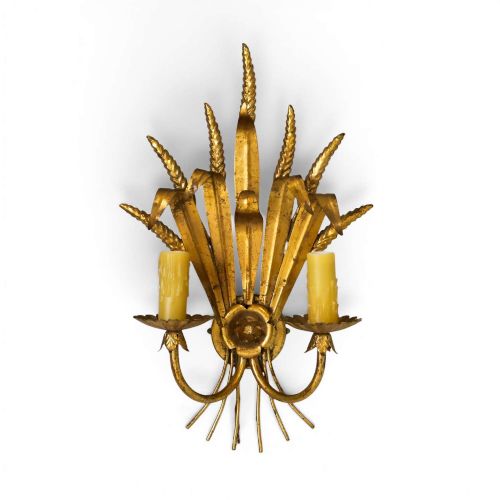
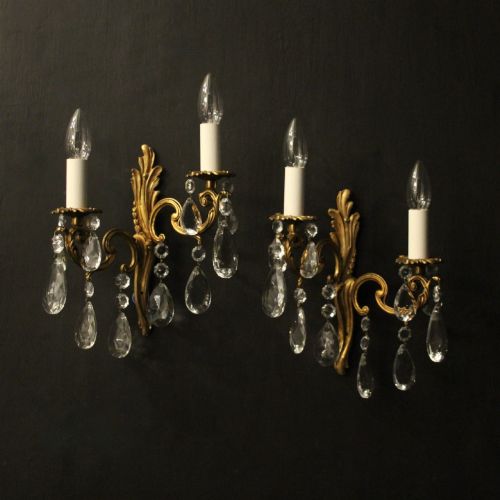
Gilded double sconces are dual-arm wall lights designed to hold candles or bulbs, projecting illumination across a room. When buyers search for gilded double sconces, they encounter twin-arm wall lights primarily sourced from French workshops dating through the nineteenth and twentieth centuries.
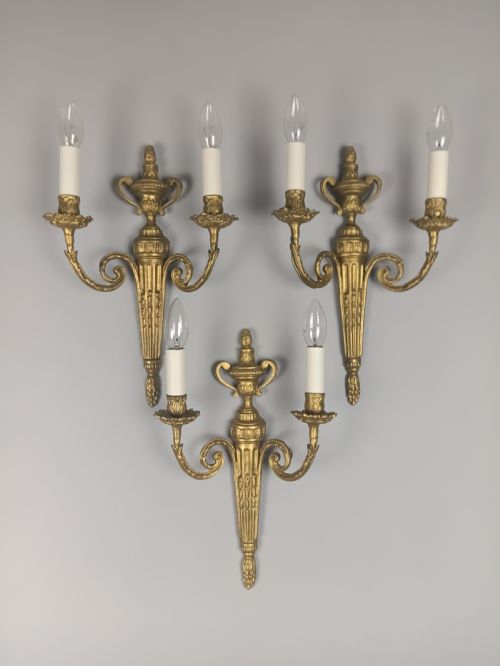
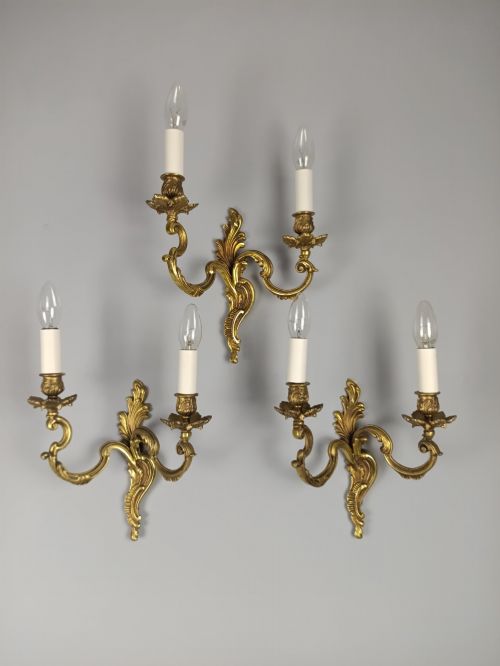
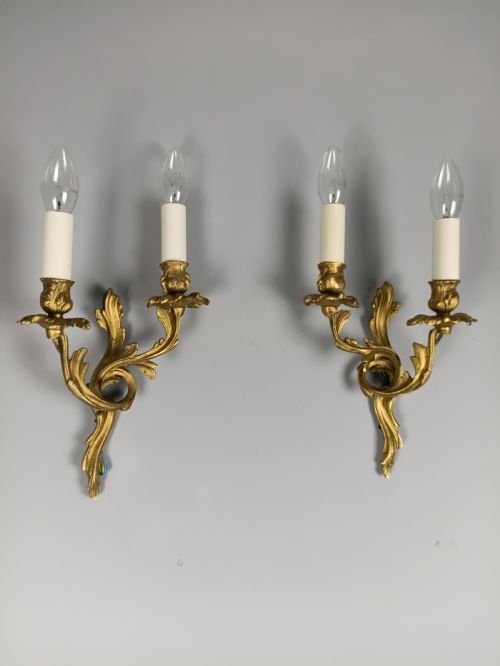
The selections span distinct historical styles, including French Rococo, Louis XVI, Empire, and Mid-Century Modern designs. Many items appear in matching pairs or larger sets, constructed to mount directly onto interior walls.
How They Were Made
Manufacturers utilised metals such as brass, bronze, and gilt metal as the foundational structure for these wall fixtures. Artisans applied gilding or ormolu to the metallic surfaces to produce a bright, reflective golden finish.
Some examples incorporate carved wood or crystal elements alongside the metal arms, reflecting traditional craftsmanship from French and Florentine workshops.
Gilded Double Sconces Retail Price Guide 2026
Typical asking prices for gilded double sconces among the pieces listed under this phrase on Sellingantiques today, from the lower quarter to the upper quarter. They describe what is for sale here now, not the wider market.
Several wall lights feature carved ribbons frozen in metal, permanently tying up illumination with a bow.
What Varies in Quality
The standard of finishing sets pieces apart, with hand-chased bronze work demonstrating sharper detail than cast brass alternatives. Depth and durability of the gilding further distinguish standard production items from finer studio outputs.
Structural integrity and the retention of original decorative motifs, such as ribbons or crystal drops, influence the overall character of each wall light.
The Gilded Double Sconces Glossary
- Gilt bronze
- Bronze metal coated with a thin layer of gold leaf or gold powder. This technique provides a durable metallic finish that resists tarnishing over decades.
- Ormolu
- A method of applying finely ground high-carat gold to a bronze object using mercury. The process creates a rich, matte yellow lustre characteristic of period French fixtures.
- Twin arm
- A bracket configuration featuring two distinct candle branches or light holders projecting from a central backplate. This layout distributes illumination evenly across a wall surface.
- Rococo
- An ornate design movement favouring asymmetrical scrolls, floral motifs, and natural curves. Pieces in this style emphasise fluid movement and intricate cast ornamentation.
Gilded Double Sconces: Frequently Asked Questions
How were gilded double sconces used historically?
These wall fixtures were mounted in pairs or sets along reception rooms and hallways to supplement natural daylight and candle illumination. Their reflective gilt surfaces amplified the flickering light from candles.
Positioned beside mirrors or above furniture, they served both a practical lighting function and a decorative purpose in period interiors.
Are these wall lights wired for electricity?
Many surviving examples have been adapted for modern electrical use by professional technicians. Rewired fixtures allow for safe integration into contemporary domestic wiring systems.
Unconverted pieces retain their original candle-holders for those preferring traditional illumination or decorative display.
How do I identify a French Empire style sconce?
Empire style wall lights draw inspiration from classical antiquity, featuring symmetrical lines, military motifs, and formal geometric patterns. They often incorporate laurel wreaths, urns, and strict architectural proportions.
This aesthetic emerged during the early nineteenth century and contrasts sharply with the earlier flowing curves of Rococo designs.
How should I clean a gilded bronze wall light?
Dusting gently with a soft, dry cloth prevents the accumulation of particulate matter on the metallic surfaces. Avoid abrasive cleaners, water, or chemical solvents that might strip or damage the delicate gilding.
Periodic careful maintenance preserves the original golden finish and prevents unnecessary wear to the underlying bronze or brass.