



Gilded Decorative Pitcher
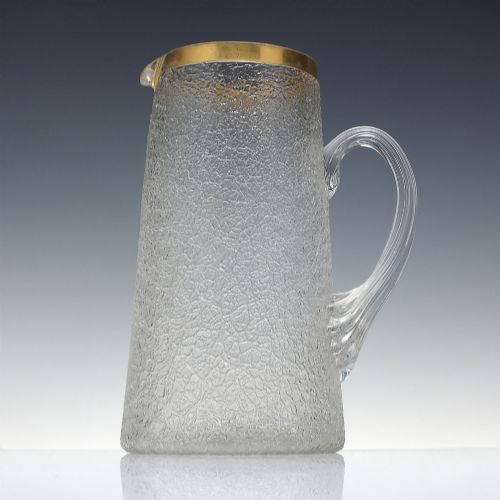
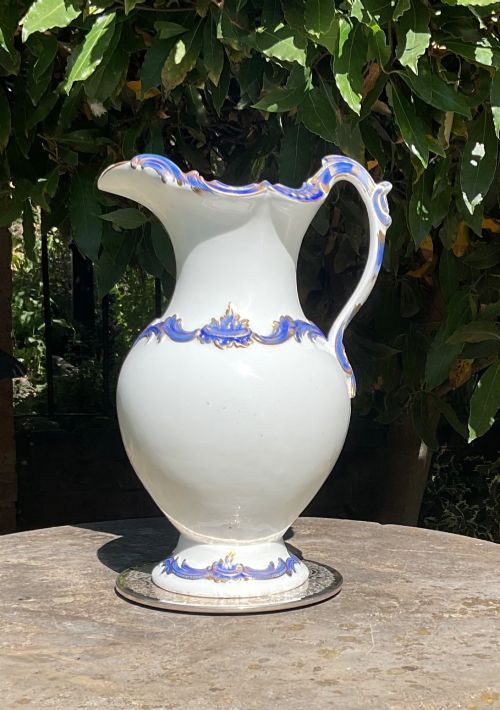
These gilded decorative pitchers bring nineteenth-century ceramic and metal form into domestic spaces, prized for ornate craftsmanship and surface gilding.
Gilded Decorative Pitcher
A gilded decorative pitcher sits at the intersection of ornamental display and historical utility, encompassing forms from washstand sets to dedicated wine ewers and jug-vases. When searching for a gilded decorative pitcher, buyers encounter Victorian, Edwardian, and Art Nouveau interpretations spanning earthenware, porcelain, glass, and bronze.
The pieces appearing on this page originate predominantly across the nineteenth and early twentieth centuries, reflecting diverse aesthetic movements from Rococo Revival to the Aesthetic Movement. English porcelain factories and French workshops dominate the forms, yielding domestic table vessels and decorative display ewers.
Many examples function purely as decorative centrepieces or mantel ornaments rather than utilitarian water containers, particularly those paired with matching bowls or executed in delicate blush ivory porcelain. Collectors encounter single cabinet display pieces alongside matched pairs intended for symmetrical display.
Determinants of Quality
Quality rests in the execution of the surface decoration, the crispness of moulded or cast detail, and the provenance indicated by factory marks. Hand-painted panels by named artists and intricate reticulated porcelain work distinguish superior examples from standard production pieces.
The application of gold leaf and raised gilding shows significant variation, with top-tier pieces exhibiting meticulous hand-tooled burnishing rather than flat, uniform metallic paint. The structural integrity of delicate handles, spouts, and cast bronze mounts further separates everyday utility items from exhibition-grade decorative objects.
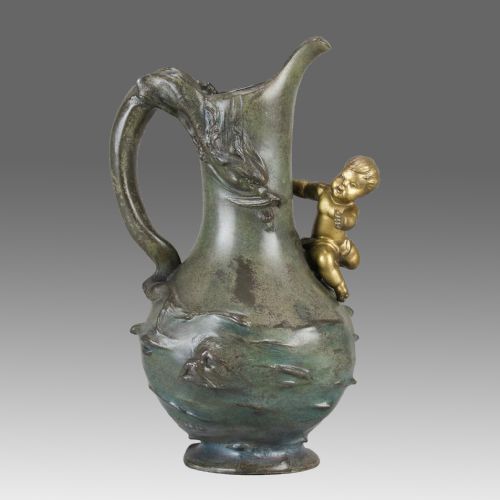
A tiny bronze putto clings permanently to the handle, ensuring your water jug looks ready to cause mischief.
Royal Worcester·Royal Crown Derby·Doulton Burslem·Doulton Lambeth·Coalport·Rockingham·Georges Van De Voorde
The Gilded Decorative Pitcher Glossary
- Ewer
- A large jug with a wide spout and arched handle, historically used for water but primarily produced as a decorative object in the nineteenth century. These vessels often feature pedestal bases and ornate handles.
- Gilding
- The application of gold leaf or gold dust to surfaces such as porcelain, glass, or bronze. This technique enhances decorative contrast against coloured glazes.
- Reticulated
- Ceramic work featuring an openwork lattice pattern created by cutting through the clay body before firing. This technique demonstrates high technical skill in porcelain manufacture.
- Blush Ivory
- A soft, matte cream-coloured porcelain glaze developed during the late nineteenth century. It provides a subtle background for hand-painted floral decoration.
- Aesthetic Movement
- A nineteenth-century design style emphasising visual beauty over narrative subject matter. Pieces from this movement often incorporate Japanese-inspired motifs and refined gilding.
Gilded Decorative Pitcher: Frequently Asked Questions
How do I care for antique gilded ceramics?
Dust these pieces gently with a soft, dry cloth and avoid harsh chemical cleaners or abrasive sponges that can wear away delicate surface gilding. Hand washing in lukewarm water should be done only when strictly necessary, keeping moisture away from unglazed bases.
Display the pieces away from direct sunlight and heat sources to protect hand-painted enamels and gold leaf from fading or degradation over time.
Were washstand sets meant to be used daily?
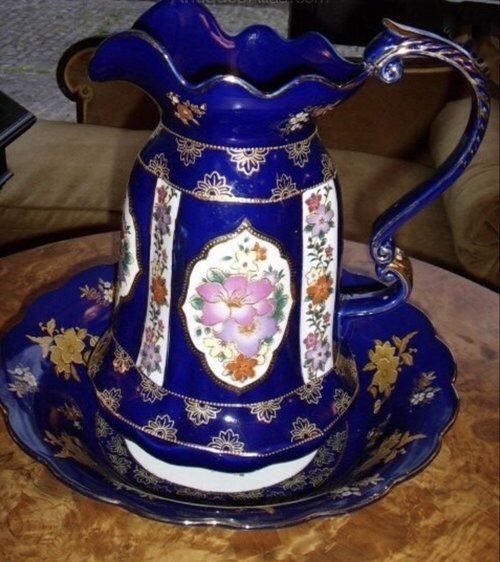
Nineteenth-century washstand sets, comprising a large water jug and matching bowl, were standard bedroom accessories for personal hygiene before modern plumbing. While functional, many surviving sets feature rich cobalt blue glazes and heavy gilding indicating they belonged to prosperous households.
Today, these sets are commonly separated for individual display as vases or decorative table pitchers rather than serving their original washing purpose.
How can I identify Victorian porcelain pieces?
Identification relies on examining factory backstamps, impressed marks, and pattern numbers located on the underside of the ceramic base. These marks often include registration numbers or symbols that narrow down the year of production.
Stylistic cues such as blush ivory glazes, raised gold decoration, and artist signatures also help date pieces to the Victorian and Edwardian periods.