


Gilded Cut Glass
Gilded cut glass brings together the brilliance of faceted crystal and the warmth of gold leaf or ormolu across lighting, mirrors, and tableware.
Gilded Cut Glass
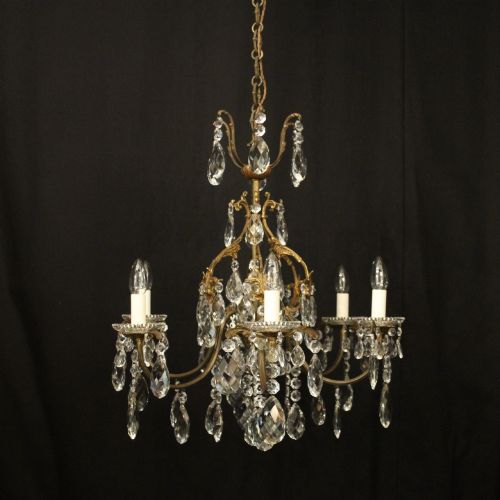
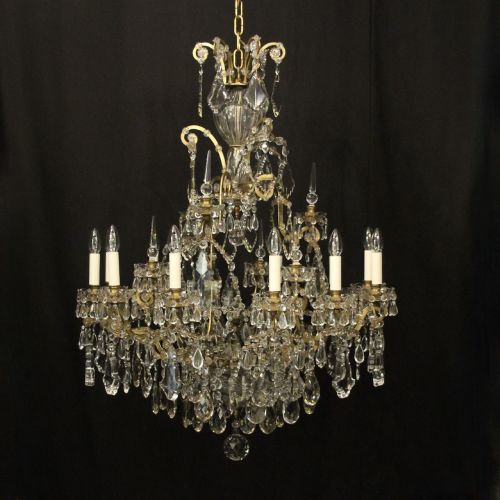
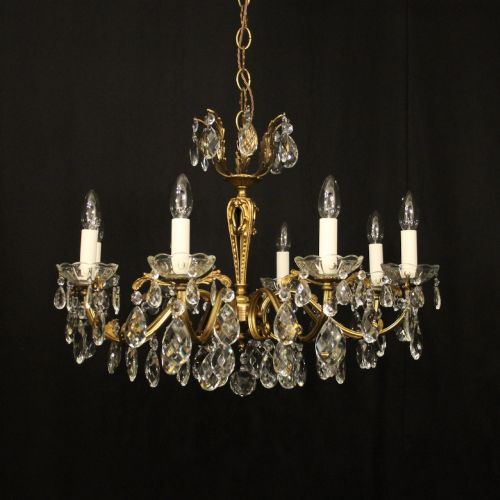
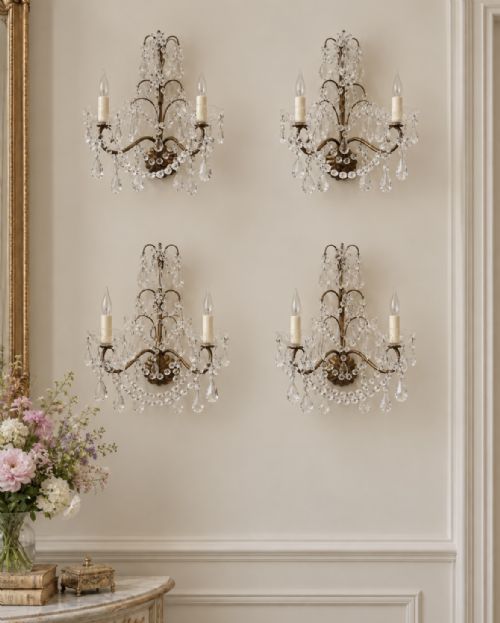
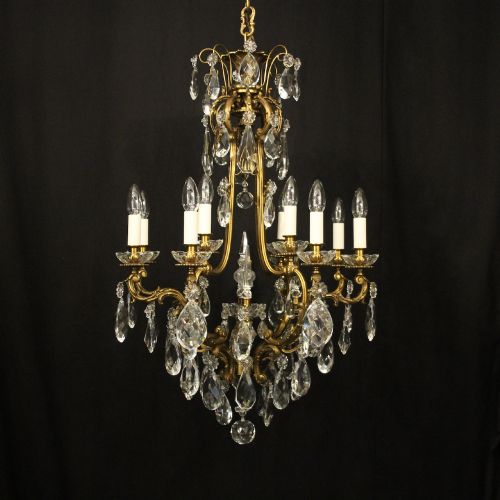
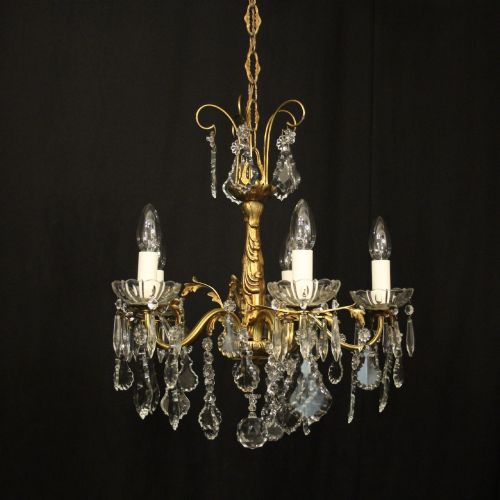
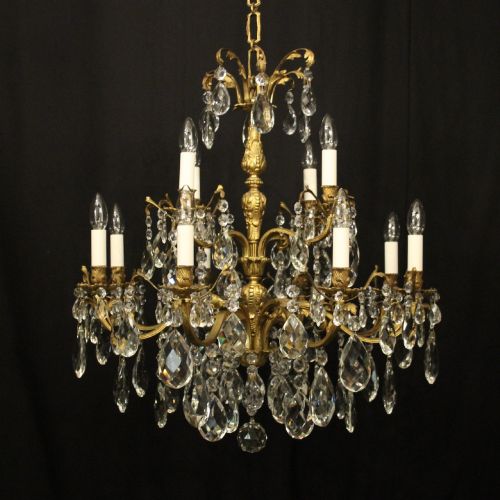
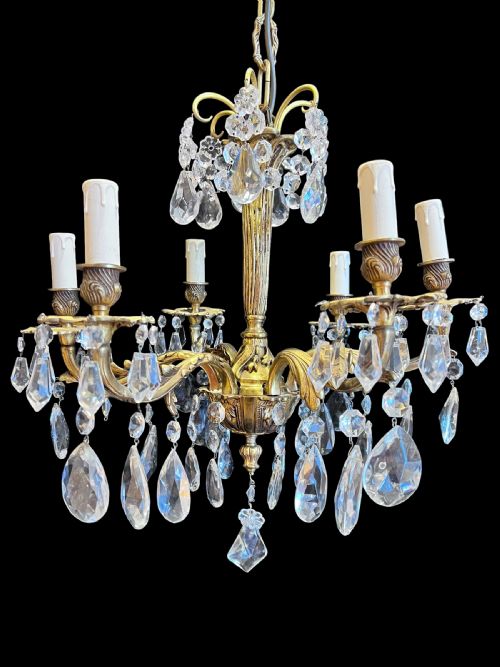
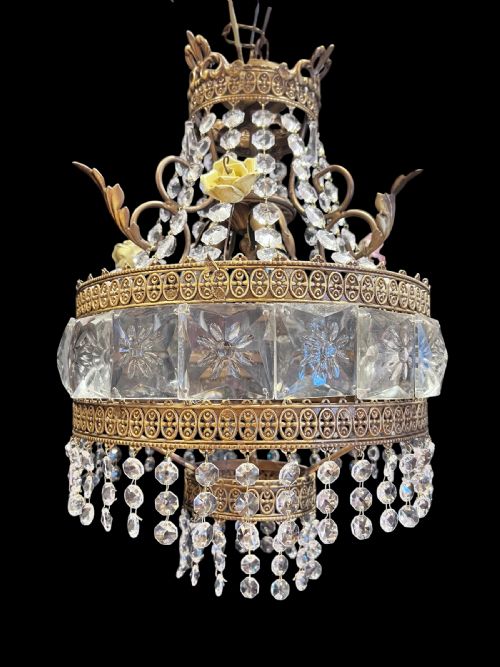
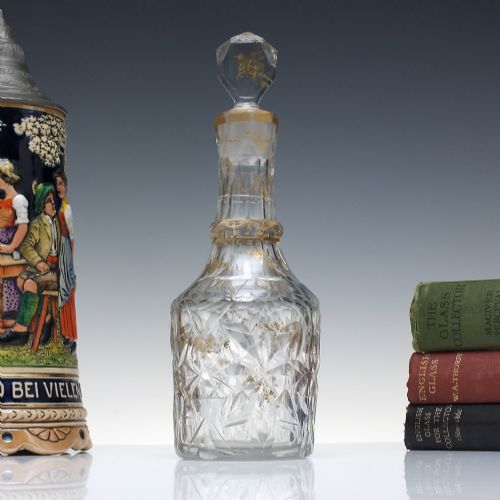
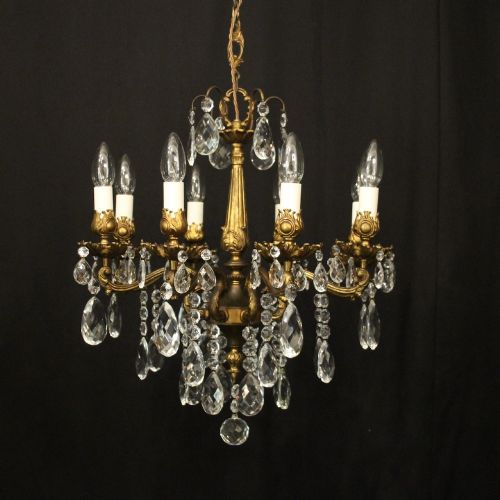
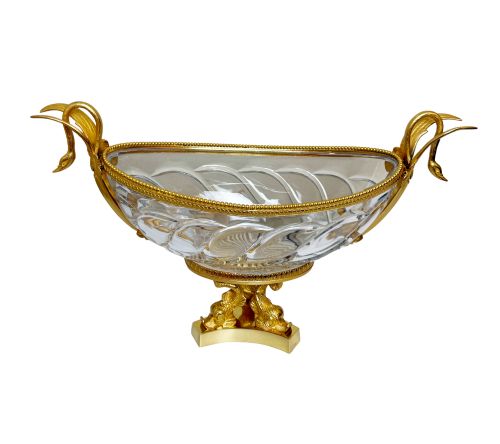
When you search for gilded cut glass, you encounter pieces intended to catch and reflect light within domestic interiors, notably chandeliers, wall sconces, and centrepieces. The selection leans heavily toward French production from the nineteenth and early twentieth centuries, alongside Georgian glassware from English workshops.
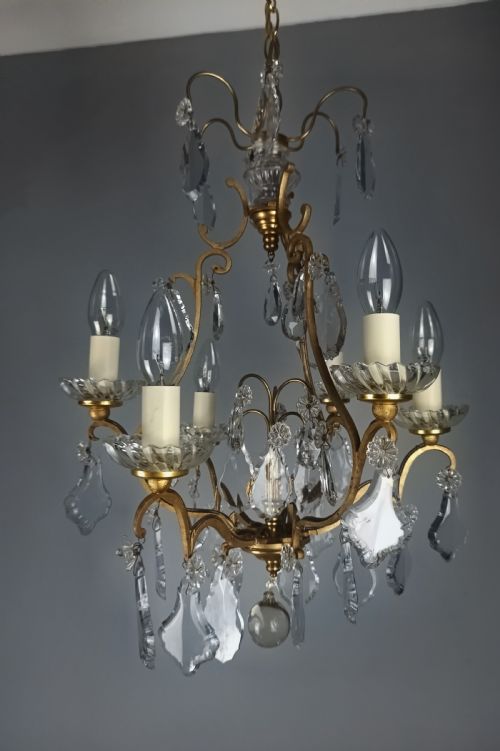
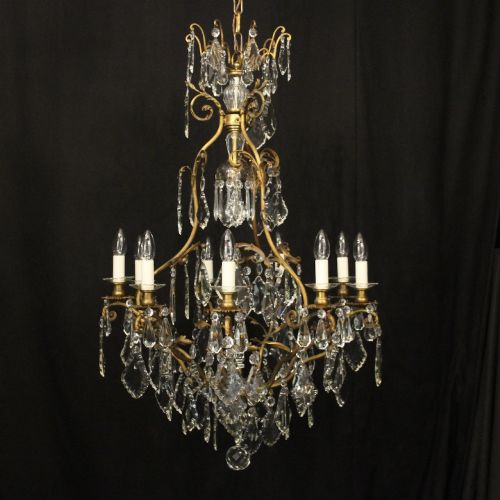
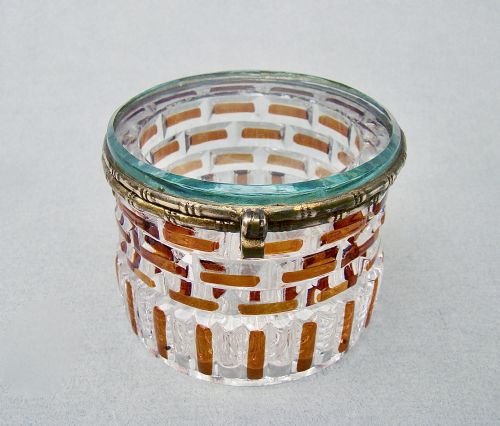
Lighting forms dominate the range, stretching from large multi-light chandeliers and birdcage fixtures down to compact ceiling lanterns and lustres. Tableware and display objects appear in the form of decanters, wine glasses, goblets, and trinket boxes, often combining clear or coloured crystal with applied metallic decoration.
Materials and Technique
The physical construction relies on heavy lead crystal or glass that is wheel-cut to produce sharp facets, paired with metal mounts cast in bronze, brass, or ormolu. Artisans then applied gilding by hand, using gold leaf, paste gilt, or fire gilding to accent the metallic frames and trace delicate patterns onto the glass surface.
Chandelier construction involved wiring or pinning individual cut crystal drops, beads, and prisms to gilded metal armatures, while table glass received enamel or gilt painting that required a low-temperature firing to bond the metal to the vitreous body.
Gilded Cut Glass Retail Price Guide 2026
Typical asking prices for gilded cut glass among the pieces listed under this phrase on Sellingantiques today, from the lower quarter to the upper quarter. They describe what is for sale here now, not the wider market.
Listings span the Georgian, Victorian, and Edwardian eras, featuring French and English chandeliers, centrepieces, decanters, and glassware.
Distinctions in Execution
Quality rests primarily on the depth and crispness of the glass cutting, where sharper, cleaner facets yield superior refraction compared to soft or rounded edges. The weight and detail of the bronze or brass casting further separate standard production from masterworks, particularly in chased mounts and heavy ormolu.
The application of the gilding also dictates value, with hand-tooled fire gilding showing a richer lustre than simpler painted bronze or worn paste gilt. Complete sets of matching drops on lighting and intact, unrubbed gold details on glassware indicate superior preservation and original integrity.
James Giles·Baccarat·Moser·Saint Louis
The Gilded Cut Glass Glossary
- Ormolu
- A technique of applying finely ground, high-carat gold to an object of bronze through mercury amalgamation, creating a durable golden finish. This method is frequently found on nineteenth-century French mounts and centrepieces.
- Lustre
- A glass pendant or ornamental vase fitted with hanging crystal prisms designed to catch candlelight. Victorian examples often feature pink glass paired with cut drops.
- Birdcage Chandelier
- A lighting form where the upper section of metal wires or straps curves outward to resemble the profile of a birdcage. These frames are densely hung with crystal beads and glass drops.
- Paste Gilt
- A method of decorating glass using a metallic powder mixed with a binding agent, applied by hand and fired. It sits slightly proud of the glass surface compared to etched or acid-gilt decoration.
Gilded Cut Glass: Frequently Asked Questions
How do I clean gilded cut glass?
Dust pieces gently with a soft brush and clean glass sections using a mild soap solution applied with a lint-free cloth. Avoid touching gilded surfaces with harsh cleaning agents or abrasive cloths, as the gold layer can easily wear away.
For chandeliers, clean crystal drops in place or remove them individually, ensuring the metal mounts and antique gilding remain completely dry during the process.
How do I date an antique chandelier?
Examine the metal casting techniques, wiring methods, and the cut of the crystal drops. Georgian and early nineteenth-century pieces often feature hand-cut glass with irregular facets and heavy bronze or brass frames, while later Victorian and Edwardian examples show more standardised machine cutting and different pin fixings.
The style of the metalwork, such as French Rococo Revival or Empire, provides a strong indicator of the decade in which the piece was produced.
Are these pieces suitable for modern wiring?
Most antique lighting fixtures require rewiring to meet current safety standards before installation in a modern home. Qualified restorers can rewire chandeliers and wall sconces while preserving the original metal arms, sockets, and crystal components.
It is advisable to check the weight capacity of your ceiling structure, as many of these crystal and bronze fixtures are exceptionally heavy.
What is the difference between glass and crystal?
Crystal refers to glass that contains a percentage of lead oxide, which increases the weight, clarity, and refractive index of the material. This high lead content allows for sharper facet cutting and produces the brilliant sparkle characteristic of quality lighting and tableware.
Standard glass is lighter and softer, yielding a less intense reflection when cut and polished.