






Gilded Crystal Ceiling Lamp
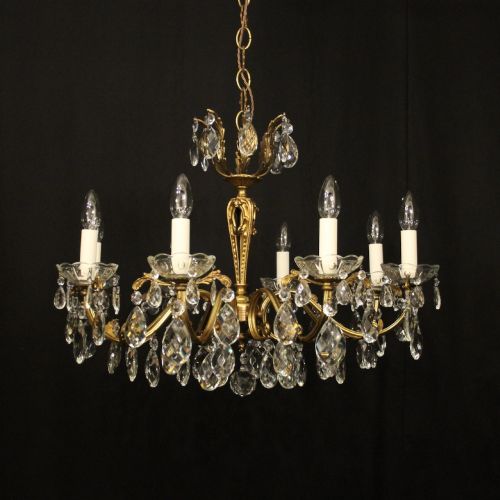
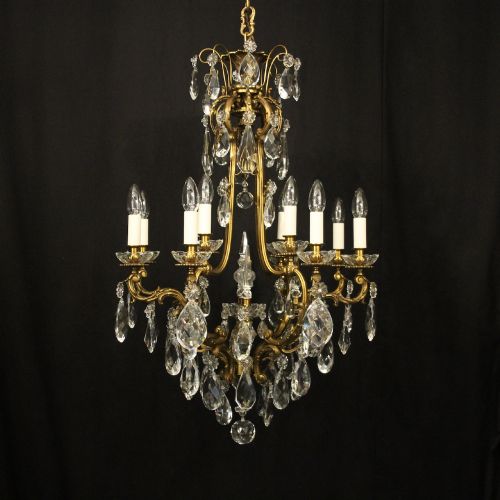
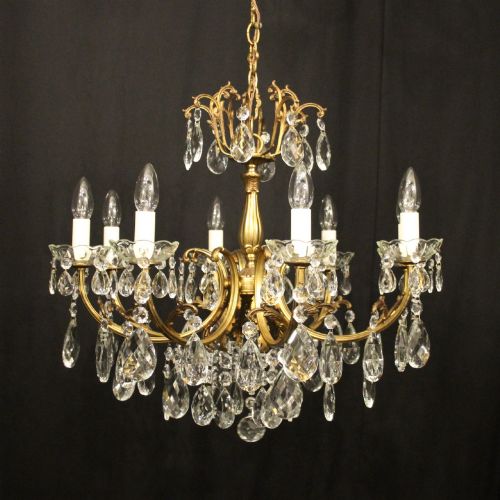
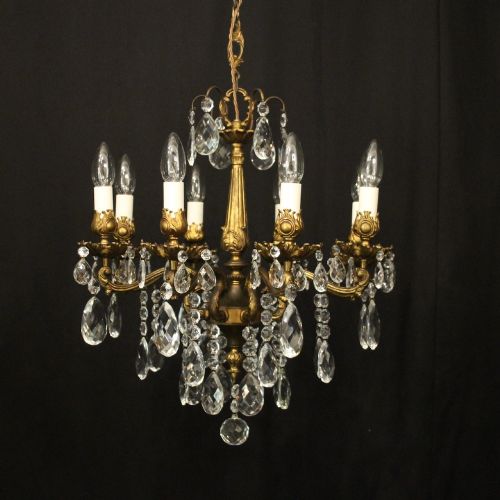
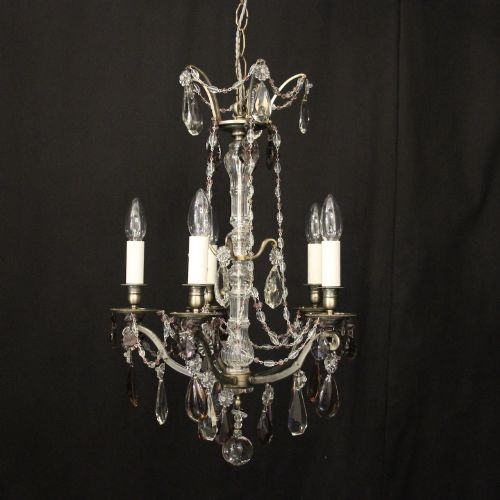
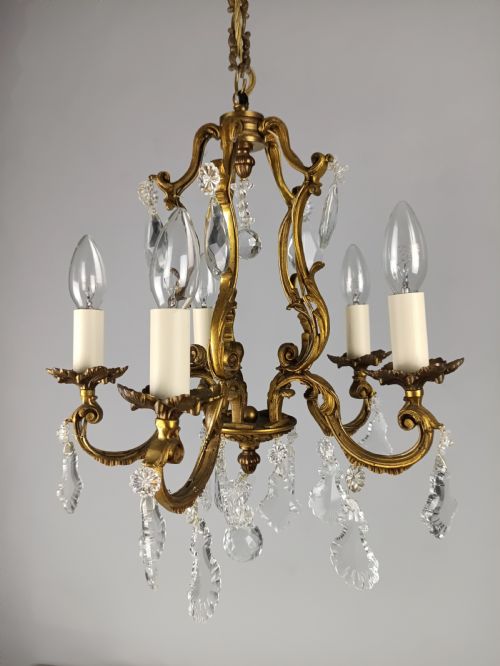
A gilded crystal ceiling lamp brings a brilliant wash of reflected light and classical French or Italian styling to a room.
Gilded Crystal Ceiling Lamp
A gilded crystal ceiling lamp appears in various configurations, most frequently as a chandelier or pendant light suspended from above. These fixtures hail primarily from the early twentieth century, alongside examples from the Edwardian era and the nineteenth century.
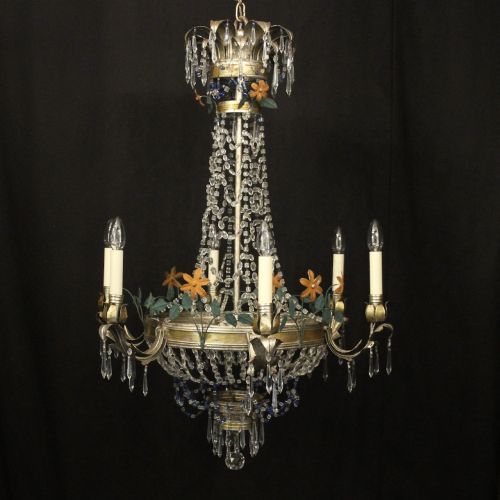
The objects on this page lean heavily toward French designs, including Chateau, Empire, and Rococo styles, complemented by Italian Florentine pieces. They range from compact five-arm chandeliers measuring ten to twelve inches up to grand sixteen-light installations.
How they were made
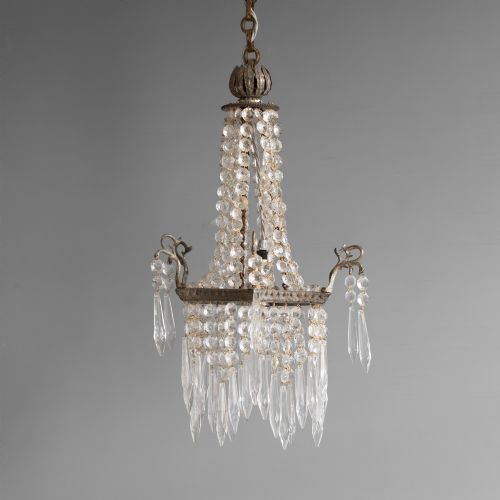
Maker construction relies heavily on metal frames formed from brass, bronze, or gilt metal, which receive a gilded finish to create a rich metallic sheen. Cut glass and crystal drops are suspended from these armatures, often arranged in tents and bags or secured with swags.
The electrical and structural components integrate glass elements alongside the metal framework. Coloured crystal or clear glass drops catch and refract the illumination from multiple light sources across the various arms.
Gilded Crystal Ceiling Lamp Retail Price Guide 2026
Typical asking prices for gilded crystal ceiling lamp among the pieces listed under this phrase on Sellingantiques today, from the lower quarter to the upper quarter. They describe what is for sale here now, not the wider market.
Listings span several decades, featuring pieces from 1900, 1910, 1920, and 1930 alongside Edwardian and nineteenth-century examples.
What varies in quality
Quality rests in the density and precision of the crystal cutting, which determines how cleanly the glass refracts light through a room. Cast bronze components with deep chasing display a superior hand compared to simpler stamped brass frames.
The complexity of the design alters the character of each piece, from modest four-light fixtures to sixteen-light bronze creations adorned with cherubs or floral motifs. The richness of the gilding and the integrity of the glass drops mark the distinction between standard and finer examples.
The Gilded Crystal Ceiling Lamp Glossary
- Gilded
- Covered thinly with gold leaf or gilt paint to give a decorative metallic finish. This surface treatment brightens the metal armature of the lamp.
- Chandelier
- A branched decorative ceiling fixture designed to hold multiple lights. These objects distribute illumination outward across a space.
- Tent and bag chandelier
- A lighting form where crystal beads form a conical tent shape above a gathered bag of drops below. This construction style creates a layered cascade of glass.
- Florentine
- A decorative style originating from Florence, frequently incorporating floral motifs and gilt frames. Such pieces showcase distinct regional Italian artistry.
- Rococo
- An ornate artistic style characterised by asymmetry, scrollwork, and natural forms. French versions of this aesthetic define many fixtures on the page.
Gilded Crystal Ceiling Lamp: Frequently Asked Questions
How do I clean a crystal chandelier?
Maintenance involves wiping individual crystal drops and glass components carefully while they remain attached to the frame. Using a mild cleaning solution prevents damage to the gilded metal surfaces.
Regular dusting keeps the refraction clear and maintains the brilliance of the glass without requiring total dismantling of the fixture.
Where should I hang these ceiling lamps?
These fixtures suit dining rooms, living spaces, and hallways where overhead illumination serves as a focal point. Their scale determines whether they fit a modest room or a high-ceilinged hall.
Placement must account for the physical drop of the chandelier and the clearance needed underneath for everyday movement.
How do I date an antique chandelier?
Dating relies on examining the metal casting techniques, the wiring methods, and the style of the glass drops. Edwardian and early twentieth-century pieces often display specific mounting styles distinct from nineteenth-century examples.
Consulting the materials, such as bronze versus stamped brass, provides further clues regarding the era of manufacture.