

Gilded Ceiling Pendant
These gilded ceiling pendant lights bring warmth and reflective brilliance to a room, spanning grand French chandeliers to intimate English and Italian hall lanterns.
Gilded Ceiling Pendant
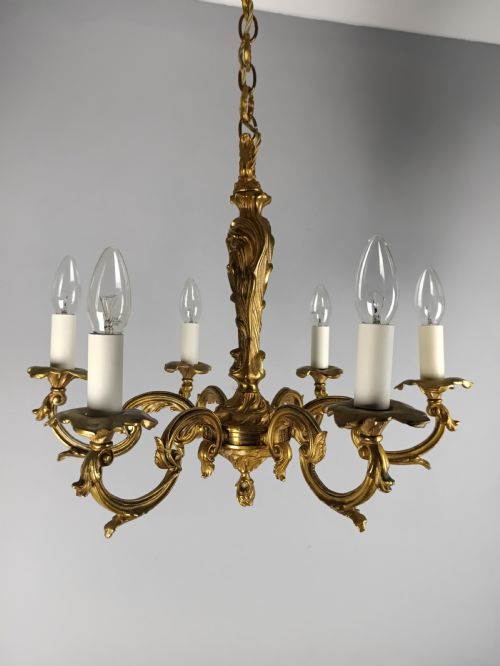
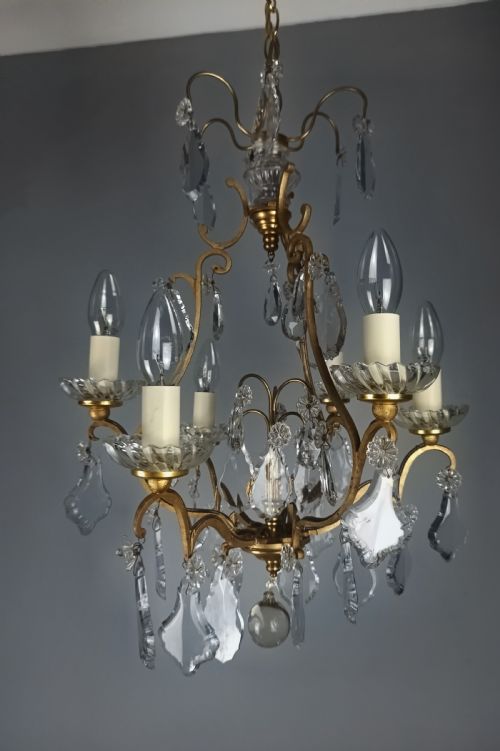
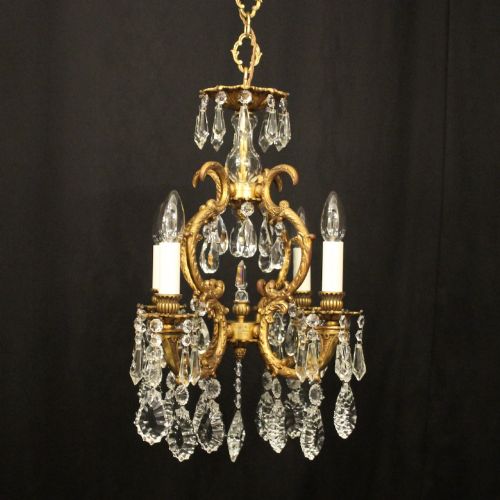
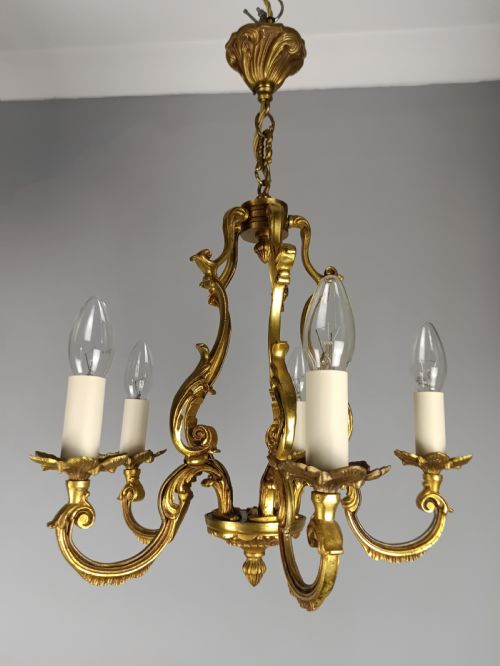
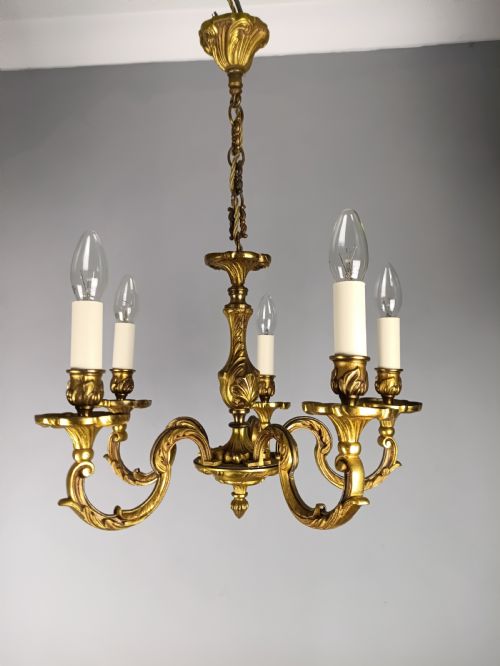
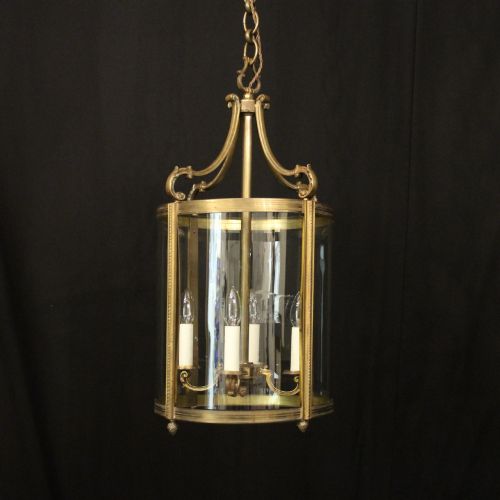
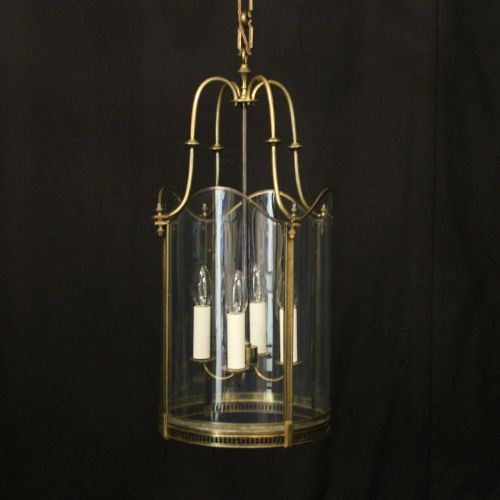
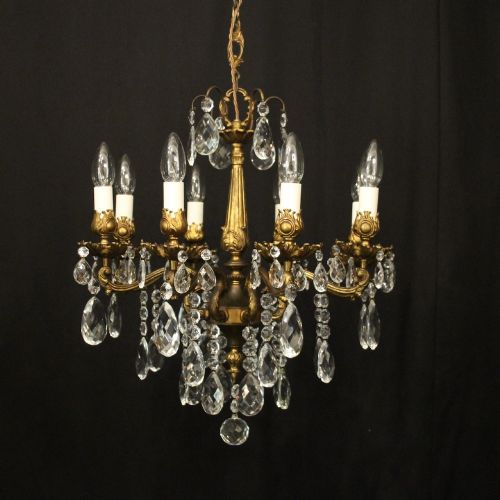
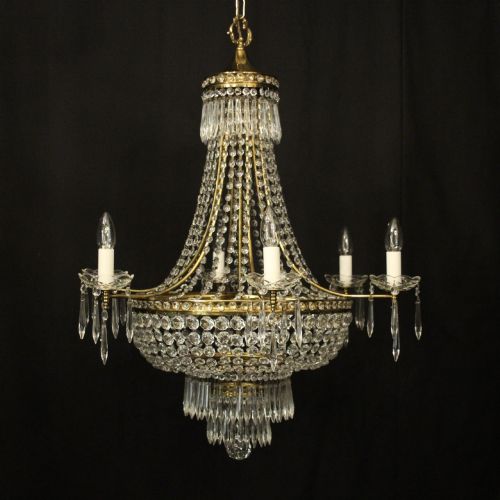
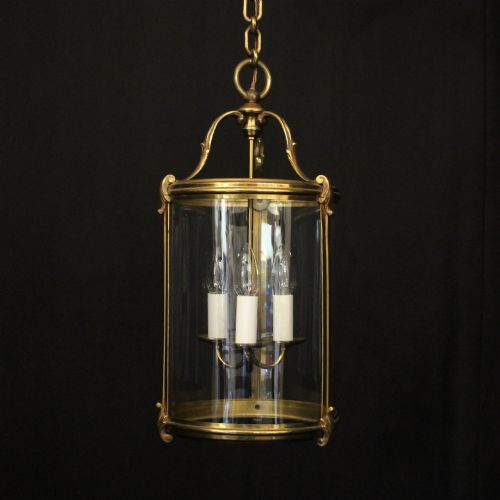
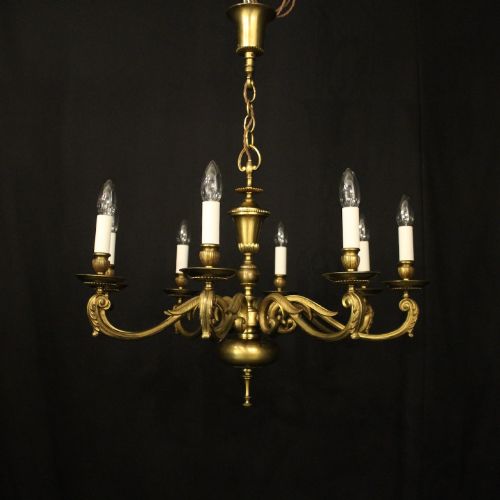
When searching for a gilded ceiling pendant, buyers encounter an array of multi-light chandeliers, hall lanterns, and hanging fixtures originating primarily from the nineteenth and early twentieth centuries. French designs dominate the selection, ranging from elaborate birdcage chandeliers and tent and waterfall configurations to convex hall lanterns and simpler plafonnieres.
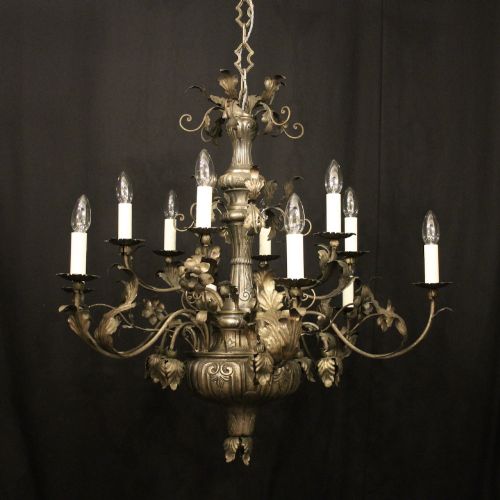
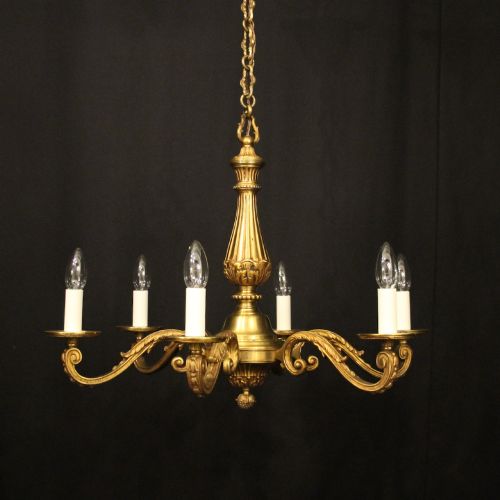
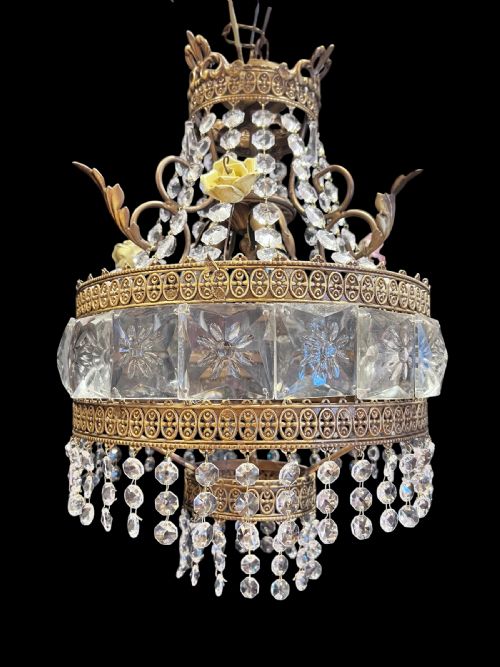
Italian examples add regional character through Florentine polychrome finishes and porcelain flowers, while English makers contribute restrained brass frames. Pieces scale from compact single or triple-light hall fixtures up to expansive twelve-light chandeliers designed for high-ceilinged principal rooms.
Materials and Construction
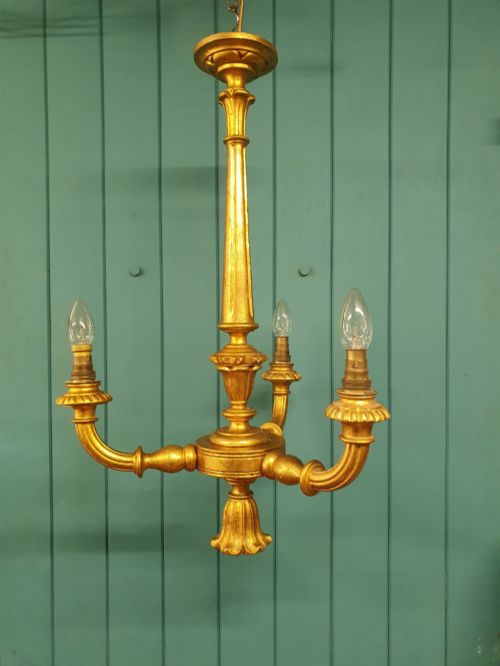
Makers utilised cast bronze, brass, and carved gesso or giltwood to form the rigid skeletons of these fixtures, applying gold leaf or liquid gilding to create luminous metallic surfaces. Many incorporate iron or toleware frameworks painted and gilt, supporting ceramic floral elements or polychrome details.
Transparent components rely on moulded crystal, cut glass drops, amber teardrops, and turquoise crystals suspended from wire loops or pinned directly into the metal armature. Wiring channels and galleries integrate closely with the structural metalwork, often holding original or period-matched glass shades.
Several chandeliers feature winged cherubs keeping watch from the central stem.
Differentiating Quality in Gilded Lighting
The distinction between standard production and superior craftsmanship lies in the depth and execution of the metallic finish, where hand-applied gold leaf on cast bronze surpasses simple painted or sprayed coatings. Finely chased mounts, crisp casting details on cherubs or acanthus scrolls, and heavy gauge brass or bronze indicate higher workshop standards.
Crystal composition and quantity also dictate grade, with heavy, hand-cut glass prisms and complete strings of droplets creating superior light refraction compared to pressed glass alternatives. Original matching components, such as coordinated galleries, matching chains, and intact ceramic floral adornments, maintain the integrity of the piece.
The Gilded Ceiling Pendant Glossary
- Gilt Bronze
- An alloy of copper and zinc or tin treated with gold leaf or mercury gilding to produce a rich metallic surface. This material allows for sharp cast relief work on arms and mounts.
- Birdcage Chandelier
- A style of hanging light featuring an open metal framework shaped like an avian cage, typically hung with strings of glass crystals. These fixtures concentrate light through a central tier.
- Tent and Waterfall
- A lighting configuration where strings of crystal beads form an upper conical tent shape above a lower cascading fall of drops. This arrangement maximises light dispersion across a room.
- Plafonnier
- A shallow ceiling-mounted light fixture designed to sit close to the plasterwork rather than hanging on a long drop. They often combine metal frames with moulded glass or crystal panels.
- Toleware
- Painted and lacquered sheet metal used to form decorative elements such as floral clusters or leaves on chandeliers. It provides colourful contrast against gilt surfaces.
Gilded Ceiling Pendant: Frequently Asked Questions
How do I choose the right size pendant?
Consider the proportions of the room and the height of the ceiling when selecting a fixture. Larger multi-light chandeliers require substantial floor space to balance their visual weight properly.
Hall lanterns and compact three-light fixtures suit lower ceilings and narrower passages where extended drops obstruct movement.
Are these lights compatible with modern wiring?
Most antique hanging fixtures accommodate standard electrical components housed within the original metal bodies. Professional installation ensures the internal wiring safely supports modern bulb wattages.
Rewiring often preserves the historic gallery and socket covers while updating the internal cable for safety.
How do I identify French styles?
French lighting from this era typically exhibits rococo revival curves, neoclassical symmetry, or elaborate cast bronze mounts. Details such as winged cherubs, convex glass panels, and intricate leaf scrolls point to French workshops.
Italian pieces often contrast these with polychrome paints and delicate ceramic floral additions.