


Gilded Accent Light
A gilded accent light brings warmth and metallic sheen to an interior, taking the form of an antique table lamp.
Gilded Accent Light
When you search for a gilded accent light, you encounter decorative table lamps designed to provide soft illumination while introducing metallic surface detail into a room. These pieces function primarily as atmospheric lighting rather than task illumination, often placed upon side tables, desks or cabinets.
The selections available here span diverse historical periods from the eighteenth century to the mid-twentieth century. You are most likely to meet nineteenth-century examples and early twentieth-century creations, particularly French and English forms utilising ormolu, gilt bronze or carved giltwood.
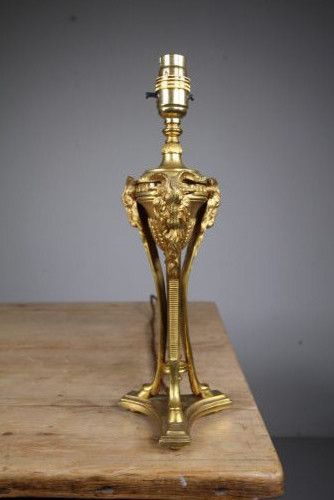
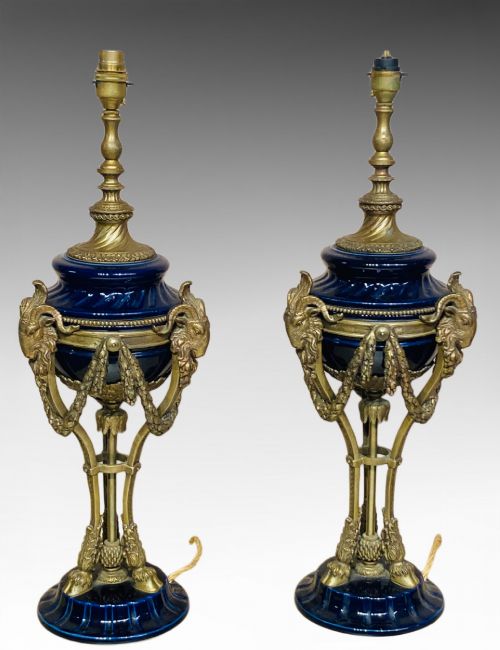
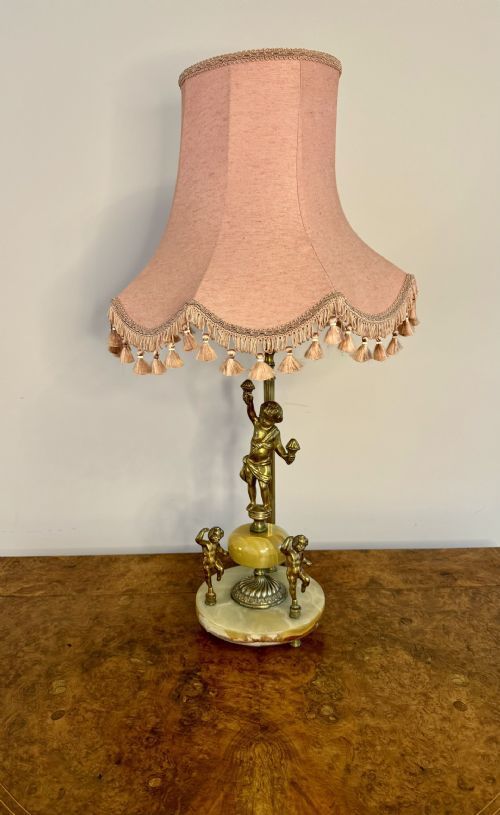
The forms vary from classical revival styles such as Louis XVI and Empire to exotic interpretations including Chinoiserie, Japanese Satsuma and Meiji period pieces. Alongside these figural works featuring cherubs or rams heads, you find simpler turned wooden bases and glazed ceramic bodies with gilded mounts.
How They Were Made
Maker workshops produced these illumination pieces through metalcasting, carving and ceramic fabrication. Ormolu and gilt bronze components required skilled foundry work, involving the application of gold amalgam onto bronze or brass before heating to bond the finish.
Carved wooden examples utilise timber bases shaped by hand and finished with gold leaf applied over a prepared gesso layer. Ceramic and porcelain bodies frequently incorporate hand-painted decoration alongside cast metal mounts secured by threaded fixings.
Cast bronze cherubs and carved rams heads stubbornly hold aloft modern electrical fittings, bridging centuries of interior lighting tastes with divine confusion.
What Varies in Quality
Carved wooden and gesso bases demonstrate quality through the delicacy of the hand-carving and the intact preservation of the original gold leaf surface. Inferior examples often show heavy-handed moulding, blurred cast details or flat, modern metallic paints rather than genuine period leaf or fire gilding.
The Gilded Accent Light Glossary
- Ormolu
- Finely chased gilded bronze produced by mercury amalgamation. This technique was widely utilised by French makers during the eighteenth and nineteenth centuries to create rich decorative mounts.
- Giltwood
- Timber that has been coated in gold leaf. Carvers applied the leaf over a layer of gesso on woods such as pine or hardwood.
- Neoclassical
- A style drawing inspiration from classical antiquity. It appears frequently in nineteenth-century designs featuring symmetrical urns, columns and classical motifs.
- Chinoiserie
- European decorative style reflecting Chinese artistic traditions. These pieces often combine lacquered surfaces with oriental motifs adapted for Western interiors.
- Meiji Period
- A Japanese historical era spanning from eighteen sixty-eight to nineteen twelve. Satsuma pottery from this period was frequently exported and later converted into table lamps.
Gilded Accent Light: Frequently Asked Questions
What is a gilded accent light?
A gilded accent light is a decorative table lamp featuring metallic gold leaf, ormolu, or gilt bronze surfaces. These pieces are designed to cast a warm glow while serving as sculptural decorative objects.
They combine historical craftsmanship with functional lighting, ranging from French figurative designs to carved wooden bases from various European traditions.
How do I date an antique lamp?
Dating relies on examining the materials, wiring methods, mounting hardware and stylistic indicators such as Neoclassical or Art Nouveau motifs. Historical periods like the nineteenth century or the Edwardian era leave specific manufacturing clues.
Changes in metal casting techniques and ceramic styles help place a piece within a specific decade or century.
Where should I place a lamp?
These lamps suit side tables, console tables, sideboards and desks where they provide secondary atmospheric lighting. Their metallic finishes catch natural daylight as well as evening illumination.
Placement should highlight the decorative base while ensuring the scale complements surrounding furniture.
Are these lamps safe to use?
Many older lamps feature vintage wiring that may require inspection or replacement by a qualified electrician to meet modern safety standards. The structural body of the lamp often dates to the nineteenth or early twentieth century.
Rewiring allows antique and vintage bases to function safely with contemporary electrical outlets.